
Irregular Menstruation Management in Korea
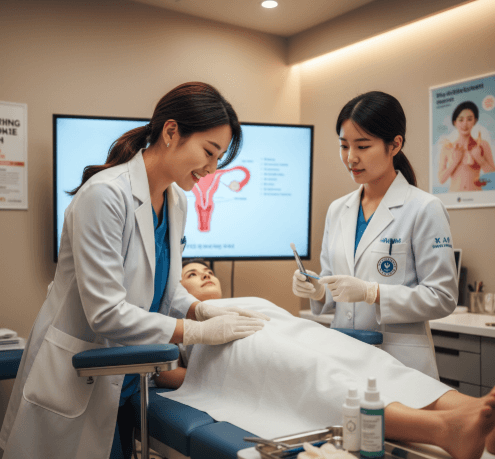
What it is Irregular menstruation refers to cycles that are shorter, longer, heavier, or lighter than the normal monthly rhythm. A typical cycle lasts 21–35 days, and anything outside this range is considered irregular. ✔️ Types: Skipped periods, very heavy or very light bleeding, prolonged cycles, or frequent cycles.✔️ Causes: Can be hormonal, lifestyle-related, or […]
Preconception Counseling in Korea

What it is Preconception counseling is a medical consultation done before trying to get pregnant. Its goal is to evaluate a woman’s (and sometimes her partner’s) health, identify risk factors, and provide guidance to ensure a safe and healthy pregnancy. ✔️ Focus: Improve maternal health, reduce pregnancy complications, and increase chances of a healthy baby.✔️ […]
Essure Removal in Korea
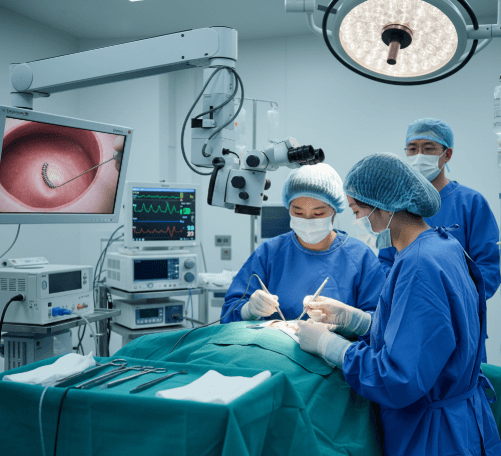
What it is Essure was a permanent birth control device consisting of small metal and fiber coils placed inside the fallopian tubes to block them and prevent pregnancy. Over time, some women experienced serious side effects, leading to the discontinuation of Essure in many countries. Essure removal is a surgical procedure done to take out […]
Tubal Ligation Reversal in Korea
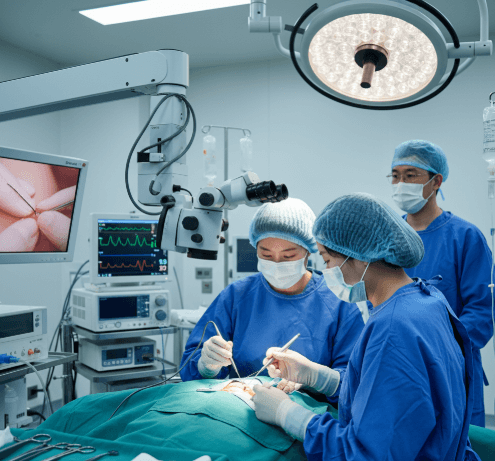
What it is Tubal ligation reversal is a surgical procedure performed to restore fertility in women who have previously undergone tubal ligation (sterilization). In this surgery, the blocked or sealed fallopian tubes are reconnected or repaired so that eggs can once again travel from the ovaries to the uterus. ✔️ Goal: To allow natural conception […]
Tubal Ligation (Laparoscopic) in Korea
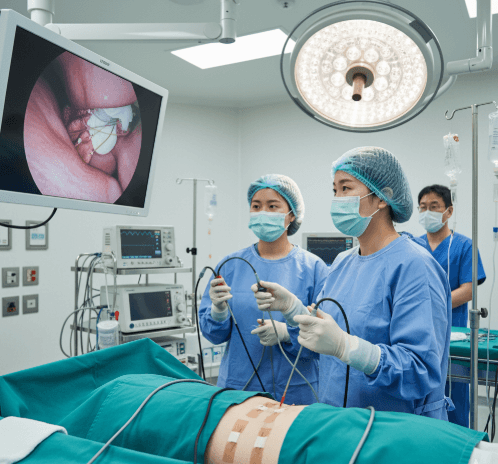
What it is Tubal ligation, often referred to as “getting your tubes tied,” is a permanent form of female sterilization. In this procedure, the fallopian tubes are cut, tied, or sealed to prevent eggs from traveling from the ovaries to the uterus, making pregnancy impossible. ✔️ Surgical method: In Korea, it is most commonly performed […]
Emergency Contraception in Korea

What it is Emergency contraception (EC) is a method used to prevent pregnancy after unprotected sex or contraceptive failure (such as a broken condom, missed birth control pill, or unplanned intercourse). In Korea, emergency contraception is available by prescription from a doctor and comes mainly in two forms: ✔️ Emergency contraceptive pills (ECPs) – high-dose […]
Contraceptive Implant (Nexplanon) Insertion/Removal in Korea
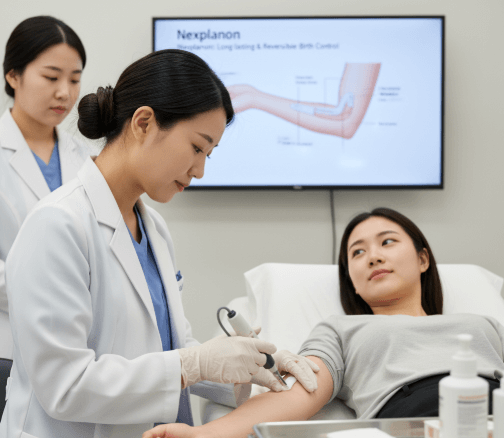
What it is The contraceptive implant, commonly known by the brand name Nexplanon, is a small, flexible rod about the size of a matchstick that is inserted under the skin of the upper arm. It continuously releases a low dose of progestin hormone to prevent pregnancy. ✔️ Duration: Effective for up to 3 years✔️ Effectiveness: […]
Copper IUD Insertion in Korea
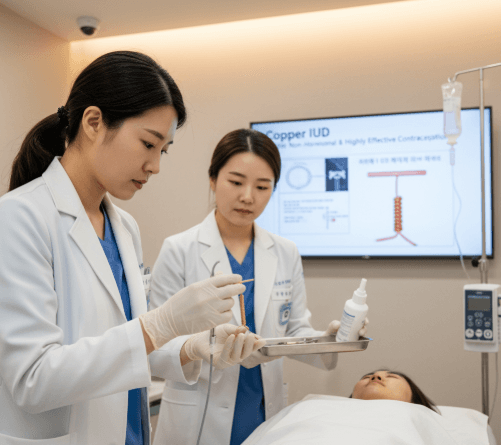
What it is A copper intrauterine device (IUD) is a small, T-shaped device placed inside the uterus to prevent pregnancy. Unlike hormonal IUDs, it does not release hormones. Instead, it uses copper as the active ingredient. Copper creates a toxic environment for sperm, preventing fertilization. ✔️ Effectiveness: More than 99% effective✔️ Duration: Can last up […]
Hormonal IUD Insertion in Korea
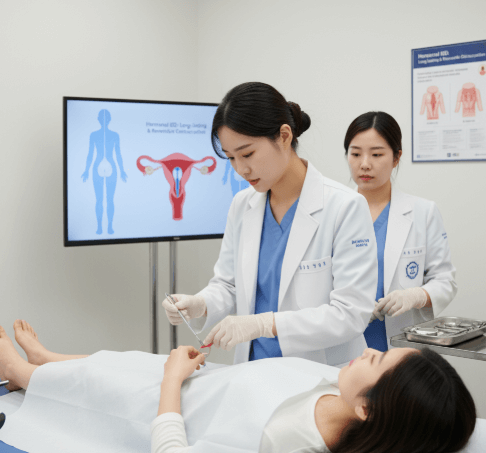
What it is A hormonal intrauterine device (IUD) is a small, T-shaped device placed inside the uterus to provide long-term birth control. It slowly releases progestin hormone, which prevents pregnancy by:✔️ Thickening cervical mucus to block sperm entry✔️ Thinning the uterine lining to prevent implantation✔️ Sometimes suppressing ovulation Hormonal IUDs in Korea are typically effective […]
Birth Control Pills Prescription in Korea

What it is Birth control pills are oral contraceptives that contain synthetic hormones to prevent pregnancy. They usually contain a combination of estrogen and progestin, or sometimes only progestin (mini-pill). In Korea, birth control pills are widely available but are often prescribed by a gynecologist or general practitioner after consultation. ✔️ Purpose: To prevent pregnancy […]