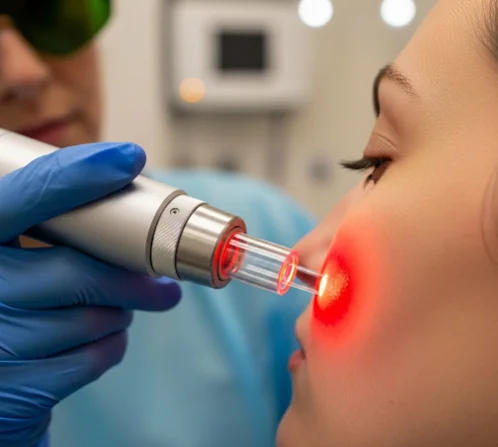
Vbeam PDL in Korea is one of the most trusted and effective treatments for redness, vascular lesions, and rosacea. PDL stands for Pulsed Dye Laser, and Vbeam is the leading system in this category. It works by delivering a specific wavelength of laser light (595 nm) that targets hemoglobin in blood vessels, causing them to collapse without damaging surrounding tissue.
In Korea, where flawless, even-toned skin is highly valued, Vbeam PDL has become a go-to treatment for patients struggling with facial redness, rosacea, acne marks, spider veins, and vascular birthmarks. Korean dermatology clinics, known for their advanced technology and holistic aftercare, have refined this treatment into safe, effective, and personalized programs.
What It Is
The Vbeam PDL is a 595 nm pulsed dye laser specifically designed to treat vascular lesions and redness. The laser energy is absorbed by blood vessels, heating and collapsing them while leaving surrounding skin intact.
Key uses of Vbeam PDL include:
- Rosacea and chronic redness.
- Post-acne red marks.
- Spider veins and broken capillaries.
- Port-wine stains and vascular birthmarks.
- Red stretch marks and scars.
In Korea, Vbeam is considered the gold standard for redness management, with most leading dermatology clinics offering it as part of their vascular and pigmentation treatment programs.
Why It’s Done
Patients undergo Vbeam PDL for both medical and aesthetic reasons:
- Medical purposes → Treats vascular skin conditions like rosacea, hemangiomas, and port-wine stains.
- Aesthetic purposes → Reduces redness, clears post-acne marks, and improves overall complexion.
- Preventive purposes → Many young Koreans use it to prevent worsening of broken capillaries or rosacea.
The treatment aligns with the Korean beauty standard of smooth, clear, and even-toned skin, making it one of the most in-demand procedures.
Alternatives
While Vbeam PDL is highly effective, Korean clinics also offer alternatives:
- IPL Photofacial or BBL → Broader-spectrum light therapy for redness and pigmentation.
- Nd:YAG laser (1064 nm) → For deeper vascular lesions.
- Pico lasers → Primarily for pigmentation, with some vascular benefits.
- Chemical peels → Mildly improve redness and texture.
- Topical K-beauty products → Soothing creams with centella asiatica or niacinamide for redness.
Preparation
Preparation for Vbeam PDL in Korea is carefully managed:
- Consultation → A dermatologist examines the vascular condition with imaging tools to customize settings.
- Pre-care instructions → Patients should avoid sun exposure, tanning, and retinoids before treatment.
- Medical disclosure → Any history of easy bruising or blood-thinning medications should be discussed.
- Skin preparation → Gentle cleansing and moisturizing are recommended before the appointment.
Most patients do not need numbing cream, but it can be applied for added comfort.
How It’s Done
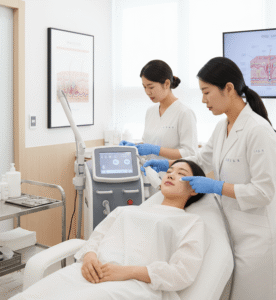
A Vbeam PDL session usually takes 20–30 minutes:
- Cleansing – The skin is cleansed of any impurities or makeup.
- Protection – Eye shields are placed.
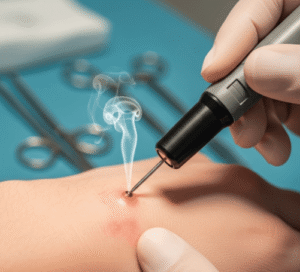
- Laser application – The Vbeam handpiece delivers pulses of 595 nm laser light. The device often includes a cooling spray for comfort.
- Post-care – Soothing cream or cold compresses may be applied.
- Final step – Sunscreen is applied before leaving the clinic.
Patients often describe the sensation as a rubber band snap on the skin, followed by cooling.
Recovery
Recovery from Vbeam PDL is relatively quick compared to more aggressive lasers:
- Immediately after → Mild redness and swelling are common. Some patients may see temporary purplish marks (purpura), especially with stronger settings.
- 1–3 days later → Redness and swelling subside. If purpura occurs, it usually fades in 5–7 days.
- Within 1 week → Skin tone looks clearer and redness reduced.
Korean clinics enhance recovery with soothing facials, LED therapy, and calming ampoules. Patients are instructed to avoid direct sunlight and use SPF 50+ sunscreen daily.
Complications
Vbeam PDL is very safe, but side effects can occur:
- Redness, swelling, or sensitivity for a few days.
- Temporary purpura (purple spots) depending on treatment intensity.
- Rare cases of hyperpigmentation or hypopigmentation if aftercare is not followed.
Korean dermatologists minimize risks by carefully adjusting energy levels, offering lower-intensity treatments for cosmetic redness, and reserving higher fluence for medical vascular lesions.
Treatment Options
In Korea, Vbeam PDL is offered in several specialized programs:
- Rosacea program → Customized settings to reduce chronic redness.
- Post-acne redness program → Clears red acne scars and marks.
- Vascular birthmark program → Targets port-wine stains and hemangiomas.
- Anti-aging program → Combines Vbeam with collagen-stimulating treatments.
- Combination packages → Vbeam plus IPL/BBL for pigmentation, or Vbeam plus Aqua Peel for cleansing.
Clinics in Seoul, particularly in Gangnam, provide multi-session packages at affordable rates. Most patients undergo 3–5 sessions spaced 4–6 weeks apart for optimal results.
Conclusion
Vbeam PDL in Korea is considered the gold standard for treating redness and vascular lesions. Using targeted pulsed dye laser technology, it effectively reduces rosacea, broken capillaries, post-acne redness, and vascular birthmarks while remaining safe for Asian skin types.
Korean clinics enhance the treatment experience with advanced technology, customized programs, and luxurious aftercare, ensuring effective results with minimal downtime. For patients seeking to achieve the clear, even-toned complexion that defines K-beauty standards, Vbeam PDL in Korea is one of the most reliable and proven options.