
What it is
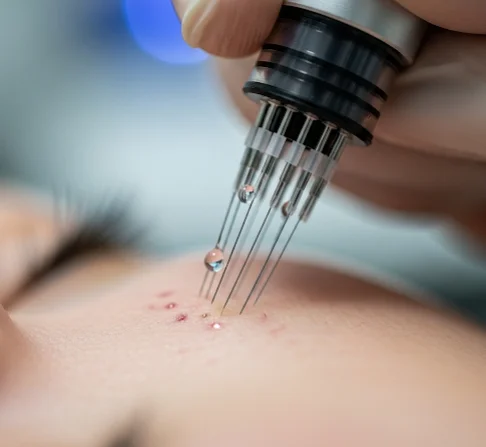
→ Tranexamic acid (TXA) microinjections are a dermatological treatment where tiny doses of tranexamic acid are injected directly into the skin to treat melasma, post-inflammatory hyperpigmentation (PIH), sunspots, and uneven skin tone.
→ Tranexamic acid works by blocking the plasminogen–plasmin pathway, which reduces melanocyte activity and prevents excessive melanin production.
→ Instead of oral or topical TXA, microinjections deliver the ingredient directly to the dermis, ensuring higher local concentration with fewer systemic side effects.
→ In Korea, TXA microinjections are considered a safe and highly effective option for stubborn pigmentation, often combined with lasers, peels, or brightening therapies.
Why it’s done
→ Tranexamic acid microinjections are performed to:
- Treat melasma, especially vascular or dermal types resistant to creams and lasers.
- Lighten hyperpigmentation from acne scars or skin injury.
- Reduce redness and vascular contribution to pigmentation.
- Prevent recurrence of pigmentation after initial treatments.
- Improve overall skin clarity and brightness.
→ Patients choose TXA microinjections because they target pigmentation at its source without significant downtime.
Alternatives
→ Alternatives to TXA microinjections include:
- Topical TXA creams/serums → gentler but slower results.
- Oral TXA → effective but carries systemic risks (blood clotting concerns).
- Cosmelan, Dermamelan, Enlighten peels → for surface pigmentation.
- Laser toning (Q-switched Nd:YAG, pico-lasers) → for deeper pigmentation.
- Cocktail mesotherapy (skin boosters) → mixing TXA with vitamins, hyaluronic acid, and antioxidants.
→ TXA microinjections stand out because they combine safety (local effect) with strong efficacy.
Preparation
→ Before tranexamic acid microinjections, patients should:
- Avoid sun exposure for at least 1–2 weeks.
- Stop blood-thinning medications (aspirin, certain supplements) if approved by the doctor.
- Discontinue harsh skincare (retinoids, acids) 3–5 days before.
- Shave or clean the treatment area if necessary.
- Undergo patch testing if sensitive to TXA or mesotherapy formulas.
→ In Korea, dermatologists also perform skin analysis and melasma mapping before starting injections.
How it’s Done
→ A standard TXA microinjection procedure includes:
- Cleansing and antiseptic preparation of the skin.
- Topical numbing cream applied for comfort (20–30 minutes).
- Microinjection technique:
- Using ultra-fine needles or mesotherapy guns, TXA is injected at shallow depths (1–2 mm) across pigmented areas.
- Injections are evenly spaced for uniform results.
- Soothing mask or cooling device applied afterward.
→ Duration → 20–30 minutes per session.
→ Frequency → usually 4–6 sessions at 2–4 week intervals.
→ Maintenance → booster sessions every few months if melasma is chronic.
Recovery
→ Recovery after TXA microinjections is very mild:
- Immediate effects → slight redness, pinpoint marks, or mild swelling.
- 24–48 hours → skin usually returns to normal.
- 1–2 weeks → gradual improvement in pigmentation and brightness.
- 1–3 months → noticeable reduction in melasma and even skin tone.
→ Aftercare recommendations:
- Apply soothing creams or aloe vera.
- Avoid sun exposure, saunas, and heavy workouts for 24–48 hours.
- Use broad-spectrum sunscreen daily.
- Refrain from applying harsh skincare for 3–5 days.
Complications
→ While generally safe, possible side effects include:
- Temporary redness, swelling, or bruising at injection sites.
- Mild pain or sensitivity during and after procedure.
- Allergic reaction (rare).
- Post-inflammatory hyperpigmentation (PIH) if aftercare is not followed.
- Vascular risks → much lower than oral TXA but still monitored.
→ With professional application, the risks remain minimal.
Treatment options in Korea
→ Korea is one of the global leaders in pigmentation management and pioneers in TXA use for melasma:
- Dermatology-led protocols → injections are done by trained dermatologists, not estheticians.
- Advanced mesotherapy devices → Korean clinics use precision mesoguns for even distribution.
- Combination therapies → TXA injections are often paired with laser toning, LED therapy, or whitening serums.
- Personalized formulas → some clinics mix TXA with vitamin C, glutathione, or hyaluronic acid for dual brightening and hydration.
- High safety standards → strict sterile protocols minimize infection or irritation risks.
- Medical tourism → international patients benefit from customized pigmentation programs with English-speaking staff.
→ With cutting-edge mesotherapy technology, advanced pigmentation expertise, and integrated aftercare, Korea is one of the best destinations for tranexamic acid microinjection treatments.