What it is in Korea
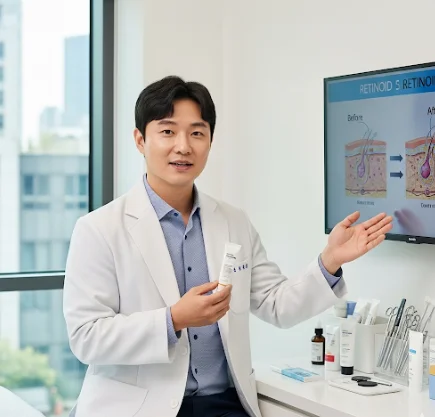
➤ Topical retinoid in Korea refers to the use of vitamin A derivatives applied directly to the skin to treat acne, pigmentation, and aging concerns.
→ Retinoids normalize skin cell turnover, unclog pores, reduce inflammation, and stimulate collagen production.
✦ Common topical retinoids used in Korea include:
- Tretinoin (all-trans retinoic acid) → prescription-strength, highly effective for acne and wrinkles
- Adapalene → gentler, widely available, often recommended for sensitive skin
- Tazarotene → stronger, less commonly used due to irritation risk
✔ In Korea, topical retinoids are often prescribed alongside benzoyl peroxide, antibiotics, or K-beauty soothing regimens, ensuring effectiveness with minimized irritation.
Why it’s done in Korea
▸ Medical reasons → Treats mild-to-severe acne, clogged pores, and post-inflammatory hyperpigmentation.
▸ Aesthetic reasons → Retinoids are known as the “gold standard in anti-aging,” reducing fine lines and improving skin elasticity.
▸ Preventive reasons → Long-term use helps prevent acne recurrence and slow down visible aging.
✔ Dermatologists in Korea recommend topical retinoids when:
- Acne persists despite other topical treatments
- Patients have clogged pores, blackheads, or resistant acne
- Early wrinkles or sun damage appear
- Pigmentation issues (melasma, dark spots) are visible
Alternatives in Korea
While topical retinoids are effective, Korean dermatologists may suggest alternatives or complementary options:
➤ Topical alternatives
- Azelaic acid → gentler option for sensitive skin, reduces pigmentation
- Benzoyl peroxide → antibacterial, prevents resistance when combined with retinoids
- Niacinamide → calming, barrier-supportive ingredient
➤ Oral therapies
✔ Antibiotics → temporary use for inflammatory acne
✔ Isotretinoin → systemic treatment for severe or resistant acne
➤ Procedural treatments
✦ Chemical peels (salicylic, glycolic, Jessner) → exfoliation and brightening
✦ Laser therapy → pigmentation and scar reduction
✦ Microneedling → stimulates collagen for wrinkles and scars
Preparation in Korea
Before starting a topical retinoid regimen in Korea, dermatologists provide clear guidance:
▸ Skin conditioning
→ Start with low concentrations (e.g., adapalene or low-dose tretinoin) to build tolerance.
→ Apply retinoids every 2–3 nights at first, then increase frequency.
▸ Lifestyle considerations
✦ Use hydrating, barrier-strengthening products (ceramides, hyaluronic acid).
✦ Avoid excessive sun exposure and always apply SPF 50+ sunscreen.
▸ Medical evaluation
✔ Dermatologists assess skin type, acne severity, and sensitivity.
✔ Patients with eczema, rosacea, or very dry skin may be prescribed gentler retinoid alternatives.
How it’s done in Korea
An effective topical retinoid regimen in Korea usually follows structured steps:
- Cleansing → Gentle, non-foaming cleansers to prevent irritation.
- Application → A pea-sized amount of retinoid cream/gel applied at night on dry skin.
- Moisturizer layering → Korean dermatologists often recommend the “sandwich method” (moisturizer → retinoid → moisturizer) to reduce irritation.
- Combination therapy
- Retinoid + benzoyl peroxide (for acne)
- Retinoid + azelaic acid (for pigmentation)
- Retinoid + laser or peel (for scars and wrinkles)
- Clinic supervision → Korean clinics monitor skin response and adjust concentrations gradually.
✔ Unlike Western regimens, Korean dermatology integrates retinoids with soothing K-beauty skincare (essences, sheet masks, calming serums) for better tolerance.
Recovery in Korea
▸ Initial phase (1–4 weeks)
✔ Common side effects include redness, peeling, dryness, or a temporary “purge” (breakouts before improvement).
▸ Short-term results (6–12 weeks)
→ Noticeable reduction in acne, fewer clogged pores, and smoother texture.
▸ Long-term results (3–6 months)
✦ Significant improvement in pigmentation, fine lines, and skin elasticity.
✦ Maintenance therapy may continue for years, as retinoids provide long-term benefits.
Complications in Korea
Topical retinoids are safe under Korean dermatology supervision, but possible issues include:
➤ Mild side effects
- Irritation, redness, dryness
- Sun sensitivity
➤ Rare complications
✦ Severe peeling or eczema flare-ups in sensitive skin
✦ Hyperpigmentation in darker skin tones if sun protection is neglected
✔ Korean dermatologists minimize risks by starting at low doses, using combination moisturizers, and recommending strict sun care routines.
Treatment Options in Korea
Korea is a leader in retinoid-based skincare and dermatology programs, offering both medical prescriptions and cosmetic-grade formulations.
➤ Major hospitals
- Seoul National University Hospital Dermatology → Prescribes topical retinoids for acne, pigmentation, and aging.
- Asan Medical Center → Integrates retinoids with laser therapy for scar management.
➤ Private dermatology clinics (Gangnam, Apgujeong, Myeongdong)
✔ Oracle Skin Clinic, Banobagi Dermatology, ID Dermatology → Specialize in retinoid regimens combined with K-beauty skincare, peels, and laser toning.
➤ K-beauty integration
✦ Korean skincare brands offer retinol and retinal products (gentler, cosmetic-grade retinoids).
✦ Clinics often recommend layering with hydrating essences, soothing serums, and barrier creams for long-term tolerance.
Conclusion in Korea
➤ Topical retinoid in Korea is one of the most effective treatments for acne, pigmentation, and early aging, offering both medical and aesthetic benefits.
→ It works by unclogging pores, stimulating collagen, and renewing skin cells, making it the gold standard for acne and anti-aging.
✦ With Korea’s advanced dermatology expertise, customized regimens, and integration with K-beauty skincare, topical retinoids are a globally trusted solution for achieving clearer, smoother, and more youthful skin.