🟢 What it is
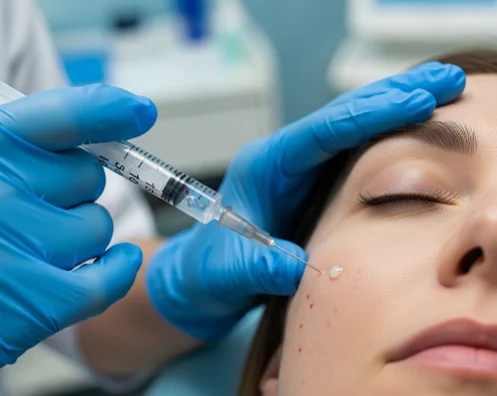
Skin Boosters in Korea are microinjection treatments that deliver hyaluronic acid (HA) or other bioactive substances directly into the dermis to improve hydration, elasticity, smoothness, and overall skin quality. Unlike traditional dermal fillers, which are designed to add volume or sculpt facial features, skin boosters are meant to revitalize and rejuvenate the skin itself.
They are sometimes referred to as “intradermal moisturizers” because they work from the inside out, giving the skin a healthy glow, plumpness, and the glass-skin effect often associated with Korean beauty.
🟢 Why it’s Done
Patients in Korea choose skin boosters for both cosmetic enhancement and preventive anti-aging:
➡️ Deep hydration: Replenishes moisture within the skin layers.
➡️ Improved elasticity: Strengthens collagen and elastin networks.
➡️ Texture refinement: Smooths fine lines and roughness.
➡️ Brightening effect: Enhances radiance for the signature K-beauty “glow.”
➡️ Prevention of aging: Maintains youthful skin before deep wrinkles form.
➡️ Holistic care: Complements fillers, Botox, and laser treatments for full-face rejuvenation.
In Korea, skin boosters are seen as a foundational treatment for maintaining healthy, radiant skin at any age.
🟢 Popular Types of Skin Boosters in Korea
🔹 Hyaluronic Acid (HA) Skin Boosters
- Example: Restylane Vital, Juvederm Volite, Yvoire Hydro.
- Function: Deep hydration, skin plumping, elasticity improvement.
🔹 Rejuran Healer (Polynucleotides, PN/PDRN)
- Derived from salmon DNA fragments.
- Function: Repairs damaged skin, improves texture, reduces fine lines, enhances healing.
🔹 Profhilo
- High-concentration HA with different molecular weights.
- Function: Hydrates while stimulating collagen and elastin, improves skin firmness.
🔹 Juvelook / Lenisna
- Hybrid biostimulator + HA.
- Function: Improves acne scars, fine lines, and skin elasticity.
🔹 Exosome Skin Boosters
- Stem-cell derived vesicles.
- Function: Cellular repair, strong anti-aging, brightening, and healing properties.
🔹 Glutathione / Vitamin C / Whitening cocktails
- Used in mesotherapy-style skin boosters.
- Function: Brightening, evening out pigmentation, antioxidant protection.
🟢 Alternatives
Other treatments can complement or substitute for skin boosters:
🔹 Topical skincare: Moisturizers, serums, and essences (limited penetration compared to boosters).
🔹 Laser treatments (Fraxel, IPL, CO2): Resurface and brighten skin.
🔹 Microneedling with PRP: Stimulates collagen and improves texture.
🔹 Chemical peels: Exfoliate and brighten, but results are less hydrating than boosters.
🔹 Radiofrequency Microneedling (RF): Firms skin, often paired with boosters for synergy.
In Korea, combination therapy is the gold standard—skin boosters + laser/energy devices for maximum rejuvenation.
🟢 Preparation
Preparation ensures safe and effective results:
➡️ Consultation: Doctors analyze hydration levels, skin elasticity, and problem areas.
➡️ Medical history: Patients disclose allergies, autoimmune conditions, or prior treatments.
➡️ Avoid blood thinners: No aspirin, ibuprofen, alcohol, or fish oil for 3–5 days.
➡️ Skin prep: Gentle cleansing, avoid strong exfoliants or retinoids.
➡️ Expectation setting: Korean doctors emphasize that skin boosters improve quality gradually with multiple sessions.
🟢 How it’s Done
A typical session takes 20–30 minutes:
- Cleansing & sterilization of the treatment area.
- Numbing: Topical anesthetic applied for comfort.
- Microdroplet injections:
- Injected across the face (or neck, hands, décolletage) using tiny needles or injector guns.
- Even distribution ensures uniform hydration and collagen stimulation.
- Soothing care: Cooling masks or LED therapy applied afterward.
Korean clinics often recommend 3 initial sessions, 3–4 weeks apart, followed by maintenance every 6–12 months.
🟢 Recovery
Recovery is usually mild and fast:
🔹 Downtime: Minimal—patients resume daily life quickly.
🔹 Redness/swelling: Mild, usually resolving in 1–2 days.
🔹 Tiny bumps (injection marks): May appear but fade within 24–48 hours.
🔹 Results: Noticeable improvement in glow and hydration within 1–2 weeks; best effects after full course.
✅ Post-care in Korea includes:
- Avoid saunas, alcohol, and heavy exercise for 24–48 hours.
- Use gentle skincare and keep skin moisturized.
- Daily sunscreen to protect new collagen and skin barrier.
🟢 Complications
Skin boosters are safe, but mild side effects may occur:
⚠️ Mild issues:
- Redness, swelling, tenderness.
- Small bruises at injection points.
⚠️ Rare risks:
- Infection if post-care is neglected.
- Allergic reaction (extremely rare).
- Uneven hydration if injections are not evenly distributed.
➡️ Korean dermatologists minimize risks using fine needles, advanced injector devices, and sterile protocols.
🟢 Treatment Options in Korea
Korean dermatology clinics offer a wide range of skin booster programs tailored to different needs:
🔹 Hydration & Glow: HA-based boosters (Restylane Vital, Juvederm Volite).
🔹 Repair & Healing: Rejuran Healer, PN/Exosome boosters.
🔹 Elasticity & Firmness: Profhilo, Juvelook, Lenisna.
🔹 Brightening: Vitamin cocktails, Glutathione-based boosters.
🔹 Combination therapy: Often paired with lasers (Fraxel, IPL) or microneedling for stronger effects.
🟢 Final Thoughts
Skin Boosters in Korea are considered the foundation of K-beauty anti-aging and skin health treatments. They don’t dramatically change facial shape but improve skin quality at a cellular level, resulting in radiant, youthful skin.
➡️ Perfect for individuals seeking hydrated, glowing, and naturally youthful skin.
➡️ Best used as part of a comprehensive treatment plan that may include fillers, Botox, or energy devices.
➡️ With Korea’s innovative booster formulations and advanced microinjection techniques, patients can achieve the coveted glass-skin look with long-lasting results.
In summary: Skin boosters in Korea are a safe, customizable, and highly effective treatment that deliver hydration, radiance, and collagen stimulation—helping the skin look healthier and younger over time.