What it is
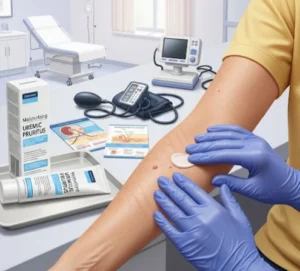
Shave biopsy in Korea is a dermatological diagnostic procedure in which a thin layer of skin tissue is shaved off for examination under a microscope.
It is most often used to evaluate suspicious moles, growths, rashes, or non-melanoma skin cancers (basal cell carcinoma and squamous cell carcinoma). Unlike excisional biopsies, which remove the entire lesion, a shave biopsy collects only the top layers of skin (epidermis and part of the dermis).
→ The procedure is quick, minimally invasive, and leaves little to no scarring when performed properly.
• Conducted in dermatology clinics, university hospitals, and specialized skin centers across Korea.
• Local anesthesia is used for comfort, and the sample is immediately sent to pathology labs for diagnosis.
Why it’s done
Patients in Korea undergo a shave biopsy for:
→ Skin cancer screening → To test suspicious lesions or non-healing patches.
→ Mole evaluation → For irregular or changing moles.
→ Diagnosis of rashes or growths → To identify inflammatory or infectious skin conditions.
→ Minimally invasive testing → When deep excision is unnecessary.
→ Quick cosmetic recovery → Preferred when aesthetics matter, since it leaves minimal marks.
Alternatives
Depending on the type and depth of lesion, alternatives include:
• Punch biopsy → Removes a small circular section of skin including deeper layers.
• Excisional biopsy → Removes the entire lesion, often used for suspected melanomas.
• Incisional biopsy → Removes part of a larger lesion for testing.
• Fine needle aspiration → Used for deeper nodules, not for surface skin.
→ Shave biopsy is chosen when a superficial sample is sufficient for diagnosis.
Preparation
Before undergoing shave biopsy in Korea, preparation steps include:
- Dermatology consultation → To decide if shave biopsy is the best diagnostic method.
- Medical history review → Including allergies, bleeding disorders, and medications.
- Anesthesia planning → Local anesthetic injection or cream applied to the site.
- Patient education → Korean dermatologists explain risks, expected scar, and aftercare in detail.
→ Patients are advised to avoid aspirin or blood thinners unless medically required.
How it’s done
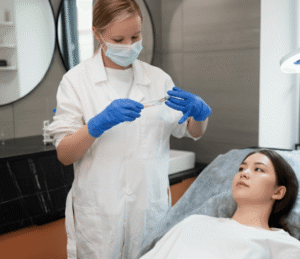
Shave biopsy in Korea is performed in a sterile clinical setting:
- Anesthesia → Local injection or numbing cream is applied.
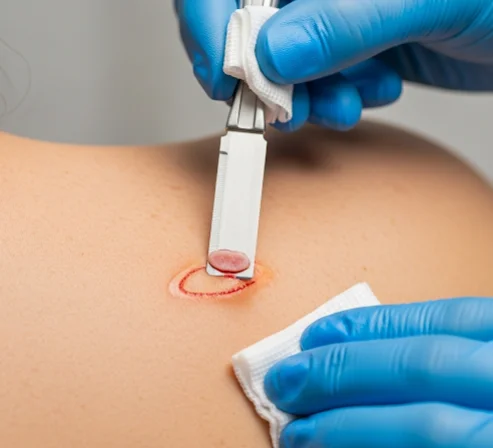
- Shaving the lesion → A small blade or scalpel shaves off the top portion of the lesion.
- Hemostasis → Bleeding is controlled with aluminum chloride, electrocautery, or pressure.
- Sample collection → The shaved tissue is placed in formalin and sent to pathology.
- Wound dressing → The site is covered with an ointment and bandage.
→ The procedure usually takes 10–20 minutes.
→ Stitches are not required, unlike excisional biopsies.
Recovery
Recovery from a shave biopsy in Korea is quick and simple:
• Healing time → Small wounds typically heal within 1–2 weeks.
• Scarring → Minimal, often leaving only a faint mark or flat scar.
• Aftercare → Keep the site clean, apply ointment, and change dressings daily.
• Sun protection → Crucial to prevent pigmentation at the biopsy site.
→ Most patients return to normal activities immediately.
Complication
Although rare, possible complications include:
- Infection → Prevented with sterile care and ointments.
- Bleeding → Usually minor and controlled during the procedure.
- Scarring or hypopigmentation → Small cosmetic changes at the biopsy site.
- Incomplete diagnosis → If the lesion requires deeper tissue, an additional biopsy may be needed.
→ Korean dermatologists minimize these risks with precise technique and advanced aftercare.
Treatment option in Korea
Korea offers safe and advanced shave biopsy procedures:
→ Dermatology clinics and university hospitals → Equipped with modern pathology labs for rapid results.
→ Skilled dermatologists → Trained in both cancer detection and cosmetic preservation.
• On-site pathology → Some centers provide same-day or next-day biopsy results.
• Scar care integration → Aftercare may include silicone gels, laser scar revision, or whitening creams.
• Medical tourism → International patients benefit from Korea’s efficient, affordable, and cosmetically sensitive biopsy care.
→ With its high diagnostic accuracy, minimally invasive technique, and strong cosmetic focus, shave biopsy in Korea is a safe and effective choice for evaluating suspicious skin lesions.