What it is
A retinoid titration plan is a structured approach to introducing and adjusting retinoids (vitamin A derivatives such as retinol, retinaldehyde, or prescription tretinoin) into a skincare routine.
Retinoids are powerful ingredients that stimulate cell turnover, collagen production, and pigmentation control, but they can also cause redness, peeling, and irritation if started too aggressively.
In Korea, dermatologists recommend a gentle, step-by-step titration system — gradually increasing frequency and concentration — so that the skin can adapt safely while maximizing anti-aging and brightening results.
Why it’s done
- Anti-aging → reduces wrinkles, fine lines, and sagging
- Pigmentation control → improves melasma, freckles, acne scars
- Acne treatment → unclogs pores, regulates oil production
- Texture refinement → smoother, brighter skin tone
- Preventive care → many Koreans in their 20s–30s use retinoids early to delay aging
A titration plan ensures steady improvement without major irritation, especially important for sensitive Asian skin prone to post-inflammatory hyperpigmentation (PIH).
Alternatives
- Other anti-aging agents → peptides, growth factors, bakuchiol (plant-based retinol alternative)
- Exfoliating acids → glycolic acid, lactic acid, mandelic acid (milder resurfacing)
- Hydrating actives → hyaluronic acid, panthenol, ceramides for barrier support
- Laser or energy devices → pico laser, RF microneedling, HIFU for collagen stimulation
In Korea, retinoids are often combined with moisturizers, ceramides, and calming ampoules to reduce irritation.
Preparation
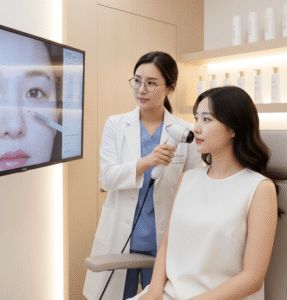
- Skin analysis → dermatologists assess barrier health, pigmentation, and acne activity
- Barrier repair first → start with ceramide creams and panthenol for 2–3 weeks before introducing retinoids
- Lifestyle adjustments → consistent SPF use and avoidance of harsh exfoliants
- Patch testing → especially important for sensitive or eczema-prone skin
How it’s Done
Step 1: Choosing the right retinoid
- Beginners → low-dose retinol (0.1–0.3%) or retinaldehyde (gentler, faster results)
- Intermediate → higher-strength retinol (0.5–1%) or retinaldehyde (0.05–0.1%)
- Advanced → prescription tretinoin (0.025–0.05%) or adapalene (popular for acne)
Step 2: Frequency titration
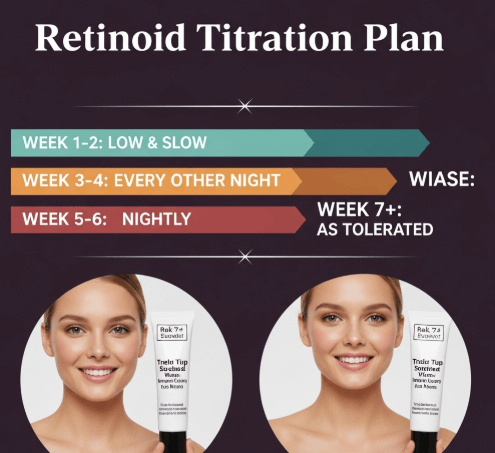
- Weeks 1–2 → Apply 1–2 times per week
- Weeks 3–4 → Increase to every 2–3 nights if tolerated
- Weeks 5–8 → Move to every other night
- 3 months+ → Daily use if skin adjusts well
Step 3: Application method (Korean “sandwich technique”)
- Cleanse skin
- Apply hydrating toner/essence
- Light moisturizer layer
- Retinoid (pea-sized amount for entire face)
- Barrier cream/occlusive layer on top
Step 4: Combination strategy
- Evenings: Retinoid + barrier cream
- Mornings: Vitamin C serum + sunscreen for synergistic anti-aging/brightening
Recovery
- 2–4 weeks → mild dryness, redness, and peeling (retinization phase)
- 6–8 weeks → skin starts tolerating retinoids better, texture improves
- 3–6 months → visible reduction in fine lines, pigmentation, and acne
- 12 months+ → long-term collagen stimulation and lasting anti-aging effects
Korean clinics support recovery with:
✔️ Barrier creams rich in ceramides
✔️ Centella asiatica and panthenol ampoules
✔️ LED light therapy to calm irritation
Complications
- Irritation, peeling, and dryness if started too aggressively
- Photosensitivity (requires strict SPF use)
- Post-inflammatory hyperpigmentation (PIH) in sensitive skin
- Purging → temporary acne flare-up as pores unclog
Korean dermatologists minimize these risks by starting slow, layering with moisturizers, and tailoring dosage to individual tolerance.
Treatment Options in Korea
Popular retinoid products
- Over-the-counter: Retinol and retinal serums from brands like Innisfree, Dr. Different, IOPE
- Dermatology-grade: Prescription tretinoin, adapalene, or tazarotene from clinics
- Hybrid formulas: Retinol blended with ceramides, peptides, and hyaluronic acid for tolerability
Signature Korean retinoid titration protocols
- Beginners → Retinal 0.05% twice a week + ceramide cream
- Intermediate → Retinol 0.5% every other night + peptide ampoule
- Advanced → Tretinoin 0.025% nightly with barrier repair layering
Integration with other treatments
- Pigmentation: Retinoid + tranexamic acid iontophoresis + pico laser
- Anti-aging: Retinoid + RF microneedling + collagen drink program
- Acne: Retinoid + zinc infusion support + light therapy
Preventive beauty trend
- Koreans in their mid-20s often start retinal-based routines to delay wrinkle formation.
- Retinoids are treated as long-term lifestyle skincare, not quick fixes.
Medical tourism appeal
- Korean clinics often create personalized retinoid starter kits for international patients, combining retinoid creams, soothing ampoules, and ceramide moisturizers.
Key Point
A retinoid titration plan in Korea is a stepwise, barrier-conscious routine that starts with gentle formulas and gradually builds intensity. By combining retinoids with ceramide moisturizers, soothing actives, and daily SPF, Korean dermatologists help patients achieve long-term anti-aging, brightening, and acne-fighting benefits with minimal irritation.