➤ What it is
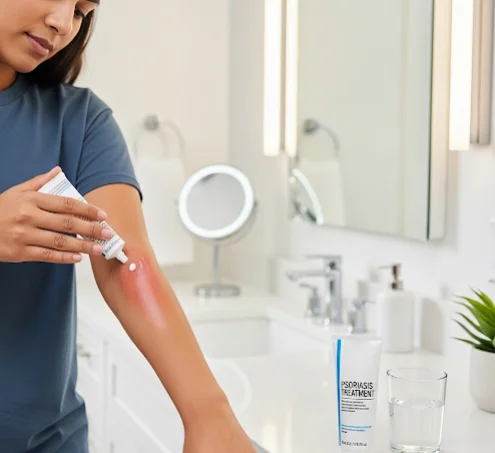
Psoriasis is a chronic autoimmune skin disorder characterized by rapid skin cell turnover, leading to the accumulation of thickened, scaly plaques. It is not contagious, but it is long-lasting and may fluctuate in severity over time.
There are several subtypes:
- Plaque Psoriasis (Psoriasis Vulgaris) → most common, with raised, red patches covered in silvery scales.
- Guttate Psoriasis → small, drop-shaped lesions often triggered by infections.
- Inverse Psoriasis → smooth, shiny patches in skin folds.
- Pustular Psoriasis → white pustules surrounded by inflamed skin.
- Erythrodermic Psoriasis → rare, severe, widespread inflammation requiring urgent care.
Psoriasis is linked to genetics, immune system dysfunction, stress, infections, and environmental triggers. It is also associated with systemic conditions like psoriatic arthritis, metabolic syndrome, and cardiovascular disease.
In Korea, psoriasis management is comprehensive, integrating medical dermatology, advanced biologics, phototherapy, skincare routines, and holistic support. Clinics emphasize not only controlling symptoms but also improving quality of life and skin aesthetics.
➤ Why it’s done
Psoriasis management is crucial for:
- Symptom Relief → Reduces itching, pain, and scaling.
- Preventing Progression → Minimizes risk of severe flare-ups or psoriatic arthritis.
- Improving Skin Appearance → Smooths plaques and restores tone.
- Enhancing Quality of Life → Reduces emotional distress, depression, and social stigma.
- Addressing Comorbidities → Early management helps reduce risks of heart disease, diabetes, and joint inflammation.
In Korea, dermatologists focus on both medical control and aesthetic recovery, tailoring treatment to the patient’s severity, triggers, and lifestyle.
➤ Alternatives
Psoriasis has multiple treatment options depending on disease severity and response:
Topical Therapies (Mild to Moderate Cases)
- Corticosteroids → reduce inflammation and scaling.
- Vitamin D analogues (calcipotriol) → slow skin cell growth.
- Coal tar, salicylic acid → used for thick plaques.
- Moisturizers and barrier creams → crucial in daily care.
Phototherapy
- Narrowband UVB therapy is commonly used in Korea for moderate psoriasis.
- Helps slow skin cell turnover and reduce plaques.
Systemic Treatments (Moderate to Severe Cases)
- Methotrexate, cyclosporine, acitretin → immunosuppressive medications.
- Require monitoring due to side effects.
Biologic Therapies (Severe/Refractory Psoriasis)
- Adalimumab, secukinumab, ixekizumab, ustekinumab, risankizumab.
- Target specific immune pathways (TNF-α, IL-17, IL-23).
- Widely available in Korea and integrated into dermatology care.
Lifestyle and Complementary Approaches
- Stress reduction (meditation, yoga, Korean herbal medicine wellness programs).
- Healthy diet and weight management.
- Smoking and alcohol avoidance.
Korean Dermatology Alternatives
- LED light therapy to reduce inflammation and promote healing.
- Cosmetic skincare programs → hydration facials, calming masks, and pigmentation care.
- Barrier repair regimens using Korean cosmeceuticals with ceramides and hyaluronic acid.
➤ Preparation
Before starting psoriasis therapy, preparation is important:
- Dermatological Evaluation
- Assessment of plaque size, thickness, and location.
- PASI (Psoriasis Area and Severity Index) scoring for severity.
- Screening for psoriatic arthritis and comorbidities.
- Laboratory Testing
- Blood tests before systemic or biologic therapy (liver, kidney, TB screening).
- Skin Conditioning
- Regular moisturizing before treatment improves outcomes.
- Avoiding irritants and harsh skincare.
- Korean Clinic Preparation
- Clinics often provide pre-treatment calming facials and barrier-strengthening masks to reduce baseline irritation before starting aggressive therapy.
➤ How it’s Done
Psoriasis Management in Korea is a layered process combining therapies:
1. Topical Care
- Corticosteroids and vitamin D analogues applied to plaques.
- Moisturizers used several times daily.
2. Phototherapy
- Narrowband UVB delivered 2–3 times weekly.
- Korean clinics use advanced phototherapy devices that minimize side effects and target plaques precisely.
3. Systemic Medications
- Methotrexate or cyclosporine for resistant moderate cases.
- Monitored with blood work.
4. Biologic Therapy (Severe Psoriasis)
- Injectables like secukinumab or risankizumab given regularly.
- Korean hospitals have dedicated biologic clinics for psoriasis patients.
5. Korean Dermatology Additions
- LED red light therapy → reduces inflammation.
- Hydration and barrier facials → soothe irritated skin.
- Pigmentation correction facials after flare resolution.
6. Lifestyle Integration
- Education on diet, stress management, and skincare.
- Korean clinics often provide holistic wellness counseling including herbal teas, stress relief therapies, and spa-based support.
➤ Recovery
Recovery timelines vary by treatment type:
- Topical therapy → plaques improve within 2–4 weeks.
- Phototherapy → visible clearance after 6–12 sessions.
- Systemic medications → improvement in 1–2 months.
- Biologics → rapid improvement, sometimes within 2–4 weeks.
Aftercare Instructions:
- Continue moisturizers and sunscreen.
- Avoid triggers like stress, alcohol, and smoking.
- Attend regular follow-ups to adjust therapy.
Korean Recovery Practices:
- Post-clearance cosmetic facials (hydration, whitening) to restore skin tone.
- LED therapy to prevent rebound inflammation.
- Ongoing use of K-beauty cosmeceuticals designed for sensitive and inflamed skin.
➤ Complications
If psoriasis is not well managed, it may lead to:
- Psoriatic arthritis → joint pain and stiffness.
- Metabolic complications → obesity, diabetes, cardiovascular disease.
- Skin complications → scarring, pigmentation, lichenification.
- Psychological distress → depression, social withdrawal.
Korean dermatologists minimize risks with early systemic treatment, advanced biologics, and cosmetic aftercare.
➤ Treatment Options in Korea
Korea’s dermatology system is highly advanced in managing psoriasis:
Why Korea excels:
- State-of-the-art biologics and phototherapy widely available.
- Integration of medical and aesthetic care → medical therapy combined with cosmetic skincare.
- Holistic care → lifestyle counseling, diet, stress management included.
- Strong follow-up culture → patients monitored closely to prevent relapses.
Unique Korean Practices:
- Personalized skincare regimens using dermatologist-approved K-beauty brands.
- Barrier-repair programs as part of psoriasis care.
- Laser and LED therapies used alongside biologics for cosmetic outcomes.
- Medical tourism programs designed for international psoriasis patients seeking both treatment and aesthetic support.
✨ Final Thoughts
Psoriasis Management in Korea combines the best of modern immunotherapy, phototherapy, and supportive skincare science. With biologics, systemic drugs, and advanced light treatments, medical symptoms are controlled, while Korean cosmetic dermatology ensures scar reduction, pigmentation care, and long-term skin health.
This dual focus on health and aesthetics makes Korea a global leader in psoriasis management. Patients benefit not only from improved quality of life but also from the confidence of clear, healthy-looking skin.