What it is
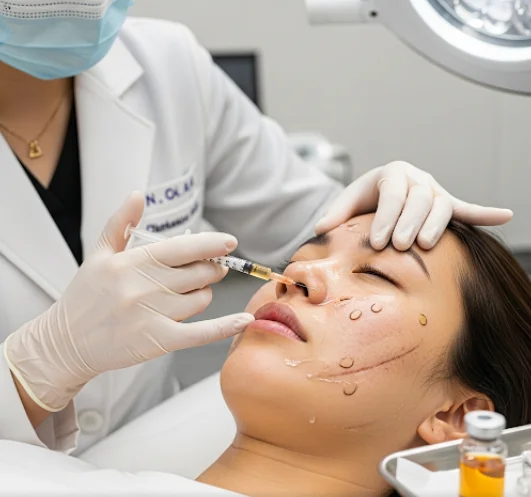
PRP (Platelet-Rich Plasma) treatment for scars in Korea is a regenerative therapy that uses the patient’s own blood plasma enriched with platelets to accelerate healing and stimulate tissue repair. Platelets are rich in growth factors, which play a crucial role in collagen production, skin regeneration, and scar remodeling.
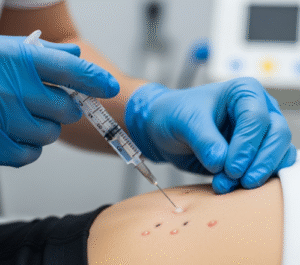
The procedure involves drawing a small amount of the patient’s blood, processing it in a centrifuge to isolate platelet-rich plasma, and then injecting or applying it to scarred areas. PRP can be administered alone or combined with treatments such as microneedling, fractional lasers, or subcision for enhanced results.
In Korea, PRP therapy is often branded as part of advanced “skin booster” or “vampire facial” programs and is highly popular for acne scar repair and overall skin rejuvenation.
Types of scars PRP is used for in Korea include:
- → Acne scars (rolling, boxcar, and ice-pick scars in combination therapy)
- → Surgical scars
- → Traumatic scars
- → Stretch marks
Why it’s Done
PRP therapy is chosen because it uses the body’s own healing power to repair damaged skin, making it both natural and safe.
➤ Medical Reasons
- • To accelerate scar tissue remodeling
- • To promote angiogenesis (new blood vessel formation) and improve scar color
- • To aid healing after aggressive scar procedures (laser, subcision, microneedling)
➤ Cosmetic Reasons
- • Improves scar texture and depth
- • Brightens skin tone and reduces discoloration around scars
- • Enhances skin elasticity and smoothness
- • Restores a more uniform skin surface
➤ Psychological Benefits
- • Boosts confidence and self-esteem by reducing visible scars
- • Offers a natural treatment without synthetic fillers or foreign substances
- • Appeals to patients seeking long-term skin health improvement
👉 In Korea, PRP is often recommended for patients who prefer biological, natural approaches rather than purely mechanical or synthetic treatments.
Alternatives
PRP is effective, but alternatives or complementary treatments may be used depending on the scar type.
➤ Laser & Energy-Based Alternatives
- • Fractional CO₂ laser → gold standard for deep acne scars
- • Erbium:YAG resurfacing → gentler resurfacing for mild scars
- • Fraxel 1550 → non-ablative option for pigmentation and texture
➤ Microneedling & RF Alternatives
- • Dermapen microneedling → stimulates collagen without RF energy
- • Microneedling RF (Secret RF, Potenza, Morpheus8, Sylfirm X) → adds radiofrequency for deeper tightening
➤ Surgical & Chemical Alternatives
- • Subcision → releases tethered rolling scars
- • TCA CROSS → effective for deep ice-pick scars
- • Punch excision/elevation → best for resistant boxcar scars
➤ Topical & Injectable Alternatives
- • Dermal fillers → temporary improvement for depressed scars
- • Skin boosters (hyaluronic acid, Rejuran Healer) → hydration and scar remodeling
- • Topical retinoids and vitamin C → gradual collagen stimulation
⚠️ PRP is rarely used as a stand-alone treatment for deep scars—in Korea, it is usually combined with lasers, microneedling, or subcision.
Preparation
Preparation ensures PRP therapy is both safe and effective.
➤ General Preparation
- • Consultation with a dermatologist to confirm scar type and goals
- • Stop blood-thinning medications (aspirin, NSAIDs, alcohol) 3–5 days before
- • Stay well-hydrated to ensure smooth blood draw and processing
- • Avoid smoking and excessive alcohol which impair healing
- • Ensure skin is free from active acne or infections
➤ Specific Preparation in Korean Clinics
- • Blood test screening may be done for safety
- • Topical numbing cream applied before injections or microneedling
- • Some clinics recommend antioxidant supplements to enhance results
How it’s Done
PRP therapy is usually done in a clinic setting and takes 30–60 minutes.
Step-by-step process:
- → Blood draw: A small sample (10–30 ml) of the patient’s blood is collected.
- → Centrifugation: Blood is spun in a centrifuge to separate platelet-rich plasma.
- → PRP extraction: The golden-yellow plasma rich in growth factors is isolated.
- → Application methods:
- Direct injections into scar tissue
- Microneedling with PRP (“vampire facial”) to infuse plasma into microchannels
- Combination with laser resurfacing to enhance healing
- → Post-care: Cooling masks, serums, or healing boosters may be applied.
Combination therapies in Korea:
- • PRP + Microneedling (Dermapen) → accelerates collagen stimulation
- • PRP + RF Microneedling (Secret RF, Potenza) → stronger results for acne scars
- • PRP + Subcision → supports healing after scar band release
- • PRP + CO₂ or Fraxel laser → reduces downtime and enhances recovery
Recovery
PRP is considered low-downtime compared to aggressive scar treatments.
➤ Immediate Recovery (1–3 Days)
- • Mild redness, swelling, or sensitivity at injection/microneedling sites
- • Small pinpoint marks if combined with microneedling
➤ Short-Term Recovery (1–2 Weeks)
- • Redness fades within 24–72 hours
- • Skin may feel tighter or slightly dry
- • Makeup usually allowed after 24 hours
➤ Long-Term Care
- • Apply sunscreen (SPF 30–50) daily
- • Avoid harsh skincare for 3–5 days
- • Use hydrating serums and gentle moisturizers
- • Results appear gradually over 2–6 months as collagen builds
👉 In Korea, many patients resume daily activities immediately or the next day, making PRP very convenient.
Complications
PRP is generally very safe since it uses the patient’s own blood, but some side effects may occur.
➤ Common Side Effects
- • Mild redness, swelling, or tenderness
- • Temporary bruising at injection sites
- • Slight dryness or peeling
➤ Moderate Risks
- • Post-inflammatory hyperpigmentation (rare, especially with Korean aftercare)
- • Infection if hygiene is not maintained
- • Temporary flare-up of acne
➤ Rare Complications
- • Allergic reactions are virtually nonexistent since PRP is autologous
- • Nodules if plasma is injected too superficially (rare)
- • Delayed healing in patients with medical conditions affecting blood quality
👉 Korean dermatologists minimize risks with sterile techniques, precise injections, and personalized aftercare.
Treatment Options in Korea
Korea is a global leader in PRP-based scar treatments, often incorporating PRP into multi-step programs.
➤ Popular PRP Programs in Korea
- • PRP + Microneedling (Vampire Facial) → most popular for acne scars and rejuvenation
- • PRP + RF Microneedling (Secret RF, Potenza, Sylfirm X) → combines deep collagen remodeling with growth factors
- • PRP + CO₂ Laser → reduces downtime and accelerates healing after ablative treatments
- • PRP + Rejuran Healer → double regenerative effect for scars and elasticity
➤ Why Patients Choose Korea
- → Advanced PRP processing systems ensuring high concentration of growth factors
- → Combination therapy culture: PRP is rarely done alone, maximizing results
- → Highly skilled dermatologists specializing in scar management
- → Affordable packages compared to Western countries, with world-class outcomes
- → Medical tourism infrastructure: English-speaking staff, aftercare products, and customized recovery plans