Poikiloderma of Civatte Treatment in Korea addresses a chronic skin condition characterized by reddish-brown discoloration, broken capillaries, and thinning of the skin, usually on the sides of the neck and sometimes the chest. This condition is strongly linked to chronic sun exposure, aging, and hormonal influences, and while it is harmless, it often causes cosmetic concerns.
In Korea, where dermatology blends advanced laser technology with holistic skincare, treatments for Poikiloderma of Civatte are tailored to target vascular changes, pigmentation, and skin texture simultaneously. Korean clinics use vascular lasers, IPL/BBL photofacials, Pico lasers, chemical peels, and medical-grade skincare, making them a global leader in managing this condition safely and effectively.
What It Is
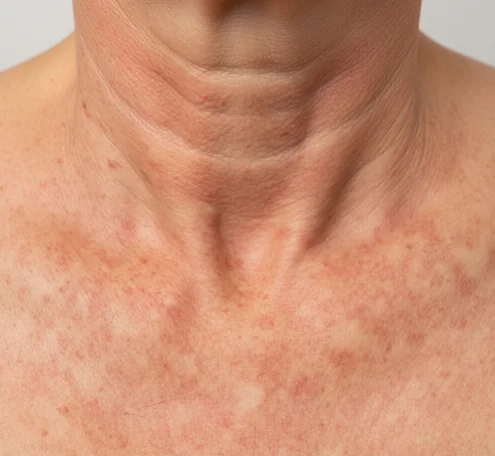
Poikiloderma of Civatte is a chronic photodamage condition affecting the skin, mainly seen on the sides of the neck but sparing the shaded area under the chin.
Key features:
- Redness and telangiectasia (visible broken vessels).
- Brownish pigmentation due to sun exposure.
- Skin thinning and atrophy.
- More common in women over 40, especially with fair or sun-sensitive skin.
Because it combines vascular, pigmentary, and textural changes, treatment requires a multimodal approach—a specialty in Korean dermatology.
Why It’s Done
Patients seek treatment for Poikiloderma of Civatte in Korea for:
- Cosmetic improvement → Reduce mottled discoloration and achieve clearer skin.
- Anti-aging → Sun-damaged skin appears older; treatment restores youthfulness.
- Confidence boost → Redness and pigmentation on the neck can be socially bothersome.
- Preventive care → Early treatment prevents worsening with age and sun exposure.
- Cultural ideals → Korean aesthetics emphasize even-toned, luminous skin extending beyond the face.
Alternatives
If vascular and laser treatments are not chosen, Korean clinics also recommend alternatives:
- IPL/BBL photofacials → Improve redness and pigmentation.
- Q-switched or Pico lasers → Target brown pigmentation specifically.
- Fractional lasers (CO₂, Er:YAG, Fraxel) → Improve skin texture and thinning.
- Chemical peels → Superficial peels for pigmentation and texture improvement.
- Topical skincare → Retinoids, Vitamin C, niacinamide, and sunscreen.
- Camouflage makeup → Temporary concealment for those not ready for procedures.
Preparation
Preparation for Poikiloderma of Civatte treatment in Korea includes:
- Consultation → Dermatologist evaluates vascular, pigmentary, and atrophic changes.
- Pre-care → Avoid tanning, exfoliants, and retinoids 1–2 weeks before.
- Medical history → Patients disclose sensitivity, rosacea, or previous treatments.
- Skin conditioning → Sunscreen and barrier repair creams recommended before starting treatment.
How It’s Done
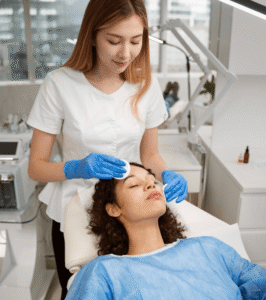
A treatment session in Korea is tailored to each patient’s presentation and typically lasts 30–60 minutes:
- Cleansing – Skin is thoroughly cleansed.
- Numbing cream (if laser used) – Applied for comfort.
- Treatment application –
- Vascular lasers (Vbeam PDL, Nd:YAG) → Target redness and broken vessels.
- IPL/BBL photofacials → Treat both redness and pigmentation.
- Pico lasers → Break down stubborn pigmentation.
- Fractional resurfacing → Address thinning and texture irregularities.
- Post-care – Cooling masks, antioxidant serums, and hydrating ampoules.
- Final step – Sunscreen applied before leaving.
Most patients require 3–6 sessions spaced 4–6 weeks apart for optimal results.
Recovery
Recovery is generally mild:
- Immediately after → Temporary redness, warmth, or mild swelling.
- 2–5 days later → Pigmented spots may darken before flaking off.
- 1–2 weeks later → Skin tone looks more even, redness reduced.
- Long-term → Progressive improvements with repeated treatments.
Korean clinics enhance healing with hydration facials, LED therapy, and calming masks. Daily SPF 50+ sunscreen is essential to prevent recurrence.
Complications
Treatment for Poikiloderma of Civatte is safe in Korea, but possible side effects include:
- Temporary redness, swelling, or dryness.
- Mild bruising or purpura after vascular laser.
- Hyperpigmentation or hypopigmentation if sun care is neglected.
- Rare scarring if aggressive protocols are used.
Korean dermatologists minimize risks by using low-fluence, multi-session protocols instead of aggressive single treatments.
Treatment Options
Korean clinics offer specialized programs for Poikiloderma of Civatte:
- Vascular laser packages → Vbeam PDL or Nd:YAG for redness.
- IPL/BBL programs → Combined care for redness and pigmentation.
- Pico + fractional laser combos → For pigmentation plus skin texture.
- Comprehensive anti-aging programs → Pigmentation, redness, and collagen stimulation.
- Maintenance programs → Long-term skincare with antioxidants and sunscreen.
Clinics in Seoul, especially in Gangnam, provide multi-session deals that make treatments both effective and accessible for locals and international patients.
Conclusion
Poikiloderma of Civatte Treatment in Korea offers a comprehensive and advanced solution for sun-induced redness, pigmentation, and skin thinning on the neck and chest. With vascular lasers, IPL/BBL, Pico lasers, and fractional resurfacing, Korean dermatologists deliver safe, natural-looking, and long-lasting improvements.
Backed by the K-beauty philosophy of prevention, holistic care, and precision, Korea has become a top global destination for managing complex conditions like Poikiloderma of Civatte. For patients seeking to restore clarity, smoothness, and youthfulness to sun-damaged skin, Korea provides one of the best treatment systems worldwide.