What it is
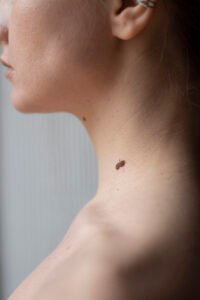
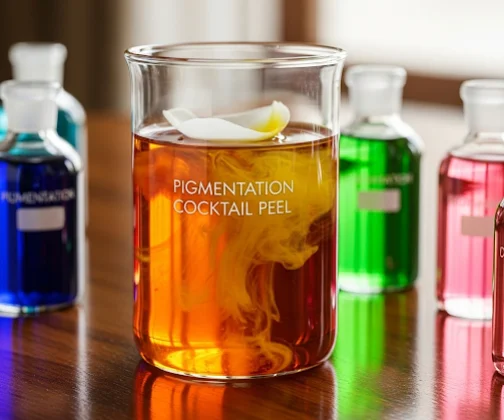
→ Pigmentation cocktail peel is a dermatological treatment that combines a customized blend of chemical peeling agents, antioxidants, and brightening ingredients to reduce hyperpigmentation, melasma, sunspots, acne scars, and uneven skin tone.
→ Unlike standard chemical peels that use a single acid, a pigmentation cocktail peel contains a synergistic mix of acids and brightening compounds — such as glycolic acid, lactic acid, kojic acid, arbutin, vitamin C, tranexamic acid, and retinoids.
→ The goal is to gently exfoliate the skin, suppress melanin production, and stimulate skin renewal without excessive irritation.
→ In Korea, pigmentation cocktail peels are widely offered in dermatology clinics and medical spas, often tailored to Asian skin types prone to post-inflammatory hyperpigmentation (PIH).
Why it’s done
→ Pigmentation cocktail peels are performed to:
- Lighten dark spots, melasma, and freckles.
- Reduce acne scars and post-inflammatory pigmentation.
- Improve skin texture and clarity.
- Even out skin tone for a brighter, more youthful appearance.
- Boost collagen production for smoother, firmer skin.
→ They are particularly popular among patients seeking a non-invasive alternative to lasers for pigmentation.
Alternatives
→ Alternatives to pigmentation cocktail peels include:
- Standard chemical peels → single-acid options like glycolic, salicylic, or TCA peels.
- Laser treatments → Q-switched Nd:YAG, fractional lasers, or intense pulsed light (IPL).
- Topical creams → hydroquinone, retinoids, vitamin C serums.
- Microneedling with serums → enhances penetration of brightening ingredients.
- Cryotherapy → for localized dark spots or freckles.
→ While effective, these may carry higher risks of PIH, especially in darker skin types, making cocktail peels a gentler choice.
Preparation
→ Before a pigmentation cocktail peel, patients should:
- Avoid sun exposure and tanning for at least 2 weeks.
- Discontinue harsh skincare (retinoids, AHAs, BHAs, exfoliants) 5–7 days prior.
- Use sunscreen daily to stabilize pigmentation before the procedure.
- Stop waxing or hair removal in the area for at least a week.
- Discuss medical history → particularly for keloids, eczema, or photosensitivity.
→ Korean clinics often recommend a pre-conditioning regimen with mild brightening creams before the peel for optimal results.
How it’s Done
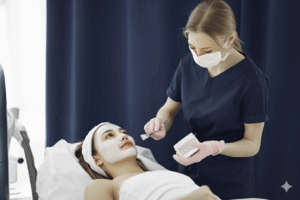
→ A pigmentation cocktail peel session follows these steps:
- Cleansing → skin is thoroughly cleaned of oils and makeup.
- Degreasing → mild prep solution applied to enhance penetration.
- Application of cocktail peel → customized blend of acids and brightening agents is evenly applied.
- Controlled exposure time → peel left on skin for several minutes, depending on skin sensitivity.
- Neutralization → peel is neutralized with a solution or removed with water.
- Soothing application → calming mask or gel applied to reduce redness.
- Sun protection → broad-spectrum sunscreen applied before leaving clinic.
→ Sessions usually last 30–45 minutes, and a series of 3–6 treatments spaced 2–4 weeks apart is recommended.
Recovery
→ Recovery from a pigmentation cocktail peel is usually mild:
- Day 1–2 → mild redness and tightness.
- Day 3–5 → light peeling or flaking may occur.
- Day 7 onward → skin appears brighter, smoother, and clearer.
→ Patients should:
- Use gentle cleansers and fragrance-free moisturizers.
- Apply soothing gels (aloe vera, panthenol, cica-based creams).
- Avoid picking or peeling skin during flaking.
- Strictly use sunscreen daily to prevent rebound pigmentation.
→ Most patients return to normal activities immediately, though peeling may last up to a week.
Complications
→ While generally safe, possible side effects include:
- Temporary redness, dryness, or stinging.
- Hyperpigmentation or hypopigmentation if sun exposure occurs post-peel.
- Excessive peeling or irritation in sensitive skin.
- Breakouts in acne-prone patients due to purging.
- Allergic reaction to certain ingredients.
→ These risks are minimized when performed by a trained dermatologist using Korean protocols.
Treatment options in Korea
→ Korea is a leader in pigmentation management, making cocktail peels both safe and effective:
- Customized blends → dermatologists adjust acid strengths and add melanin inhibitors like tranexamic acid or kojic acid.
- Gentle protocols → designed for Asian skin, minimizing risk of PIH.
- Combination treatments → cocktail peels are often paired with laser toning, LED therapy, or whitening serums for enhanced results.
- Medical-grade skincare integration → patients receive aftercare kits with brightening and soothing creams.
- Focus on even-toned beauty → pigmentation-free skin is a major aesthetic standard in Korea, so clinics specialize in advanced peel formulas.
- Medical tourism services → international patients benefit from detailed consultations, English-speaking staff, and take-home aftercare regimens.
→ With advanced formulations, dermatology expertise, and holistic skincare integration, Korea is one of the best places for pigmentation cocktail peel treatments.