A modern medical approach to managing childhood vascular tumors
What it is
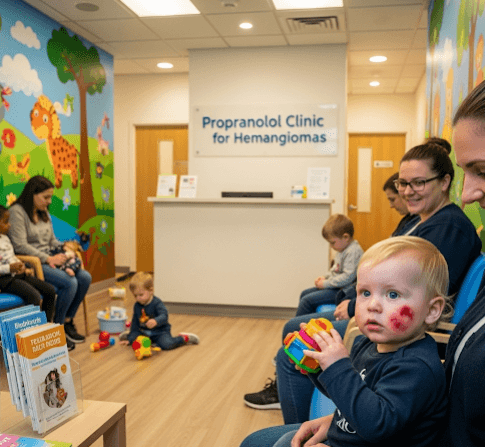
A pediatric hemangioma is the most common type of benign vascular tumor in infants and young children. Often referred to as a “strawberry birthmark,” it appears as a red, raised lesion on the skin. These usually develop within the first few weeks of life, grow rapidly during infancy, and then slowly regress (involute) over several years.
While many hemangiomas shrink without intervention, some become problematic — growing too large, ulcerating, or interfering with vital functions such as vision, breathing, or feeding.
The propranolol clinic is a specialized treatment setting where infants and children are given propranolol, a beta-blocker medication originally used for heart conditions. Discovered in 2008 to shrink hemangiomas effectively, propranolol has become the gold standard therapy. In Korea, propranolol treatment is offered in multidisciplinary pediatric clinics that combine dermatology, cardiology, and plastic surgery expertise.
Why it’s done
Propranolol treatment is initiated when hemangiomas cause medical or cosmetic complications.
✔ Functional obstruction – Lesions near the eyes, mouth, or airway can interfere with vision, breathing, or feeding.
✔ Ulceration or bleeding – Some hemangiomas break down, leading to painful sores or infections.
✔ Rapid or aggressive growth – Large or multiple hemangiomas may damage surrounding tissues.
✔ Aesthetic concerns – Facial or visible lesions may affect self-esteem as the child grows.
✔ Lack of natural regression – Some hemangiomas persist or worsen, requiring medical management.
By shrinking the blood vessels inside the lesion, propranolol provides a safe, effective, and non-invasive solution.
Alternatives
Although propranolol is now the preferred therapy, alternatives still exist.
→ Observation – Small, uncomplicated hemangiomas may be monitored until they naturally regress.
→ Topical beta-blockers (Timolol gel) – Used for superficial hemangiomas, especially on the face.
→ Corticosteroids – Previously the main treatment, given orally or by injection, but less favored today due to side effects.
→ Laser therapy (pulsed-dye laser) – Effective for residual redness or surface-level lesions.
→ Surgery – Reserved for hemangiomas that leave scars, deformities, or fail to respond to medication.
In Korea, propranolol is often combined with laser therapy or minor surgical corrections for comprehensive care.
Preparation
Safe initiation of propranolol requires thorough preparation.
➤ Clinical evaluation – A full medical examination is done to document hemangioma size, growth, and location.
➤ Cardiac testing – Includes echocardiogram and ECG, since propranolol affects heart rate and blood pressure.
➤ Respiratory assessment – Children with asthma or chronic lung disease are screened carefully.
➤ Baseline measurements – Blood pressure, heart rate, and glucose levels are recorded before starting therapy.
➤ Parental counseling – Parents are educated about possible side effects, follow-up schedules, and home care instructions.
➤ Hospital initiation – The first dose is typically given in a clinic or hospital, with monitoring for 2–4 hours to ensure safety.
How it’s done
Treatment is carefully supervised in propranolol clinics.
➔ Starting dose – A small dose is calculated based on the child’s weight.
➔ Gradual adjustment – The dosage is slowly increased to the effective therapeutic level.
➔ Administration – Propranolol is given two to three times daily, usually with meals to avoid hypoglycemia.
➔ Monitoring – Regular check-ups are scheduled to measure blood pressure, heart rate, and hemangioma response.
➔ Treatment duration – Most children are treated for 6–12 months, though some may need longer.
➔ Tapering off – The drug is discontinued gradually to prevent rebound growth or cardiovascular effects.
Recovery
Recovery in propranolol therapy refers to clinical improvement rather than surgical healing.
→ Visible improvements are often seen within 1–2 weeks, as the hemangioma softens and fades.
→ Over time, lesions flatten and become less noticeable.
→ Children usually tolerate propranolol well, with little interruption to daily life.
→ Once treatment is complete, many hemangiomas do not return, though follow-up is essential.
→ Some children may later undergo cosmetic procedures to address residual skin changes.
Complications
Propranolol is generally safe but requires careful monitoring.
✔ Low blood pressure (hypotension) and slow heart rate (bradycardia).
✔ Low blood sugar (hypoglycemia) if doses are taken without food.
✔ Breathing difficulties in children with asthma.
✔ Cold hands and feet due to circulation changes.
✔ Sleep disturbance or irritability.
✔ Rebound growth of hemangiomas if medication is stopped too quickly.
In Korea, complications are minimized by hospital-based initiation, careful monitoring, and regular follow-up.
Treatment options in Korea
Korea offers some of the most advanced propranolol clinics in the world.
➤ Multidisciplinary care – Pediatric dermatologists, cardiologists, and surgeons work together.
➤ Safe initiation protocols – Clinics start propranolol under hospital observation for maximum safety.
➤ Digital tracking – Korean clinics use photography, ultrasound, and 3D imaging to monitor progress precisely.
➤ Integrated cosmetic care – After hemangioma shrinkage, treatments such as pulsed-dye laser, microneedling, or scar correction are offered.
➤ Family-centered approach – Parents receive education, 24-hour support lines, and treatment guides.
➤ Medical tourism readiness – International patients benefit from bilingual staff, concierge services, and structured care programs.
➤ Research leadership – Korean hospitals publish influential studies on hemangioma management, setting global standards.
Seeking care in Korea ensures safe, effective treatment of hemangiomas with advanced medical and cosmetic support, giving children the best chance for healthy skin and confidence.