What It Is
Defining Paronychia
→ Paronychia is an infection or inflammation of the skin around the fingernails or toenails, usually affecting the nail folds.
→ It can be acute (rapid onset, usually bacterial) or chronic (lasting weeks to months, often fungal or mixed causes).
→ Symptoms include redness, swelling, pain, pus accumulation, and tenderness around the nail.
Defining Paronychia Drainage
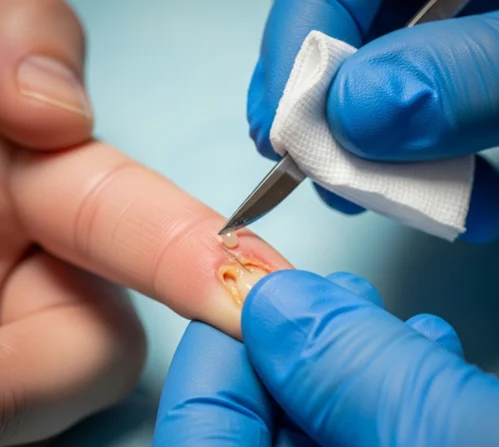
→ Paronychia drainage is a minor surgical procedure used to release pus and pressure from an infected nail fold.
→ It provides immediate relief of pain, reduces infection risk, and promotes healing.
→ In Korea, dermatologists and surgeons perform paronychia drainage in outpatient clinics under local anesthesia with a strong focus on cosmetic outcome and infection control.
Key Characteristics
- Involves small incision or lifting of nail fold
- Removes pus and infected material
- Often combined with antibiotics or antifungals afterward
- Provides rapid pain relief and restores nail fold health
Why It’s Done
Main Reasons for Drainage
➡ Immediate Pain Relief – Pus buildup causes throbbing pain; drainage reduces pressure.
➡ Prevent Spread of Infection – Untreated paronychia may spread to deeper tissues (felon, cellulitis).
➡ Restore Nail Health – Prevents long-term nail deformities.
➡ Reduce Recurrence – Chronic cases improve once infected material is cleared.
➡ Improve Functionality – Allows patients to use hands or feet normally again.
Alternatives
Non-Surgical Options
- Warm Soaks → Several times daily with saline or antiseptic solution to encourage spontaneous drainage.
- Topical Antibiotics → For very mild cases.
- Oral Antibiotics/Antifungals → If infection suspected but no abscess formed.
- Steroid Creams → Sometimes used in chronic, non-infectious paronychia.
Surgical Alternatives
→ If drainage is not enough:
- Partial Nail Avulsion → Removing part of the nail if ingrown nail is the cause.
- Total Nail Avulsion → Reserved for severe or chronic recurrent cases.
- Matrixectomy → Permanent removal of problematic nail root for chronic ingrown cases.
Preparation
Before Paronychia Drainage in Korea
➡ Medical Evaluation – Doctor confirms whether infection is bacterial, fungal, or mixed.
➡ Physical Exam – Assess swelling, pus pocket, and nail involvement.
➡ Lab Tests – Rarely, pus culture or fungal tests may be done.
➡ Patient Counseling – Explanation of the procedure, healing expectations, and aftercare.
➡ Pre-Procedural Care – Cleaning of affected area; oral antibiotics may be started if infection is severe.
How It’s Done
The Drainage Procedure in Korea
Step 1: Local Anesthesia
- Small injection around the nail fold numbs the area.
- Ensures pain-free procedure.
Step 2: Sterile Preparation
- Skin cleaned with antiseptic solution.
- Area draped to maintain sterility.
Step 3: Incision or Nail Fold Lifting
- A fine scalpel or instrument makes a tiny incision at the swollen area.
- Alternatively, nail fold is gently lifted to allow pus to escape.
Step 4: Drainage of Pus
- Collected pus is expressed, relieving pressure.
- Sometimes small cotton or gauze wick is placed for continued drainage.
Step 5: Dressing and Aftercare
- Wound covered with sterile gauze.
- Antibiotic ointment applied.
- Patient instructed on soaks and dressing changes at home.
Procedure Duration
- Entire procedure lasts 10–20 minutes.
Comfort
- Minimal discomfort due to anesthesia.
- Relief is often immediate after drainage.
Recovery
Immediate Recovery
- Pain improves within hours after procedure.
- Swelling decreases over 1–2 days.
- Patients can usually resume daily activities quickly.
Long-Term Recovery
→ With proper care:
- Healing occurs within 1–2 weeks for acute cases.
- Chronic cases may take longer but improve once infection is cleared.
- Nail usually grows back healthy unless long-term damage was present.
Complications
Risks Without Drainage
- Worsening Infection → Spread to deeper tissues, abscess formation.
- Permanent Nail Deformity → Chronic inflammation damages nail growth.
- Severe Pain → Persistent throbbing limits function.
- Systemic Infection → Rare, but possible in immunocompromised patients.
Risks With Drainage
- Minor Bleeding → Controlled during procedure.
- Recurrence → If underlying cause (ingrown nail, fungus, trauma) is not treated.
- Scarring or Nail Changes → Rare if procedure is properly done.
- Allergic Reaction → To anesthesia or dressings (very uncommon).
Treatment Options in Korea
Why Korea Excels in Paronychia Drainage
➡ Skilled Specialists – Dermatologists and podiatric surgeons experienced in nail and skin infections.
➡ Advanced Sterile Technique – Reduces risk of scarring and recurrence.
➡ Integrated Care – Drainage often combined with antibiotics, antifungals, or nail avulsion if needed.
➡ Cosmetic Precision – Korean clinics focus on preserving nail appearance.
➡ Patient Education – Strong emphasis on hygiene, nail trimming, and footwear adjustments.
Patient Experience in Korea
- Procedure is quick and outpatient-based.
- Patients receive aftercare kits (soaks, ointments, dressings).
- Follow-ups scheduled to ensure infection resolution.
- Chronic cases get long-term prevention plans to avoid recurrence.
Conclusion
Paronychia drainage in Korea is a safe, quick, and effective outpatient procedure that provides immediate pain relief and infection control.
By combining precise drainage, proper wound care, and preventive guidance, Korean dermatologists ensure both rapid healing and long-term nail health.
With a focus on cosmetic outcomes, advanced infection management, and patient education, Korea offers some of the most reliable and patient-friendly nail and skin infection treatments worldwide.
For patients suffering from painful, swollen, pus-filled nail folds, paronychia drainage provides a fast and lasting solution.