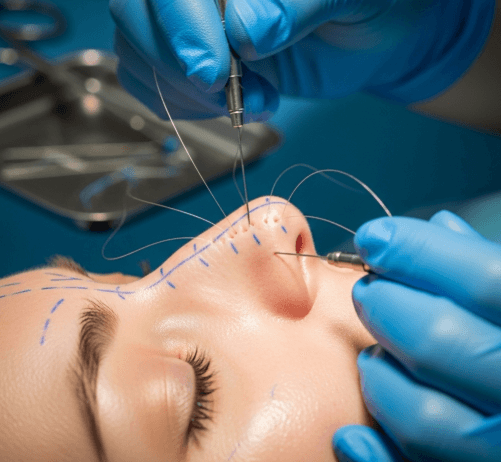
What It Is
A Nose Thread Lift is a non-surgical nose enhancement procedure that uses biodegradable absorbable threads — typically PDO (Polydioxanone), PLLA (Poly-L-Lactic Acid), or PCL (Polycaprolactone) — to reshape and lift the nose. This procedure is sometimes called a “lunchtime nose job” because it can be done in less than an hour with minimal downtime.
The threads, often designed with barbs, are inserted under the skin to:
- Lift and define the nasal bridge.
- Straighten or sharpen the nasal profile.
- Slightly lift the nasal tip for a more refined shape.
- Stimulate collagen production, which supports longer-lasting results.
In Korea, where natural, harmonious nose shapes are preferred over overly dramatic surgical rhinoplasty results, the nose thread lift is one of the most popular minimally invasive alternatives.
Why It’s Done
Patients choose nose thread lifts for both aesthetic reshaping and non-surgical correction:
➝ Bridge augmentation → Creates a higher and straighter nasal bridge.
➝ Tip lifting → Corrects drooping tips and improves definition.
➝ Profile refinement → Smooths minor humps or irregularities.
➝ Slimmer nose contour → Creates a sharper, more defined nose line.
➝ Non-surgical alternative → For those who want enhancement without rhinoplasty.
➝ Preventative beauty → Younger patients use it as a temporary solution before considering permanent surgery.
In Korean aesthetics, the ideal nose is slender, straight, and well-balanced with the rest of the face, and the thread lift offers a subtle enhancement that fits this beauty ideal.
Alternatives
While nose thread lifts are effective, alternatives may be better depending on patient goals:
- Dermal fillers (liquid rhinoplasty) → Hyaluronic acid fillers can lift the bridge or tip but don’t provide mechanical support.
- Surgical rhinoplasty → Permanent, dramatic reshaping but with significant downtime.
- Combination nose lift (threads + fillers) → Common in Korea, threads provide structure while fillers refine contour.
- PDO mono threads → Stimulate collagen for skin tightening around the nose, less structural lift.
In Korea, the hybrid method (threads + fillers) is highly popular since it combines threads for lifting with fillers for shaping.
Preparation
Preparation ensures both safety and optimal results:
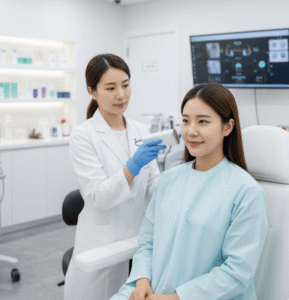
➝ Consultation → Doctors assess nasal anatomy and desired shape.
➝ Medical history review → Patients disclose allergies, prior nose surgery, and medications.
➝ Avoid blood thinners → Stop aspirin, ibuprofen, and supplements 5–7 days before (with medical advice).
➝ No alcohol or smoking → For at least 48 hours before treatment.
➝ Skin preparation → Avoid harsh skincare or treatments 3–5 days prior.
➝ Numbing → Local anesthesia is used at the insertion points.
How It’s Done
A nose thread lift session typically takes 30–60 minutes:
- Cleansing & sterilization → Nose and surrounding area are thoroughly disinfected.
- Local anesthesia → Small injections are made at entry points for comfort.
- Thread insertion →
- Fine cannulas insert threads along the nasal bridge and tip.
- Barbed threads anchor into tissue, lifting and reshaping the nose.
- Adjustment → Threads are pulled slightly to refine the angle and projection.
- Finishing → Excess thread ends are trimmed; cooling gel or packs applied.
Treatment plan:
- One session → Provides immediate improvement.
- Maintenance → PDO threads: 12–18 months; PLLA: 18–24 months; PCL: 24–36 months.
Recovery
Nose thread lifts offer minimal downtime compared to surgery:
- Immediately after → Nose looks straighter and lifted; mild swelling or redness possible.
- Day 1–3 → Bruising or tightness may occur.
- Week 1–2 → Threads settle, and nose contour looks more natural.
- Month 1–3 → Collagen production enhances lift and definition.
- Month 6–12 → Best results visible, subtle and natural.
Aftercare recommendations:
➝ Avoid pressing, rubbing, or wearing heavy glasses for 1–2 weeks.
➝ Sleep on your back with head elevated for the first week.
➝ Apply ice packs to reduce swelling in the first 24 hours.
➝ Avoid alcohol, saunas, or strenuous exercise for 1–2 weeks.
➝ Always wear SPF 50+ sunscreen to protect the treated area.
Complications
Nose thread lifts are safe but carry some risks:
➝ Bruising and swelling → Common, temporary.
➝ Thread visibility → Rare, minimized by using deeper insertion and correct technique.
➝ Asymmetry → Correctable with thread adjustment.
➝ Infection → Rare with sterile procedures; antibiotics are often prescribed.
➝ Extrusion (thread poking out) → Very rare, corrected by trimming or repositioning.
Korean dermatologists minimize risks by using FDA/KFDA-approved threads, advanced imaging for planning, and refined techniques.
Treatment Options in Korea
Korea is one of the top destinations for nose thread lifts, with advanced technology and highly experienced practitioners.
1. Types of Threads Used
- PDO threads → Affordable, last 12–18 months.
- PLLA threads → More durable, last 18–24 months.
- PCL threads → Premium, long-lasting up to 36 months.
Final Thoughts
Nose Thread Lift in Korea is one of the most effective non-surgical methods for nose reshaping, offering immediate lift, contour definition, and collagen stimulation without the downtime of surgery.
Korean clinics enhance results through careful thread mapping, advanced insertion techniques, and combination therapies (with fillers, Botox, or HIFU). For patients seeking a safe, natural, and minimally invasive alternative to rhinoplasty, the nose thread lift in Korea is an excellent option.