Moxi Laser in Korea is one of the newest and most popular non-ablative fractional laser treatments designed to improve skin tone, texture, and radiance with minimal downtime. Sometimes called a “prejuvenation laser”, it is especially favored by younger patients who want to prevent early aging while enhancing their natural glow.
In Korea, dermatology clinics have quickly adopted the Moxi laser as part of their advanced skin treatment programs. Known for combining high-tech procedures with signature K-beauty aftercare, Korea has positioned Moxi as an ideal solution for patients seeking subtle yet effective results without the risks of aggressive resurfacing lasers.
What It Is
Moxi is a non-ablative fractional 1927 nm thulium laser. Unlike ablative lasers that remove surface skin layers, Moxi gently creates controlled micro-coagulation zones in the upper layers of the skin. This triggers a natural repair process, stimulating collagen and improving skin tone over time.
Key benefits include:
- Brightening pigmentation such as sunspots and freckles.
- Evening out skin tone and texture.
- Shrinking pores and softening roughness.
- Providing gentle anti-aging by stimulating collagen.
- Safe for all skin types, including pigmentation-prone Asian skin.
In Korea, Moxi laser is often combined with hydration therapies, brightening serums, or LED light therapy to optimize results.
Why It’s Done
Moxi laser is popular in Korea for both aesthetic and preventive purposes.
- Anti-aging care → Reduces fine lines, improves elasticity, and prevents premature aging.
- Pigmentation control → Treats sun damage, freckles, and uneven skin tone.
- Texture improvement → Refines rough surfaces and minimizes pores.
- Glow enhancement → Creates the signature Korean “glass skin” look.
- Preventive treatment → Favored by patients in their 20s and 30s as a way to maintain healthy skin before major issues develop.
Because of its gentle nature, many Koreans choose Moxi as a maintenance treatment performed several times a year.
Alternatives
Korean clinics also offer other treatments that serve as alternatives or complements to Moxi:
- Clear + Brilliant → Another gentle fractional laser, often called a “mini Fraxel.”
- Pico lasers (PicoWay, PicoSure Pro) → For deeper pigmentation and scars.
- Q-switched Nd:YAG toning → A standard brightening treatment in Korea.
- Spectra or Carbon Laser Peel → For acne-prone and oily skin.
- Microneedling with ampoules (MTS) → To stimulate collagen and infuse serums.
- Chemical peels → Glycolic or lactic acid exfoliation.
- Hydrafacial or Aqua Peel → For deep cleansing and hydration.
Preparation
Preparation for Moxi laser in Korea is simple and patient-friendly.
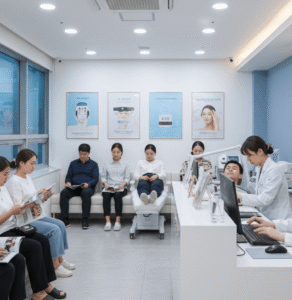
- Consultation → Dermatologists use imaging systems to evaluate pigmentation and skin condition.
- Pre-care instructions → Avoid sun exposure, tanning, and harsh exfoliants before treatment. Retinoids should be stopped a few days prior.
- Hydration → Using moisturizers and sheet masks before the session ensures the skin is well-prepped.
Because Moxi is gentle, numbing cream may not always be necessary, though many clinics provide it to enhance comfort.
How It’s Done
A Moxi laser session usually lasts 20–30 minutes:
- Cleansing – The skin is thoroughly cleansed.
- Optional numbing cream – Applied if the patient prefers.
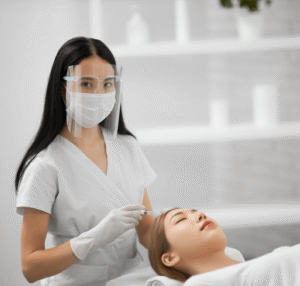
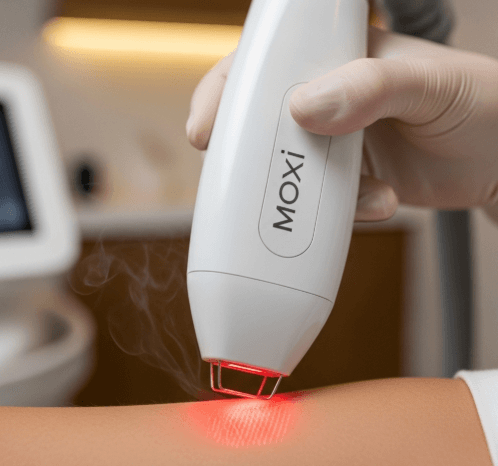
- Laser application – The Moxi handpiece delivers fractional energy across the face in multiple passes. Patients may feel a warm prickling sensation.
- Post-care – Korean clinics often follow with soothing masks, LED light, or hydration serums.
- Final step – Sunscreen and moisturizer are applied before leaving.
The treatment is quick, making it popular among professionals and busy patients.
Recovery
Moxi is known for its minimal downtime, which is one of the reasons it is so popular in Korea.
- Immediately after → Skin looks slightly red, like a mild sunburn.
- 1–2 days later → Redness fades; skin may feel dry or rough.
- 3–5 days later → Microscopic exfoliation occurs as damaged skin sheds.
- 1 week later → Skin looks brighter, smoother, and more even-toned.
Korean clinics accelerate recovery with aftercare facials, soothing ampoules, and hydration masks, ensuring patients can quickly return to daily activities.
Complications
Moxi is generally very safe, but mild side effects can occur:
- Temporary redness or dryness.
- Slight roughness or flaking during the healing phase.
- Rare risks of pigmentation changes if sun protection is ignored.
Korean dermatologists minimize risks by using customized laser settings and providing strict aftercare guidance, including daily sunscreen use.
Treatment Options
In Korea, Moxi laser is offered in various specialized programs:
- Moxi Brightening → Focused on pigmentation and radiance.
- Moxi Anti-Aging → Targeted at fine lines and collagen stimulation.
- Moxi + Aqua Peel → Deep cleansing combined with rejuvenation.
- Moxi + Vitamin C infusion → Enhances antioxidant protection.
- Moxi + Shurink (HIFU) → Combines tightening with brightening.
- Multi-session packages → Popular in Seoul clinics, especially in Gangnam, where patients often book 3–5 sessions at discounted rates.
Conclusion
Moxi Laser in Korea is a gentle yet highly effective treatment for patients who want to brighten skin tone, refine texture, and prevent aging with little to no downtime. It is ideal for younger patients seeking preventive care and older patients looking for maintenance without aggressive procedures.
With Korea’s advanced dermatology clinics, patients benefit from cutting-edge technology, personalized treatment plans, and holistic aftercare. Whether the goal is to treat pigmentation, maintain youthful skin, or simply achieve the signature Korean glow, Moxi laser has become a trusted solution in Korea’s beauty and skincare industry.