What it is
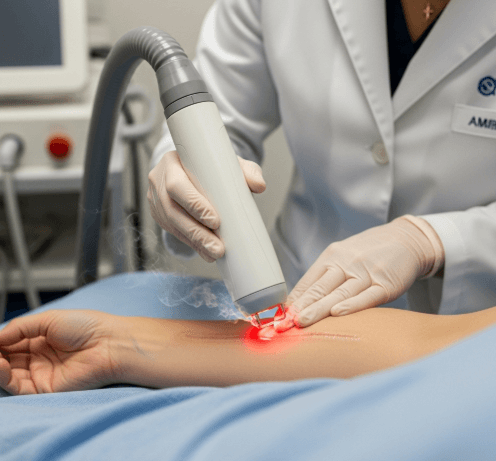
Laser scar revision is a highly advanced dermatological procedure that uses laser technology to minimize the appearance of scars, whether caused by acne, trauma, burns, or surgery. The goal is not to completely erase scars (which is impossible) but to smoothen, fade, and blend them with the surrounding skin tone and texture.
In Korea, laser scar revision is performed with cutting-edge equipment and often combined with multimodal therapies (like microneedling, fillers, or PRP therapy) to optimize results. The country is a global leader in scar treatment innovation, making it a popular destination for international patients.
➡️ Types of scars treated with lasers:
- Acne scars (boxcar, ice-pick, rolling scars)
- Hypertrophic scars (raised, thickened scars)
- Atrophic scars (sunken or depressed scars)
- Keloids (though laser is often combined with injections)
- Surgical and traumatic scars
Why it’s done
Laser scar revision is performed for medical, cosmetic, and psychological reasons.
➡️ Medical reasons
- To improve skin function by softening rigid scar tissue
- To reduce pain, itching, or discomfort from hypertrophic scars
- To prevent scar tissue from interfering with movement (in case of large scars near joints)
➡️ Cosmetic reasons
- To minimize visibility of scars
- To achieve even skin tone and texture
- To restore confidence and self-esteem
➡️ Psychological reasons
In Korean culture, clear skin is highly valued, and visible scars can impact self-image. Scar revision often provides emotional relief and improved quality of life.
Alternatives
While laser scar revision is highly effective, there are alternative or complementary treatments offered in Korea:
➡️ Microneedling (Dermaroller, RF Microneedling)
- Stimulates collagen for acne scars and atrophic scars.
➡️ Chemical Peels
- Improves skin texture and pigmentation, often combined with laser sessions.
➡️ Dermal Fillers
- Used for depressed scars to lift the skin surface.
➡️ PRP (Platelet-Rich Plasma) Therapy
- Enhances healing and collagen regeneration.
➡️ Steroid or Corticosteroid Injections
- Reduces raised hypertrophic scars or keloids.
➡️ Surgical Scar Revision
- For large or complex scars, surgery may be required before laser treatment.
⚡ In Korea, it is common for dermatologists to combine multiple therapies for the most natural-looking results.
Preparation
Proper preparation ensures safe and effective outcomes.
🔹 General preparation steps:
- Skin evaluation and consultation with a dermatologist (often using 3D skin imaging in Korean clinics).
- Avoid excessive sun exposure for at least 2 weeks before treatment.
- Stop using retinoids, exfoliants, and harsh skincare products 5–7 days before.
- Disclose medications and medical history (especially if prone to keloids or pigmentation).
- Antiviral medication may be prescribed for patients with a history of cold sores (to prevent outbreaks).
➡️ Foreign patients in Korea often benefit from translation services and customized treatment plans.
How it’s Done
Laser scar revision involves advanced laser systems tailored to scar type and skin tone. Korean clinics specialize in multi-session, low-downtime procedures.
1. Skin Cleansing and Numbing
- Double cleansing to remove oil and dirt.
- Application of numbing cream (30–45 minutes).
2. Laser Application
Different lasers may be used:
- Fractional CO₂ Laser → Best for acne scars and resurfacing.
- Er:YAG Laser → Gentle resurfacing with faster recovery.
- Pulsed Dye Laser (PDL) → Targets redness in hypertrophic scars.
- Q-Switched Laser → For pigmentation in scars.
➡️ Sometimes two lasers are combined in one session for enhanced results.
3. Cooling & Soothing Care
- Post-laser cooling mask or LED light therapy.
- Application of recovery serums or growth factor solutions.
4. Follow-up Sessions
- Most patients need 3–6 sessions spaced 4–6 weeks apart.
Recovery
Recovery varies depending on laser type and scar severity.
➡️ Mild downtime (PDL, Q-Switched)
- Slight redness, swelling for 24–48 hours.
- Normal activities can resume immediately.
➡️ Moderate downtime (Fractional CO₂, Er:YAG)
- Redness, peeling, or scabbing for 3–7 days.
- Makeup can usually be worn after 3 days.
➡️ Longer downtime (Deep resurfacing)
- 1–2 weeks healing with strict aftercare.
💡 Korean clinics often provide post-laser recovery facials, hydrogel masks, and LED therapy to shorten downtime.
Complications
Although complications are rare in Korean clinics, they can occur:
- Redness and swelling (common, temporary)
- Post-inflammatory hyperpigmentation (PIH) (especially in darker skin)
- Infection or delayed healing (rare with sterile practices)
- Hypopigmentation (loss of pigment, uncommon)
- Scarring or worsening of scars (very rare if performed by experienced doctors)
⚠️ Strict sun protection and adherence to aftercare significantly reduce risks.
Treatment Options in Korea
Korea offers some of the most innovative laser scar revision options in the world:
➡️ Fractional CO₂ Laser Scar Revision
- Gold standard for acne scars, burn scars, and surgical scars.
➡️ Dual Combination Therapy
- Example: Fractional CO₂ + RF Microneedling, or PDL + Q-switched laser.
➡️ Scar-Specific Programs
- Customized packages combining laser, fillers, PRP, and post-care facials.
➡️ Skin Boosters + Laser Combo
- Rejuran Healer (salmon DNA), Hyaluronic Acid injections after laser for better healing.
➡️ Advanced Hospital Treatments
- University hospitals in Seoul offer multi-disciplinary scar centers for trauma or burn scars.