🟢 What it is
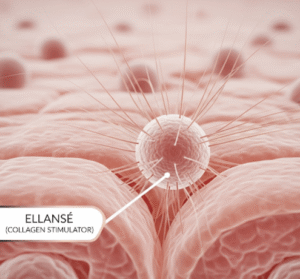
A Jawline Filler in Korea is a non-surgical cosmetic treatment that enhances, sharpens, and defines the jawline using injectable dermal fillers. Most often, Hyaluronic Acid (HA) fillers are used, though some cases may employ Calcium Hydroxylapatite (CaHA) for stronger structure and collagen stimulation.
The procedure adds volume and contour to the jawline, creating a sharper, slimmer, and more youthful face. In Korean beauty culture, a refined lower face and the iconic “V-line” look are highly sought after, making jawline fillers one of the most popular facial contouring treatments.
🟢 Why it’s Done
Jawline fillers in Korea are used to achieve both aesthetic refinement and anti-aging rejuvenation.
➡️ Create a V-line face: Defines and slims the lower face for the ideal Korean facial shape.
➡️ Enhance profile balance: Strengthens weak or rounded jawlines, especially when viewed from the side.
➡️ Correct asymmetry: Improves uneven or undefined jawline contours.
➡️ Anti-aging effect: Restores structure lost due to sagging skin and bone resorption with age.
➡️ Non-surgical alternative: Provides implant-like definition without surgery or long downtime.
In Korean clinics, jawline fillers are often paired with chin fillers and jaw Botox for maximum sculpting results.
🟢 Alternatives
If jawline fillers aren’t ideal, alternatives include:
🔹 Jawline Botox (Masseter Reduction): Slims bulky jaw muscles, a common treatment in Korea.
🔹 Thread Lift: Lifts sagging jowls but does not add volume.
🔹 HIFU (High-Intensity Focused Ultrasound) or Thermage: Tightens skin along the jawline without filler.
🔹 Surgical Implants: Permanent but invasive option for jaw enhancement.
🔹 Fat Grafting: Uses patient’s fat for augmentation, though less precise than fillers.
Korean clinics often recommend combination treatments—for example, Botox for slimming + filler for definition—to create a sharper and more balanced jawline.
🟢 Preparation
Before undergoing jawline filler treatment in Korea, patients follow specific preparation steps:
➡️ Consultation: Clinics use face scanners or 3D imaging to design a customized treatment plan.
➡️ Medical history: Patients disclose allergies, bleeding disorders, or autoimmune conditions.
➡️ Avoid blood thinners: No aspirin, ibuprofen, vitamin E, fish oil, or alcohol 3–5 days before.
➡️ No strong skin treatments: Avoid chemical peels, lasers, or retinoids before the procedure.
➡️ Discussion of goals: Korean doctors emphasize natural results and may suggest combining fillers with other treatments for the best outcome.
🟢 How it’s Done
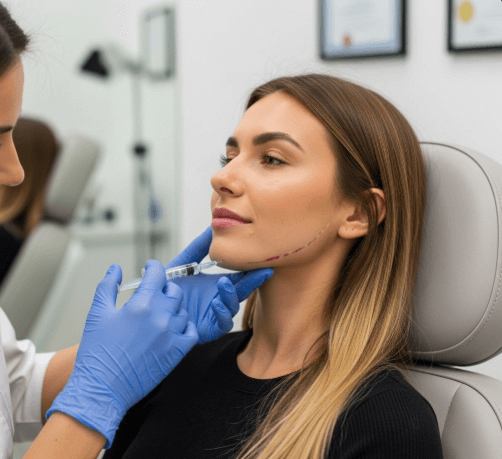
The jawline filler procedure is precise and typically completed in 30–40 minutes.
- Cleansing and sterilization of the lower face.
- Numbing: Numbing cream or local anesthetic (most HA fillers already contain lidocaine).
- Injection techniques:
- Cannula method is preferred to reduce bruising and cover a wider area.
- Needle injections may be used for sharp definition along specific jaw angles.
- Shaping and molding: Doctor sculpts the filler to ensure symmetry and smooth contour.
- Final review: Balance is checked against the chin, cheeks, and overall facial structure.
Korean practitioners focus on the “minimal dose technique”, ensuring definition without an overfilled, bulky look.
🟢 Recovery
Recovery is minimal, making fillers a top choice for professionals and travelers:
🔹 Downtime: Almost none—patients resume daily life immediately.
🔹 Swelling & tenderness: 1–3 days.
🔹 Bruising: Possible, lasting up to a week.
🔹 Results: Immediate, though final shaping becomes clear in 1–2 weeks.
✅ Post-care in Korea includes:
- Avoid alcohol, saunas, and heavy exercise for 24–48 hours.
- Do not massage or press the treated area.
- Use ice packs for swelling.
- Always apply sunscreen to protect the skin.
Most patients maintain results with touch-ups every 12–18 months, depending on filler type.
🟢 Complications
Jawline fillers are generally safe in Korea, but risks may include:
⚠️ Mild side effects:
- Temporary swelling, redness, or bruising.
- Tenderness at injection sites.
⚠️ Serious risks (rare):
- Vascular occlusion (filler blocking blood flow).
- Infection if sterile technique is compromised.
- Nodules or lumps if filler isn’t smoothed properly.
- Overfilling, which can create a square or unnatural jawline.
➡️ Korean clinics reduce risks by using blunt cannulas, premium fillers, and emergency protocols (e.g., hyaluronidase to dissolve HA fillers if needed).
🟢 Treatment Options in Korea
Korea is internationally recognized for its advanced filler technology and aesthetic expertise.
🔹 Popular filler brands for jawline:
- Korean: Revolax, Yvoire, Replengen, Neuramis, Dermalax.
- Global: Juvederm Voluma, Restylane Lyft, Teosyal Ultra Deep.
🔹 Types of jawline enhancements:
- Definition filler: Sharpens jaw edges for a clean contour.
- Angle filler: Enhances jaw angle for stronger profile.
- V-line filler: Combined with chin augmentation for slimmer, elongated look.
- Blending filler: Smooths sagging jowls or uneven jawline.
🔹 Cost in Korea:
- $400–$800 per session, depending on brand and amount.
- Premium fillers or full lower-face contouring packages: $1,000–$2,000.
- Results last 12–18 months with HA fillers, sometimes longer with CaHA fillers.
🟢 Final Thoughts
Jawline Fillers in Korea are one of the most effective non-surgical treatments for achieving the coveted V-line shape and a refined, youthful face.
➡️ They are ideal for those with soft, undefined, or sagging jawlines who want sharper contours without surgery.
➡️ With Korea’s cutting-edge filler brands, expert techniques, and natural aesthetic approach, patients can achieve long-lasting, balanced results.
In summary: Jawline fillers in Korea are a safe, customizable, and transformative option, giving definition and harmony to the lower face while maintaining a natural look.