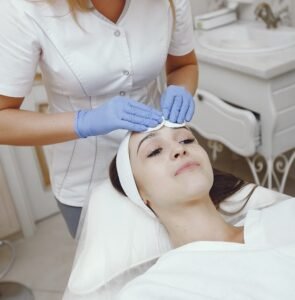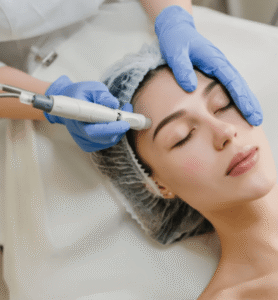
IPL Photofacial in Korea is a widely performed light-based treatment that improves pigmentation, redness, and overall skin tone using Intense Pulsed Light (IPL) technology. Unlike lasers, which use a single wavelength, IPL uses multiple wavelengths of broad-spectrum light to penetrate the skin at different depths. This makes it a versatile treatment for pigmentation, vascular lesions, sun damage, and skin rejuvenation.
Korea, known for its leadership in skincare technology, has adapted IPL photofacials into comprehensive treatment packages. Clinics often combine IPL with K-beauty aftercare rituals like hydration therapy, vitamin infusions, and calming masks, making it both effective and comfortable for patients.
What It Is
An IPL photofacial is a non-invasive light therapy that delivers high-intensity pulses of broad-spectrum light into the skin. The light energy is absorbed by pigment (melanin) and hemoglobin in blood vessels, breaking them down so the body can naturally clear them.
Key benefits of IPL include:
- Reducing pigmentation such as freckles, sunspots, and age spots.
- Minimizing redness and broken capillaries.
- Improving skin tone and brightness.
- Stimulating collagen for subtle anti-aging effects.
- Treating acne-related redness and scars.
In Korea, IPL photofacials are especially popular among younger patients who want a quick, no-downtime solution for pigmentation and redness.
Why It’s Done
Patients undergo IPL photofacials for medical, cosmetic, and preventive reasons:
- Medical uses → To treat sun damage, rosacea, broken blood vessels, and pigmentation issues.
- Cosmetic uses → To brighten dull skin, reduce uneven tone, and improve texture.
- Preventive uses → Many Koreans use IPL as part of their “skin maintenance routine”, helping to prevent early pigmentation and aging signs.
Culturally, the IPL photofacial aligns with the Korean ideal of clear, even, and radiant skin, making it one of the most requested treatments in dermatology clinics.
Alternatives
Korean clinics provide a variety of alternatives depending on skin concerns:
- Laser toning (Q-switched Nd:YAG) for deeper pigmentation.
- Pico lasers (PicoWay, PicoSure Pro) for precision pigmentation and scars.
- Clear + Brilliant or Moxi lasers for gentle fractional resurfacing.
- Spectra or Carbon Laser Peel for acne and oily skin.
- Chemical peels for exfoliation and pigmentation control.
- Hydrafacial or Aqua Peel for hydration and cleansing.
- K-beauty skincare routines with Vitamin C, niacinamide, and tranexamic acid serums.
Preparation
Preparation for IPL photofacials in Korea is simple but crucial:
- Consultation → Dermatologists analyze pigmentation, redness, and overall skin tone with imaging devices.
- Pre-care instructions → Patients should avoid sun exposure, tanning, and retinoids for at least one week before treatment.
- Hydration → Using moisturizers and sheet masks ensures the skin is well-prepared.
- Medical disclosure → Patients should inform doctors about medications or conditions that may cause photosensitivity.
Because IPL is relatively painless, numbing cream is usually not required.
How It’s Done
An IPL photofacial session in Korea typically lasts 20–30 minutes:
- Cleansing – The skin is thoroughly cleansed.
- Gel application – A cooling gel is applied to protect the skin and enhance light penetration.
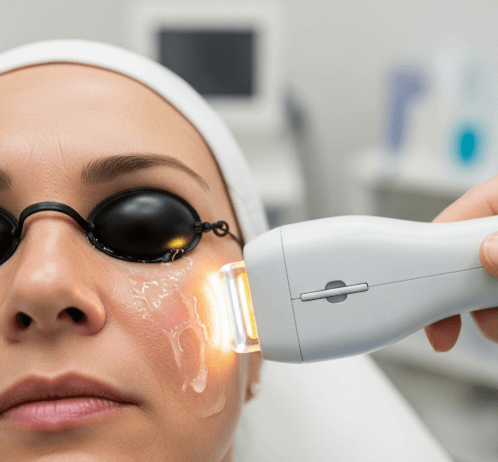
- Light pulses – The IPL handpiece delivers flashes of broad-spectrum light across the face. Patients may feel a mild snapping sensation.
- Post-care – Soothing creams, hydration masks, or LED therapy are applied.
- Final step – Sunscreen and moisturizer are used before leaving the clinic.
The treatment is quick, and many people undergo IPL during their lunch break, returning to work immediately afterward.
Recovery
One of the biggest advantages of IPL photofacials is the minimal downtime:
- Immediately after → Skin may look slightly red, like a mild sunburn.
- 1–3 days later → Pigmented spots may darken temporarily before flaking off.
- Within a week → Skin appears clearer, brighter, and more even-toned.
Korean clinics often accelerate recovery with soothing facials, cooling masks, or antioxidant serums after treatment. Patients are advised to use SPF 50+ sunscreen daily to protect results.
Complications
IPL is generally safe, but side effects may occur if aftercare is not followed:
- Temporary redness, swelling, or sensitivity.
- Darkening of pigmented spots before they fade.
- Rare blistering or pigmentation changes in sensitive skin.
Korean dermatologists reduce risks by customizing wavelengths and intensity for each patient’s skin type and providing detailed aftercare instructions.
Treatment Options
Korean clinics offer IPL photofacials in specialized programs:
- Pigmentation program → Targets freckles, melasma, and sunspots.
- Redness program → Treats rosacea and broken capillaries.
- Brightening package → Enhances overall radiance with IPL plus Vitamin C infusion.
- Anti-aging package → Combines IPL with collagen-boosting serums.
- Combination treatments → IPL plus Aqua Peel or IPL plus Shurink (HIFU).
Clinics in Seoul, especially in Gangnam, often provide multi-session packages (3–6 sessions) at competitive prices, making IPL both accessible and cost-effective.
Conclusion
IPL Photofacial in Korea is a trusted, versatile treatment for pigmentation, redness, and overall skin rejuvenation. By using broad-spectrum light, it improves skin tone, minimizes discoloration, and restores radiance—all with minimal downtime.
Korean clinics enhance the experience with personalized treatment settings, advanced aftercare, and affordable packages, ensuring safe and natural-looking results. Whether you want to treat pigmentation, control redness, or simply maintain glowing skin, an IPL photofacial in Korea offers an excellent solution aligned with the nation’s world-famous K-beauty standards.
✅ Done: This is the IPL Photofacial in Korea article, formatted in the same way as your previous requests.
Would you like me to prepare the next one as Fraxel Laser in Korea in the same style?
You said:
BBL broadband light
ChatGPT said:
Perfect ✅ Let’s create the BBL Broadband Light in Korea article in the same format as your previous ones:
- Main title includes “in Korea”.
- All other section headings are clean.
- All headings are h3 tags only.
- Around 1300–1500 words, with bold highlights, arrows, and bullet points.
BBL Broadband Light in Korea
BBL Broadband Light in Korea is one of the most advanced light-based skin rejuvenation treatments, designed to improve pigmentation, redness, skin tone, and texture using high-intensity broad-spectrum light. Often described as an evolution of IPL (Intense Pulsed Light), BBL delivers more precise energy and customizable wavelengths, making it more effective for treating stubborn pigmentation and vascular conditions.
In Korea, BBL is widely offered at dermatology clinics, where it is integrated into multi-step skincare programs with soothing facials, hydrating serums, and LED aftercare. With Korea’s reputation for skincare innovation, BBL has become a popular option for those who want to achieve clear, radiant, and youthful-looking skin with minimal downtime.
What It Is
BBL (Broadband Light) is a non-invasive light therapy system that uses intense pulses of broad-spectrum light to target pigmentation, blood vessels, and damaged skin cells. Unlike lasers, which use a single wavelength, BBL offers multiple customizable filters and settings, allowing dermatologists to treat a wider range of skin issues more precisely.
Key benefits include:
- Reduction of freckles, sunspots, and age spots.
- Treatment of redness, rosacea, and broken capillaries.
- Overall brightening and evening of skin tone.
- Stimulation of collagen for anti-aging effects.
- Prevention of future skin damage by rejuvenating skin cells.
Korean dermatologists frequently recommend BBL as part of “prejuvenation” care, helping younger patients maintain glowing, healthy skin before visible aging starts.
Why It’s Done
BBL is performed in Korea for medical, cosmetic, and preventive purposes:
- Medical uses → Treats melasma, pigmentation, rosacea, and vascular lesions.
- Cosmetic uses → Brightens the skin, minimizes pores, and improves texture.
- Preventive care → Helps maintain youthful, clear skin by stimulating collagen renewal.
Culturally, BBL matches the Korean skincare philosophy of prevention over correction. Many people in their 20s and 30s undergo treatments regularly to preserve their youthful look and maintain the signature K-beauty glow.
Alternatives
Korean clinics offer several alternatives and complementary treatments to BBL:
- IPL Photofacial → The predecessor to BBL, effective for pigmentation and redness.
- Pico lasers (PicoWay, PicoSure Pro) → For precise pigmentation and acne scars.
- Clear + Brilliant or Moxi lasers → Gentle fractional resurfacing.
- Q-switched Nd:YAG laser toning → Common in Korea for pigmentation.
- Carbon or Spectra laser peel → Popular for acne-prone or oily skin.
- Chemical peels → Glycolic or lactic acid exfoliation.
- Hydrafacial or Aqua Peel → For hydration and deep cleansing.
Preparation
Korean dermatology clinics provide detailed preparation steps to ensure safety and optimal results:
- Consultation → Skin analysis with imaging systems to evaluate pigmentation, vascular issues, and overall skin health.
- Pre-care instructions → Avoid sun exposure, tanning, retinoids, and harsh exfoliants before treatment.
- Hydration → Use moisturizers and sheet masks to prepare the skin.
- Medical history → Patients should inform dermatologists about medications, health conditions, or any history of photosensitivity.
Since BBL is gentle, numbing cream is usually unnecessary.
How It’s Done
A BBL session in Korea usually lasts 20–30 minutes:
- Cleansing – Skin is thoroughly cleansed of makeup, oils, and impurities.
- Gel application – A cooling gel is applied to protect the skin.
- Light pulses – The dermatologist uses the BBL handpiece to deliver controlled light pulses across the skin. Patients feel a mild snapping or warm sensation.
- Post-care – Soothing creams, hydration masks, or LED light are applied immediately after.
- Final step – Sunscreen and a moisturizer are provided before leaving.
Most patients undergo 3–5 sessions spaced 4 weeks apart, with visible improvements after the first or second treatment.
Recovery
BBL is well-loved in Korea because it has minimal downtime:
- Immediately after → Mild redness that usually fades within a few hours.
- 1–3 days later → Pigmented spots may temporarily darken before flaking off naturally.
- 1 week later → Clearer, brighter, and more even skin tone.
Korean clinics often enhance recovery with hydrating ampoules, calming sheet masks, and aftercare facials. Daily use of SPF 50+ sunscreen is essential to protect results.
Complications
BBL is very safe, but as with all light therapies, mild side effects can occur:
- Temporary redness or swelling.
- Darkening of treated pigmentation before it fades.
- Rare cases of blistering or hyperpigmentation if aftercare is ignored.
Korean dermatologists minimize risks by customizing light filters and energy levels to each patient’s skin type and providing strict aftercare instructions.
Treatment Options
In Korea, BBL Broadband Light is often part of specialized treatment packages:
- Pigmentation program → Targets freckles, melasma, and sunspots.
- Redness program → Designed for rosacea and broken blood vessels.
- Brightening package → Combines BBL with Vitamin C infusion or whitening ampoules.
- Anti-aging package → Adds collagen-boosting serums and hydration therapy.
- Combination treatments → BBL plus Aqua Peel, Hydrafacial, or Shurink (HIFU) for tightening.
Seoul clinics, particularly in Gangnam, frequently offer multi-session packages at affordable rates, making BBL accessible to locals and medical tourists.
Conclusion
BBL Broadband Light in Korea is a safe, versatile, and highly effective treatment for pigmentation, redness, sun damage, and overall skin rejuvenation. With its customizable filters and advanced technology, it offers superior results compared to traditional IPL.
Korean clinics elevate the experience by combining BBL with holistic aftercare, hydration therapies, and affordable packages, ensuring natural-looking, radiant results. Whether you want to treat pigmentation, reduce redness, or maintain youthful skin, BBL in Korea provides one of the most trusted and advanced options in modern skincare.