What it is
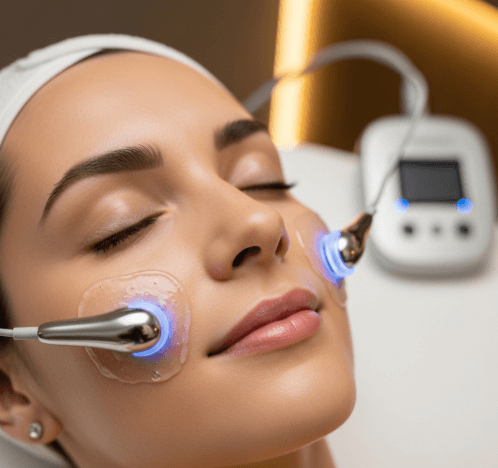
Iontophoresis brightening is a non-invasive skin treatment that uses a mild electric current to enhance the penetration of brightening agents (such as vitamin C, niacinamide, arbutin, or tranexamic acid) into the skin. Normally, the skin’s barrier prevents many active ingredients from reaching deeper layers. With iontophoresis, charged molecules are gently pushed through the epidermis into the dermis, where they can act more effectively.
In Korea, iontophoresis is widely used as part of skin brightening and pigmentation protocols, either as a standalone treatment or combined with pico lasers, chemical peels, and regenerative injectables to achieve the signature K-beauty “glass skin” effect.
Why it’s done
Patients choose iontophoresis brightening for:
- Pigmentation control → Reduces melasma, freckles, sunspots, and PIH (post-inflammatory hyperpigmentation).
- Even skin tone → Helps achieve brighter, radiant skin.
- Boosted efficacy of brightening serums that normally stay on the skin’s surface.
- Anti-aging support → Vitamin C and antioxidants help fight free radical damage.
- Gentle and needle-free approach → Perfect for patients who want results without injections or downtime.
In Korea, iontophoresis is often recommended after laser treatments to calm the skin and deliver brightening ingredients directly into freshly treated tissue.
Alternatives
Other methods for skin brightening include:
- Topical creams → Vitamin C, arbutin, kojic acid, niacinamide, tranexamic acid.
- Injectables
- Skin boosters (Rejuran, Profhilo, HA-based boosters).
- PRP (platelet-rich plasma) for regeneration.
- Glutathione or vitamin C IV drips (offered in some Korean clinics).
- Laser-based treatments
- Pico lasers for pigmentation.
- Q-switched Nd:YAG for toning.
- Other transdermal delivery methods
- Electroporation (electrical pulses).
- JetPeel or aquafacial infusion.
- Microneedling with brightening serums.
Korean dermatologists frequently combine iontophoresis with these methods for better, longer-lasting results.
Preparation
Before iontophoresis brightening:
- Skin assessment → Korean clinics often use digital skin analyzers to measure pigmentation and tone.
- Medical history → Patients with pacemakers, metal implants, or certain skin conditions may not be eligible.
- Pre-treatment care → Avoid harsh exfoliants, retinoids, or peels 3–5 days before.
- Expectation counseling → Results are gradual, requiring multiple sessions.
How it’s Done
A typical iontophoresis brightening session in Korea includes:
- Cleansing → Makeup and sunscreen removed.
- Exfoliation (optional) → Gentle peeling to remove dead skin cells.
- Application of active serum → Vitamin C, tranexamic acid, niacinamide, or custom brightening blends.
- Iontophoresis device application →
- A mild electric current is applied through electrodes.
- The current pushes active ingredients deep into the skin.
- Patients may feel a mild tingling or warmth.
- Soothing care → Cooling masks, LED healing light, and hydration-focused serums applied post-treatment.
⮕ Session length: 20–30 minutes. A series of 4–8 sessions is usually recommended.
Recovery
Iontophoresis brightening has no downtime:
- Mild redness or tingling → Resolves within hours.
- Immediate glow visible after the first session.
- Gradual brightening → Achieved over several weeks with repeated sessions.
Korean clinics often combine recovery care with:
✔️ Cooling therapy.
✔️ K-beauty calming serums (centella asiatica, hyaluronic acid, panthenol).
✔️ Sunscreen recommendations to prevent pigment recurrence.
Complications
Iontophoresis is very safe, but minor issues may occur:
- Temporary redness or tingling.
- Dryness if not paired with moisturizing care.
- Rare allergic reactions to infused ingredients.
In Korea, clinics minimize risks by customizing the serum formula based on skin type and performing patch tests for sensitive patients.
Treatment Options in Korea
Korea is a global leader in skin brightening treatments, and iontophoresis is a staple in many dermatology protocols:
- Common active ingredients infused
- Vitamin C → Antioxidant and skin brightening.
- Tranexamic acid → Popular in Korean melasma protocols.
- Niacinamide → Evens tone and improves barrier.
- Arbutin → Gentle whitening agent.
- Signature Korean protocols
- Melasma: Pico laser + tranexamic acid iontophoresis.
- Freckles & sunspots: Q-switched toning + vitamin C iontophoresis.
- Post-laser care: Iontophoresis with calming + whitening serums.
- Preventive care → Many Korean patients use iontophoresis as a monthly maintenance treatment for skin clarity.
- Medical tourism appeal → International patients often undergo iontophoresis as part of a K-beauty skin brightening package that includes facials, lasers, and boosters.
✅ Key Point: Iontophoresis brightening in Korea is a needle-free, safe, and highly effective treatment that enhances skin clarity by delivering active brightening serums deep into the skin. Combined with pico lasers, regenerative care, and K-beauty aftercare, it provides gradual, natural, and radiant results with no downtime.