What It Is
Defining Ingrown Toenail
→ An ingrown toenail (onychocryptosis) occurs when the edge of the toenail grows into the surrounding skin, causing pain, swelling, redness, and sometimes infection.
→ The condition most often affects the big toe and can result from improper trimming, tight shoes, trauma, or genetic predisposition.
Defining Wedge Resection
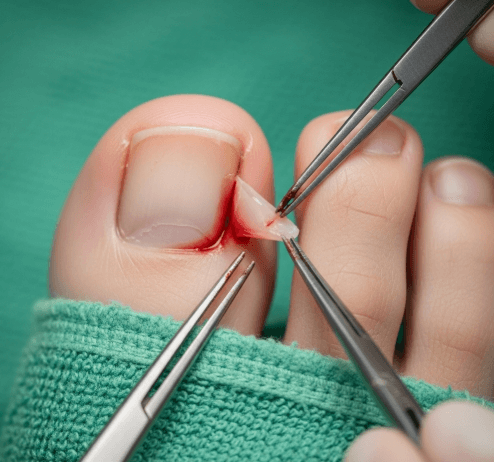
→ Wedge resection is a minor surgical procedure where the problematic edge of the toenail and a wedge of underlying nail bed tissue are removed.
→ Unlike simple nail trimming or partial avulsion, wedge resection is more definitive and reduces the risk of recurrence by addressing both nail plate and nail matrix.
→ In Korea, wedge resections are performed by dermatologists, podiatric surgeons, and orthopedic specialists, often using advanced techniques to ensure minimal pain, fast recovery, and cosmetic preservation.
Key Characteristics
- Involves removing a sliver (wedge) of nail and underlying tissue
- Done under local anesthesia in outpatient settings
- Often combined with matrixectomy (chemical or laser) to prevent regrowth of the problematic edge
- Provides long-term relief from recurrent ingrown toenails
Why It’s Done
Main Reasons for Wedge Resection
➡ Recurrent Ingrown Toenails – Conservative trimming and partial avulsion fail repeatedly.
➡ Severe Pain or Infection – When daily activities or walking become difficult.
➡ Chronic Inflammation – Redness, pus, and swelling persist despite home care.
➡ Cosmetic Deformity – Improves nail and toe appearance.
➡ Preventing Complications – Especially important in diabetics or those with poor circulation, who risk severe infections.
Alternatives
Non-Surgical Options
- Warm Water Soaks → Softens nail folds and relieves mild cases.
- Cotton Packing or Dental Floss Method → Lifts the nail edge off the skin.
- Antibiotics/Antifungals → Used if infection present, though not a definitive solution.
- Proper Nail Trimming → Straight cut nails prevent recurrence in mild cases.
- Footwear Adjustments → Wide-toed shoes reduce pressure.
Surgical Alternatives
→ If wedge resection is not selected:
- Partial Nail Avulsion → Removes only nail plate edge (higher recurrence).
- Total Nail Avulsion → Entire nail removed (used in severe or fungal cases).
- Matrixectomy Alone → Permanent destruction of nail root in severe, recurrent cases.
Preparation
Before Wedge Resection in Korea
➡ Dermatology or Podiatry Evaluation – Doctors confirm diagnosis and assess severity.
➡ History Review – Includes prior treatments, recurrence, footwear, diabetes, and circulation status.
➡ Physical Exam – Check for swelling, infection, pus, or granulation tissue.
➡ Counseling – Explanation of the procedure, healing time, and cosmetic outcomes.
➡ Pre-Procedural Care – Infected cases may require oral antibiotics before surgery.
How It’s Done
Step-by-Step Wedge Resection Procedure in Korea
Step 1: Local Anesthesia
- Toe injected with local anesthetic.
- Provides complete numbness during procedure.
Step 2: Sterile Preparation
- Toe cleaned with antiseptic solution.
- Sterile drapes placed around toe.
Step 3: Wedge Removal
- A narrow wedge of nail plate and nail bed is excised from the side causing the problem.
- Removes both visible nail and part of the nail matrix.
Step 4: Matrixectomy (Optional)
- To prevent recurrence, doctors may:
- Apply phenol chemical solution
- Use laser ablation on the nail root
Step 5: Dressing
- Wound covered with sterile dressing.
- Topical antibiotic applied.
Step 6: Post-Procedure Care
- Patients instructed on foot elevation, wound care, and follow-up.
Duration
- Procedure takes 20–40 minutes.
Comfort
- Minimal pain during procedure.
- Mild soreness for a few days afterward, easily controlled with over-the-counter painkillers.
Recovery
Immediate Recovery
- Relief of pressure and pain felt soon after procedure.
- Patients usually walk home the same day with protective footwear.
Long-Term Recovery
→ Healing typically occurs in 2–4 weeks.
- Toe remains tender for a few days.
- New nail grows more naturally, without digging into the skin.
- Recurrence rates are low, especially when combined with matrixectomy.
→ Cosmetic results in Korea are excellent, with nail often appearing nearly normal after full regrowth.
Complications
Risks Without Treatment
- Persistent Pain → Limits walking and daily activities.
- Chronic Infection → May lead to abscess or cellulitis.
- Granulation Tissue Growth → Bulky red tissue forms beside nail.
- Severe Infection in Diabetics → Risk of foot ulcers or even amputation in extreme cases.
Risks With Wedge Resection
- Bleeding → Controlled during surgery.
- Infection → Rare if aftercare instructions followed.
- Recurrence → Still possible if matrix not destroyed fully.
- Cosmetic Changes → Nail may appear narrower, though Korean clinics emphasize natural outcomes.
- Temporary Discomfort → Mild soreness for a few days.
Treatment Options in Korea
Why Korea Excels in Wedge Resection
➡ Experienced Specialists – Dermatologists and podiatrists highly trained in nail surgery.
➡ Advanced Techniques – Use of laser-assisted matrixectomy reduces recurrence and speeds healing.
➡ Cosmetic Sensitivity – Focus on preserving nail’s natural appearance.
➡ Comprehensive Care – Combination of surgical treatment with antibiotics, antifungals, and skincare counseling.
➡ Patient Education – Strong emphasis on nail care, trimming, and footwear to prevent recurrence.
Patient Experience in Korea
- Procedure performed in outpatient clinics under local anesthesia.
- Clinics often provide aftercare kits with antiseptics, ointments, and dressings.
- Follow-ups scheduled to monitor healing and prevent recurrence.
- Patients receive step-by-step home care guidance (foot soaks, dressing changes).
Conclusion
Ingrown toenail wedge resection in Korea is a safe, effective, and long-term solution for painful or recurrent ingrown toenails.
By removing the problematic wedge of nail and nail bed tissue, the procedure relieves pain, prevents infection, and restores normal nail growth.
Korea’s expertise in advanced matrixectomy techniques, cosmetic sensitivity, and patient education ensures both medical success and excellent cosmetic outcomes.
For patients suffering from chronic or severe ingrown toenails, wedge resection in Korea offers a reliable, minimally invasive, and lasting treatment.