What it is
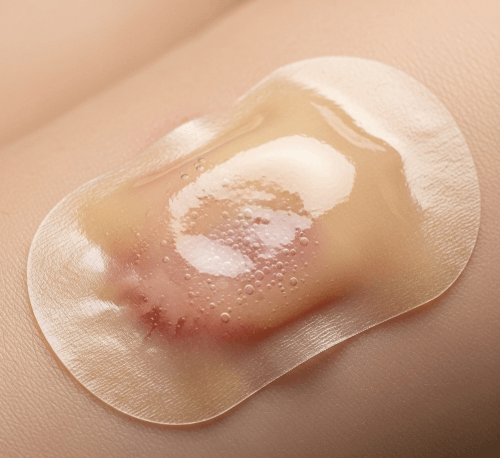
➝ Hydrocolloid dressings are advanced wound care materials made of gel-forming agents (such as carboxymethylcellulose, gelatin, and pectin) combined with a flexible, adhesive outer layer.
➝ When applied to a wound, they form a moist healing environment by absorbing exudate and converting it into a gel, which promotes tissue repair and reduces pain.
➝ They are commonly used for chronic wounds, pressure ulcers, minor burns, surgical wounds, and superficial traumatic injuries.
➝ In Korea, hydrocolloid dressings are widely available in dermatology, plastic surgery, diabetic foot clinics, and hospital wound care units.
Why it’s done
→ To promote faster wound healing by maintaining a moist environment.
→ To reduce pain and dressing change frequency, since hydrocolloids can remain in place for several days.
→ To minimize scarring and pigmentation, which is especially important in cosmetic-focused care.
→ To protect wounds from external contamination while still allowing gas exchange.
→ In Korea, hydrocolloids are also popular in post-laser and cosmetic dermatology clinics, helping skin heal smoothly after procedures.
Alternatives
→ Foam dressings: better for highly exudative wounds.
→ Alginate dressings: useful for bleeding or very wet wounds.
→ Hydrogel dressings: suitable for dry wounds requiring hydration.
→ Film dressings: thin, transparent, for superficial protection.
→ Conventional gauze dressings: inexpensive but less effective in moist healing.
Preparation
→ Assess wound type, depth, and exudate level.
→ Clean the wound with sterile saline or gentle cleanser.
→ Ensure periwound skin is dry before applying to maintain adhesion.
→ In Korea, patients are often given education on dressing selection and application techniques at wound care clinics.
How it’s Done
→ Select a hydrocolloid dressing size at least 2–3 cm larger than the wound.
→ Apply dressing directly over the wound, ensuring full coverage.
→ Smooth edges to maintain a seal against bacteria and fluid leakage.
→ Dressing may be left in place for 3–7 days, depending on exudate levels.
→ Replace if it lifts, leaks, or becomes saturated.
→ In Korean clinics, hydrocolloid dressings are often paired with secondary protective dressings or compression wraps in chronic ulcers.
Recovery
→ Patients often notice faster wound closure compared to gauze or dry dressings.
→ Pain is reduced since the moist environment prevents painful dressing removal.
→ Cosmetic outcome is better, with less scarring and pigmentation changes.
→ Post-laser and acne scar patients in Korea frequently use hydrocolloids for smoother recovery.
Complications
→ Maceration of surrounding skin if exudate is excessive.
→ Odor may develop as fluid interacts with the gel.
→ Skin irritation or allergy to adhesive in rare cases.
→ Not suitable for heavily infected or very wet wounds.
Treatment Options in Korea
→ Hydrocolloid dressings are widely used in hospital wound clinics, dermatology practices, diabetic care units, and cosmetic centers.
→ They are available over-the-counter in Korean pharmacies, making them accessible for minor wounds and post-procedure care at home.
→ Clinics often combine hydrocolloid use with modern wound healing approaches, such as NPWT, foam dressings, and antimicrobial dressings for complex wounds.
→ In dermatology and plastic surgery clinics, hydrocolloids are prescribed for post-laser resurfacing, acne scar treatment, and minor surgical wounds to ensure faster healing with minimal scarring.
→ Korea’s emphasis on cosmetic outcomes and advanced wound care technology has made hydrocolloid dressings a mainstay of clinical and outpatient care.