➤ What it is
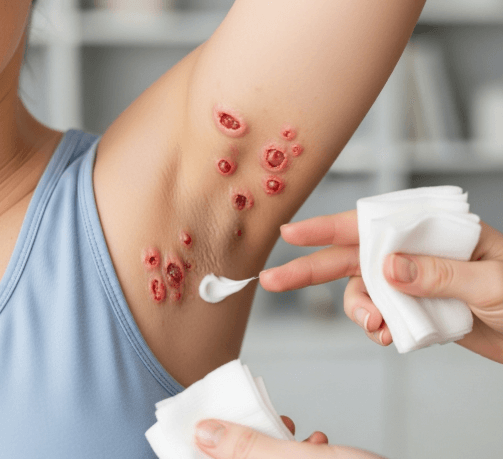
Hidradenitis Suppurativa (HS) is a chronic, recurrent inflammatory skin condition that affects areas with apocrine sweat glands and hair follicles, such as the armpits, groin, buttocks, and under the breasts.
It begins as painful, deep-seated nodules that may rupture, releasing pus and forming tunnels (sinus tracts) under the skin. Over time, repeated inflammation can cause scarring, skin thickening, and functional limitations.
Although the exact cause is not fully understood, HS is linked to:
- Blocked hair follicles and abnormal immune response,
- Genetic predisposition,
- Hormonal influences,
- Lifestyle factors (smoking, obesity, sweating).
In Korea, HS care is handled with advanced dermatology protocols combining medical therapy, surgical interventions, skincare routines, and supportive lifestyle management. Cosmetic-conscious approaches are also integrated to reduce scarring and pigmentation.
➤ Why it’s done
Hidradenitis Suppurativa care is essential because:
- Symptom Relief → Reduces pain, swelling, and discomfort from nodules and abscesses.
- Preventing Complications → Stops formation of sinus tracts and permanent scarring.
- Improving Function → Restores mobility and comfort in affected areas.
- Psychological Health → HS often causes emotional distress due to pain, odor, and visible scarring.
- Skin Conscious Culture in Korea → Care emphasizes both medical control and cosmetic appearance, restoring patient confidence.
➤ Alternatives
Management of HS requires a multimodal approach, as no single therapy is universally effective:
Medical Therapies
- Topical antibiotics (clindamycin) for mild lesions.
- Oral antibiotics (doxycycline, clindamycin, rifampin) for moderate cases.
- Hormonal therapy (anti-androgens like spironolactone, oral contraceptives) for hormonally influenced HS.
- Biologics (adalimumab, infliximab) — advanced immune-targeted therapy for severe HS.
- Corticosteroid injections for acute painful nodules.
Procedural & Surgical Approaches
- Incision and drainage for acute abscesses (temporary relief).
- Laser therapy (Nd:YAG, CO₂ laser) to reduce recurrence and scarring.
- Surgical excision of tunnels and chronic lesions in severe HS.
Lifestyle & Supportive Alternatives
- Weight management, smoking cessation.
- Loose, breathable clothing.
- Antiseptic washes (chlorhexidine, benzoyl peroxide).
Korean Dermatology Alternatives
- LED red light therapy → reduces inflammation and promotes healing.
- Barrier-repair skincare programs → restore skin balance.
- Scar and pigmentation management post-surgery.
➤ Preparation
Preparation before HS treatment ensures accurate planning and effective results:
- Medical Evaluation
- Clinical assessment using Hurley staging (I–III) to classify severity.
- Ultrasound may be used to evaluate sinus tracts.
- Pre-Treatment Skincare
- Patients advised to avoid aggressive shaving/waxing in affected areas.
- Use mild cleansers instead of harsh soaps.
- Switch to breathable, cotton-based clothing.
- Lifestyle Counseling
- Diet, exercise, and stress management.
- In Korea, patients often undergo holistic wellness consultations to complement medical care.
➤ How it’s Done
HS Care in Korea typically involves a combination of medical therapy, procedures, and skincare support:
1. Medical Management
- Topical clindamycin for early lesions.
- Oral antibiotics or hormonal therapy for moderate HS.
- Biologics like adalimumab for advanced or resistant HS.
2. Procedural Therapies
- Incision & drainage for acute abscesses.
- Laser hair removal (Nd:YAG) → reduces hair follicle inflammation, especially effective in Korean clinics.
- CO₂ laser therapy for destroying sinus tracts.
3. Surgical Options (For Severe HS)
- Wide excision of chronic sinus tracts.
- Skin grafting or flap reconstruction in advanced cases.
- Korean surgeons integrate scar-minimizing techniques and cosmetic closure methods.
4. Korean Dermatology Additions
- LED therapy post-procedure to reduce inflammation and accelerate healing.
- Scar prevention programs including silicone gels, laser resurfacing, and pigmentation treatments.
- Soothing skincare programs with hydrating facials, herbal compresses, and barrier creams.
5. Lifestyle Integration
- Daily use of antiseptic washes.
- Personalized skincare guidance (many Korean cosmeceuticals are designed for sensitive, inflammation-prone skin).
- Stress reduction programs integrated into holistic Korean clinics.
➤ Recovery
Recovery from HS therapy depends on severity and chosen treatment:
- Mild HS (Topical/Oral Therapy)
- Lesions improve within 2–4 weeks.
- Moderate HS (Laser or minor surgery)
- Healing takes 2–6 weeks, with supportive skincare.
- Severe HS (Wide excision)
- Recovery may take several months, requiring wound care and scar therapy.
Aftercare Instructions:
- Keep treated areas clean and dry.
- Avoid tight clothing and friction.
- Use prescribed wound dressings and scar prevention creams.
- Apply sunscreen to prevent post-inflammatory pigmentation.
Korean Recovery Practices:
- LED follow-ups and laser scar therapy to enhance healing.
- Hydration masks and barrier creams applied at dermatology clinics.
- Customized skincare regimens to reduce flare-ups and maintain clear skin.
➤ Complications
HS can cause significant complications if not managed early:
- Chronic scarring and tunneling.
- Restricted movement due to scar tissue.
- Recurrent painful abscesses.
- Psychological impact → depression, anxiety, and low self-esteem.
- Infection risks if abscesses rupture and spread bacteria.
Korean dermatology addresses these by:
- Combining medical treatment with surgical precision,
- Offering scar and pigmentation management,
- Providing psychological support as part of holistic care.
➤ Treatment Options in Korea
Korea offers some of the most advanced and holistic approaches for HS:
Why Korea excels:
- Cutting-edge dermatology with biologics, lasers, and surgical options.
- Integration of cosmetic dermatology → scar and pigmentation care.
- Holistic programs → lifestyle, skincare, and stress management combined with medical care.
- Medical tourism destination for international patients seeking effective yet aesthetic-focused care.
Unique Korean Practices:
- Laser hair removal widely used to reduce follicular inflammation.
- LED and phototherapy integrated into routine HS management.
- Cosmetic scar revision programs → fractional lasers, microneedling, and brightening facials.
- Personalized skincare regimens → dermatologist-guided Korean products for sensitive, HS-prone skin.
✨ Final Thoughts
Hidradenitis Suppurativa Care in Korea represents the best of medical dermatology and cosmetic restoration. With antibiotics, biologics, lasers, surgery, and skincare programs, Korea provides a comprehensive, holistic approach to managing this challenging chronic condition.
Patients not only achieve symptom control and reduced flare-ups, but also benefit from scar management, skin tone correction, and long-term preventive care.
This dual focus on health outcomes and aesthetic recovery makes Korea one of the best places worldwide for HS care.