What it is
➝ Laser deroofing is a minimally invasive surgical procedure used to treat hidradenitis suppurativa (HS), a chronic inflammatory skin disease that causes painful nodules, abscesses, and sinus tracts, usually in areas like the armpits, groin, buttocks, and under the breasts.
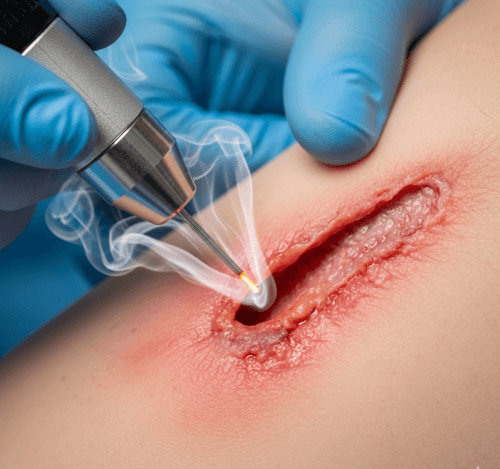
➝ The term “deroofing” refers to the removal of the “roof” (skin and tissue covering) of tunnels and abscesses, leaving the base of the lesion exposed to heal naturally.
➝ In laser deroofing, devices such as the CO₂ laser or Nd:YAG laser are used to precisely cut and vaporize the affected tissue.
➝ This method provides better control, reduced bleeding, and minimal scarring compared to traditional surgical excision.
Why it’s done
→ To manage chronic or recurrent HS lesions that do not respond to antibiotics or medical therapies.
→ To provide a long-term solution for draining sinus tracts and tunnels that cause repeated flare-ups.
→ To reduce pain, drainage, and odor, which significantly affect a patient’s daily life.
→ To improve mobility and comfort in areas like the groin or underarms, where lesions often restrict movement.
→ In Korea, laser deroofing is considered a modern alternative to excision, offering quicker recovery and less invasive treatment.
Alternatives
→ Medical therapies:
- Antibiotics (oral or topical).
- Hormonal therapy in selected patients.
- Biologics (adalimumab is FDA-approved for HS).
→ Other surgical approaches:
- Incision and drainage (temporary relief but high recurrence).
- Wide excision (removal of larger areas, longer healing).
→ Non-surgical interventions:
- Lifestyle modifications (weight management, smoking cessation).
- Pain management strategies.
Preparation
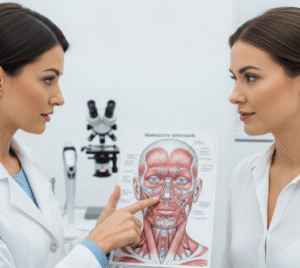
→ A dermatologist or surgeon will conduct a clinical evaluation to assess the stage and extent of hidradenitis.
→ Imaging (like ultrasound) may be used to map sinus tracts before surgery.
→ Patients are advised to:
- Stop smoking if possible.
- Control body weight and blood sugar (if diabetic).
- Discontinue certain medications that affect healing.
→ Pre-procedure instructions include avoiding anticoagulants if not medically essential.
→ In Korea, patients usually receive detailed counseling about wound care and post-surgical expectations.
How it’s Done
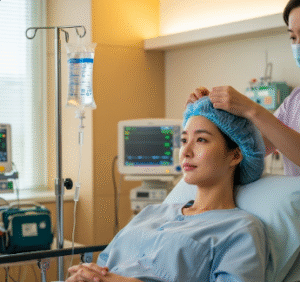
→ The procedure is typically done under local anesthesia in an outpatient setting.
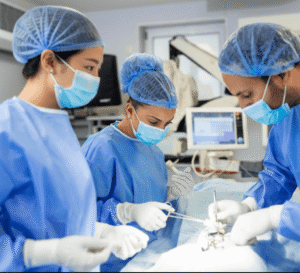
→ The surgeon uses a CO₂ or Nd:YAG laser to remove the skin covering the sinus tracts while preserving the healthy base tissue.
→ The laser simultaneously cuts and coagulates, reducing bleeding and risk of infection.
→ The wound is left open to heal naturally by secondary intention, allowing new healthy tissue to form.
→ The procedure may take 30–60 minutes, depending on the number and size of lesions.
Recovery
→ Healing usually takes 2–4 weeks, depending on the extent of treated areas.
→ Patients may experience mild discomfort, which is managed with pain relievers.
→ Daily wound care (gentle cleansing, dressing changes) is essential to promote healing.
→ Patients often report immediate relief from pain and drainage.
→ Recurrence rates are lower compared to incision and drainage, and scarring is typically less noticeable than with wide excision.
Complications
→ Possible risks include:
- Temporary pain or swelling at the treated site.
- Delayed healing if wound care is not followed properly.
- Secondary infection in rare cases.
- Recurrence of HS in untreated areas.
→ Compared to traditional surgery, laser deroofing carries a lower risk of excessive scarring and complications.
Treatment Options in Korea
→ Korea has advanced dermatologic and surgical centers that specialize in HS management, with access to modern laser technologies.
→ Laser deroofing is increasingly offered as a preferred option for patients who want less invasive procedures and faster recovery.
→ Korean doctors often combine laser deroofing with comprehensive care, including:
- Biologic therapy for moderate to severe HS.
- Lifestyle counseling (diet, weight, smoking cessation).
- Dermatologic wound-healing programs with dressings, ointments, and supportive care.
→ Patients receive structured follow-up programs to monitor recurrence and prevent new lesion formation.
→ With Korea’s focus on precision dermatologic surgery, laser deroofing is recognized as a safe, effective, and cosmetically favorable treatment for hidradenitis suppurativa.