
What it is
→ Filler reversal with hyaluronidase is a medical procedure in which an enzyme called hyaluronidase is injected into the skin to dissolve unwanted or misplaced hyaluronic acid (HA) dermal fillers.
→ Hyaluronic acid fillers are widely used for facial rejuvenation, wrinkle reduction, and contouring. While generally safe, complications or unsatisfactory results can occur.
→ Hyaluronidase breaks down HA molecules rapidly, allowing the body to absorb and remove them.
→ This procedure is performed by trained dermatologists or plastic surgeons and is considered the gold standard for filler correction.
Why it’s done
→ Filler reversal with hyaluronidase is performed for several reasons:
- Aesthetic dissatisfaction → if the filler result looks unnatural, uneven, or overfilled.
- Lumps and nodules → when filler clumps under the skin.
- Asymmetry correction → when one side of the face heals differently.
- Migration of filler → if HA filler spreads beyond the injection site.
- Medical emergencies → in cases of vascular occlusion (blocked blood vessel), which can cause tissue damage or even blindness if not treated immediately.
→ Hyaluronidase provides a safe and effective reversal option, restoring natural appearance and preventing complications.
Alternatives
→ Alternatives to hyaluronidase reversal include:
- Massage and warm compresses → may help minor filler lumps but are limited in effectiveness.
- Waiting it out → since HA fillers naturally dissolve over months, but this can take 6–18 months.
- Laser or ultrasound treatments → used in rare cases to break down filler deposits.
- Surgical removal → only for severe or non-HA fillers, but invasive and rarely needed.
→ Hyaluronidase remains the most reliable, fast, and targeted solution for unwanted HA fillers.
Preparation
→ Before undergoing filler reversal with hyaluronidase, patients should:
- Consult a dermatologist or plastic surgeon → to confirm that the filler is hyaluronic acid-based (hyaluronidase does not work on non-HA fillers like Radiesse or Sculptra).
- Medical history review → disclose allergies, past filler treatments, and skin conditions.
- Allergy testing → a small patch test may be done in patients with a history of allergic reactions.
- Avoid blood thinners (aspirin, ibuprofen, fish oil, vitamin E) for a few days before, if possible, to minimize bruising.
- Clean skin → no makeup or creams on the treatment area.
How it’s Done
→ The procedure is quick and performed in a dermatology clinic:
- Assessment → dermatologist identifies the areas with excess or misplaced filler.
- Preparation → skin is cleaned and sometimes numbed with topical anesthetic.
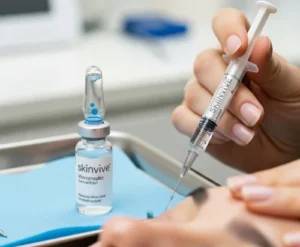
- Injection → hyaluronidase is injected directly into the area with filler.
- Action → the enzyme starts breaking down HA almost immediately.
- Massage → the treated area may be gently massaged to help distribute the enzyme.
- Follow-up → results are assessed in the following days, and additional sessions may be scheduled if needed.
→ Results are often noticeable within hours to 48 hours, though complete reversal may take several days.
Recovery
→ Recovery after hyaluronidase injections is typically short:
- Mild redness, swelling, or bruising at the injection site may occur.
- Tenderness lasts 1–3 days.
- Most patients return to daily activities immediately.
- Skin usually looks more natural within a few days.
→ Dermatologists recommend:
- Avoiding alcohol, saunas, and vigorous exercise for 24 hours.
- Applying cold compresses to reduce swelling.
- Using sunscreen if treated areas are sun-exposed.
→ In rare cases, follow-up sessions may be needed for full correction.
Complications
→ While generally safe, hyaluronidase reversal can have potential side effects:
- Allergic reaction → rare, but possible; patch testing reduces this risk.
- Overcorrection → dissolving too much filler, leading to volume loss.
- Skin irregularities → temporary unevenness if filler is dissolved unevenly.
- Swelling or bruising → common but temporary.
- Infection → rare, minimized with sterile technique.
→ In emergencies like vascular occlusion, hyaluronidase is life- and tissue-saving when administered promptly.
Treatment options in Korea
→ Korea is one of the leading countries for cosmetic dermatology and filler correction, offering advanced filler reversal services.
- Highly experienced injectors → Korean dermatologists and plastic surgeons are internationally recognized for precision in both filler placement and reversal.
- Emergency protocols → clinics are equipped to handle vascular occlusion immediately with hyaluronidase.
- Customized doses → Korean clinics tailor enzyme concentration and volume for natural correction rather than excessive reversal.
- Combination care → filler reversal is often paired with skin rejuvenation therapies (laser, microneedling, PRP) to restore smoothness.
- Safety focus → strict allergy testing and aftercare protocols are standard.
- Aesthetic expertise → emphasis is placed on symmetry and natural beauty, aligning with Korea’s reputation for subtle, refined results.
- Medical tourism → international patients frequently visit Korean clinics for both filler correction and high-quality aesthetic services.
→ With advanced techniques, safety measures, and artistic precision, Korea offers some of the best options worldwide for filler reversal with hyaluronidase.