What it is
Melasma is a chronic pigmentation disorder that appears as brown or grayish patches, usually on the cheeks, forehead, upper lip, and chin. While epidermal melasma affects the upper layers of skin and responds well to creams and peels, dermal melasma is more challenging because pigment particles are located deeper in the dermis, making them resistant to topical treatments.
A dermal melasma protocol is a structured treatment plan that combines multiple therapies to reduce pigmentation, prevent recurrence, and improve overall skin health. In Korea, dermatologists are known for using layered, multi-step protocols that combine advanced laser technology, regenerative injectables, oral/topical therapy, and strict sun protection, tailored for Asian skin.
Why it’s done
Patients seek dermal melasma treatment because:
- Topical creams alone are insufficient for deeper pigmentation.
- Melasma affects confidence due to its visibility and persistence.
- Improvement requires long-term management rather than one-time treatment.
- Preventing relapses is as important as lightening existing patches.
In Korea, melasma treatment goes beyond removal—it aims at sustained control, skin barrier strengthening, and overall complexion brightening.
Alternatives
While Korea favors combination protocols, alternatives exist:
- Topical agents
- Hydroquinone, tretinoin, and mild corticosteroids (triple therapy).
- Azelaic acid, kojic acid, arbutin, niacinamide for gentler brightening.
- Tranexamic acid creams.
- Oral treatments
- Tranexamic acid (low-dose oral therapy, commonly used in Korea).
- Antioxidant supplements (glutathione, vitamin C).
- Peels
- Glycolic acid, lactic acid, or Jessner’s peels for superficial brightening.
- Energy-based devices
- Q-switched Nd:YAG lasers (older standard, less common now).
- Fractional CO₂ lasers for texture + pigment.
- IPL (intense pulsed light) for vascular-pigment mixed cases.
⮕ However, pico lasers + regenerative therapy remain the gold standard in Korea for dermal melasma.
Preparation
Before starting a dermal melasma protocol:
- Detailed consultation → Korean dermatologists use AI-powered skin analysis systems to measure pigment depth and distribution.
- Medical review → Past treatments, sun exposure habits, hormonal influences (pregnancy, contraception).
- Skin priming → Brightening creams, antioxidants, and sunscreen are often prescribed for 2–4 weeks before lasers.
- Lifestyle adjustments → Strict daily SPF use, stress reduction, and avoidance of heat/sun triggers.
- Expectation setting → Improvement is gradual (several months) and requires maintenance.
How it’s Done
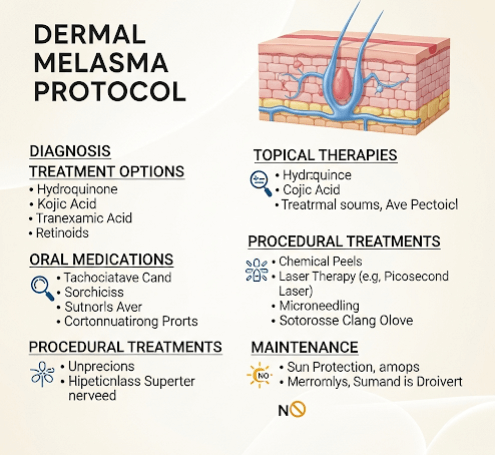
A typical Korean dermal melasma protocol involves several layers of treatment:
- Laser therapy (core step)
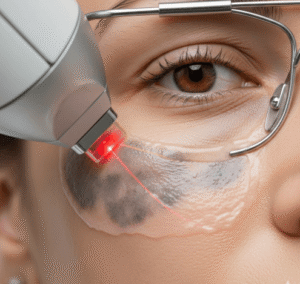
- Pico laser toning (low-fluence 1064 nm) → Breaks down deep dermal pigment gently.
- Pico fractional mode → Stimulates collagen while targeting pigment.
- Sessions: Every 2–4 weeks, usually 5–10 sessions.
- Regenerative injectables
- Rejuran Healer (PN-based) → Repairs skin barrier and reduces inflammation.
- PRP (platelet-rich plasma) → Improves healing and skin tone.
- Glutathione or vitamin C drips/injections (sometimes offered for brightening support).
- Topical therapy
- Prescription brightening creams (hydroquinone, retinoids, or azelaic acid).
- Korean cosmeceuticals with tranexamic acid, niacinamide, arbutin.
- Oral support
- Low-dose tranexamic acid (TXA) (a popular and well-researched Korean method).
- Antioxidant supplements (vitamin C, glutathione, polypodium leucotomos extract).
- Barrier strengthening & calming care
- Moisturizers with ceramides, panthenol, centella asiatica.
- LED therapy after lasers to reduce inflammation.
- Maintenance phase
- Quarterly pico laser or gentle toning sessions.
- Continuous sunscreen use (SPF 50+, PA++++) with reapplication.
- Maintenance serums (vitamin C, peptides).
Recovery
Recovery is minimal with Korean melasma protocols:
- Mild redness → 1–2 days after laser.
- Temporary darkening (micro-crusting) → Flakes off in 3–7 days.
- Gradual brightening → Seen after 2–3 sessions; optimal results after several months.
- Maintenance needed → To prevent recurrence, patients often return every 3–6 months.
Korean clinics enhance recovery with:
✔️ Cooling masks and LED light therapy.
✔️ Soothing serums (centella asiatica, hyaluronic acid, panthenol).
✔️ Post-care K-beauty creams for hydration and barrier repair.
Complications
While generally safe, risks include:
- Temporary redness or swelling.
- Post-inflammatory hyperpigmentation (PIH) if lasers are too aggressive.
- Melasma rebound if patients skip maintenance or sun protection.
Korean dermatologists prevent this by using low-fluence, multi-session approaches, which are much gentler on Asian skin compared to aggressive single-session treatments.
Treatment Options in Korea
Korea is globally recognized as a leader in melasma management. Unique features include:
- Latest pico laser systems → PicoSure, PicoWay, Discovery Pico, and premium Korean-made lasers.
- Signature Korean melasma protocols
- Mild dermal melasma: Pico toning + TXA serum infusion.
- Moderate: Pico toning + Rejuran Healer + oral TXA.
- Severe: Pico fractional + fillers/PRP + Rejuran for regeneration.
- Integrated skin programs → Melasma treatments often paired with brightening facials, whitening masks, and skin boosters.
- Preventive care → Clinics emphasize lifestyle education, including SPF discipline and stress management.
- Medical tourism appeal → Melasma protocols are a top-requested service in Korean dermatology clinics, with patients worldwide seeking treatment for resistant cases.
✅ Key Point: The dermal melasma protocol in Korea is a multi-step, layered treatment approach combining pico lasers, regenerative injectables, topical/oral therapy, and strict sun protection. Unlike one-off treatments, Korean protocols focus on long-term control, skin barrier repair, and radiant skin health, making them highly effective and sustainable.