What It Is
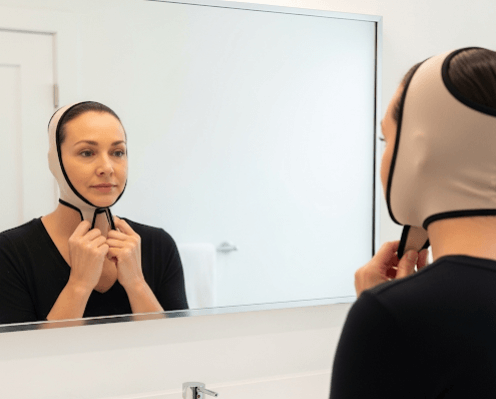
A chin strap is a supportive garment often worn after facial contouring procedures, especially those involving the chin, jawline, or double chin area. It is commonly used after:
- Thread lifts (PDO, PLLA, PCL) for jawline or double chin tightening.
- Fat dissolving injections (Kybella, mesolipo, lipolysis cocktails).
- Liposuction of the chin and jawline.
- HIFU or RF tightening treatments, when mild swelling occurs.
The chin strap:
- Provides gentle compression to reduce swelling and bruising.
- Supports tissues as they heal into their new contour.
- Prevents fluid accumulation (seroma).
- Enhances treatment outcomes by maintaining skin in its lifted position.
In Korea, where V-line jaw contouring is a beauty standard, chin straps are a routine part of aftercare protocols in many dermatology and plastic surgery clinics.
Why It’s Done
Patients are advised to wear a chin strap after procedures for multiple benefits:
➝ Swelling control → Compression reduces edema and speeds healing.
➝ Improved results → Helps tissues “set” into their new shape.
➝ Prevents fluid build-up → Lowers risk of seromas after injections or liposuction.
➝ Skin tightening support → Reinforces the lifting effect of threads or fat reduction.
➝ Comfort and security → Provides a sense of stability after invasive procedures.
In Korean aftercare philosophy, proper post-treatment support and lifestyle management are seen as equally important as the treatment itself, ensuring results that are both natural and long-lasting.
Alternatives
Although chin straps are widely used, other aftercare tools may also support healing:
- Elastic bandages → Used after surgical procedures for more extensive support.
- Cooling masks or ice packs → Reduce swelling but don’t provide compression.
- RF/LED aftercare therapies → Offered in Korean clinics to accelerate recovery.
- Massage and lymphatic drainage (later phase) → Helps reduce residual swelling.
- No compression → Sometimes recommended after very light treatments (e.g., HIFU alone).
Most Korean dermatologists recommend chin straps particularly after liposuction, thread lifts, and fat dissolving injections, where swelling and tissue repositioning are significant.
Preparation
Patients should prepare for chin strap use as part of their recovery plan:
➝ Purchase ahead of time → Clinics in Korea often provide a chin strap after treatment, but patients can buy extras for convenience.
➝ Choose the right size → Straps should fit snugly but not cause discomfort or breathing restriction.
➝ Understand clinic instructions → Each treatment has specific wearing guidelines.
➝ Skincare adjustment → Use mild cleansers and barrier creams to prevent irritation under the strap.
➝ Hydration & diet → Maintain hydration and avoid salty foods to minimize swelling.
How It’s Done (Wearing Guidelines)
Wearing a chin strap properly is key to successful aftercare. General guidelines include:
- Initial Phase (Days 1–7)
- Wear the chin strap continuously (24 hours a day) except when eating or washing.
- Remove only for short breaks to clean the area and strap.
- Intermediate Phase (Weeks 2–3)
- Wear the strap 8–12 hours daily, usually at night while sleeping.
- This phase helps maintain contour while swelling continues to resolve.
- Final Phase (Weeks 4–6)
- Wear the strap as advised by the clinic — often only at night or a few hours daily.
- Some patients discontinue earlier if swelling is fully resolved.
Duration:
- Injections (lipolysis, Kybella, mesolipo) → 1–2 weeks.
- Thread lifts → 2–3 weeks.
- Chin liposuction → 3–6 weeks, depending on healing speed.
Recovery
A chin strap is designed to enhance recovery after procedures:
- First 24–72 hours → Most swelling occurs; strap reduces fluid buildup.
- Week 1–2 → Bruising subsides; strap helps contour stabilize.
- Week 3–4 → Results become more visible; strap use tapers off.
- Month 1–3 → Final results are set; no strap needed but sun protection is crucial.
Tips for better recovery with chin straps:
➝ Keep skin clean to avoid irritation or acne.
➝ Use soft cotton liners if strap causes friction.
➝ Adjust tightness — strap should compress but not cut off circulation.
➝ Continue clinic follow-ups for progress checks.
Complications
While chin straps are generally safe, improper use can cause issues:
➝ Skin irritation → From friction, heat, or sweat accumulation.
➝ Excessive tightness → Can restrict blood flow, cause discomfort, or prolong swelling.
➝ Insufficient compression → Wearing it too loosely may reduce effectiveness.
➝ Poor compliance → Not wearing it enough may lead to suboptimal results.
In Korea, most clinics provide clear instructions and regular aftercare visits, minimizing these risks.
Treatment Options in Korea
In Korea, chin strap aftercare is a standard part of many contouring and slimming treatments:
1. Common Treatments Requiring Chin Straps
- Thread lifts (PDO, PLLA, PCL) for jawline tightening.
- Fat dissolving injections (Kybella, mesolipo, V-line injections).
- Submental liposuction for double chin removal.
- Facial contouring surgeries (orthognathic or jaw reduction).
Final Thoughts
Chin Strap Aftercare in Korea is an essential recovery practice following jawline contouring, double chin reduction, and thread lift treatments. By providing compression and support, chin straps help reduce swelling, prevent complications, and ensure the best possible results.
Korean clinics place strong emphasis on aftercare as part of treatment success, often combining chin strap use with advanced recovery therapies like LED light, lymphatic massage, and herbal support. For patients undergoing any chin or jawline procedure, wearing a chin strap as directed is one of the simplest yet most effective ways to protect and enhance results.