🟢 What it is
A Chin Filler in Korea is a non-surgical cosmetic procedure where dermal filler—most commonly Hyaluronic Acid (HA) or Calcium Hydroxylapatite (CaHA)—is injected into the chin area to enhance shape, projection, and balance of the face. Unlike surgical chin implants, fillers are minimally invasive, customizable, and reversible.
In Korean aesthetics, the chin plays a vital role in creating the “V-line face”—a slim, balanced, and youthful facial contour. By using precise filler placement, doctors can:
- Lengthen a short chin.
- Project a recessed chin forward.
- Refine asymmetries.
- Smooth out irregularities (such as dimples).
🟢 Why it’s Done
Korean dermatology and plastic surgery clinics recommend chin fillers for both aesthetic enhancement and facial proportion correction.
➡️ Improve profile balance: A receding chin makes the nose appear larger; filler restores balance.
➡️ Define V-line: Adds structure and sharpness to the lower face, a major beauty ideal in Korea.
➡️ Correct asymmetry: Balances uneven or slanted chins.
➡️ Non-surgical alternative: Provides results similar to chin implants without surgery.
➡️ Anti-aging: Restores lost definition in the jawline and chin caused by sagging skin or bone resorption.
Korean beauty standards value harmony, proportion, and refinement, making chin fillers a popular treatment among both locals and medical tourists.
🟢 Alternatives
If chin fillers are not ideal, there are alternative treatments:
🔹 Chin Implants (Surgery): Permanent, but more invasive with downtime.
🔹 Fat Grafting: Uses patient’s fat for augmentation—longer lasting, but less precise.
🔹 Thread Lifting: Lifts sagging lower face but does not add volume.
🔹 Jawline Botox: Slims masseter muscles, often combined with chin filler for a sharper look.
🔹 HIFU (High-Intensity Focused Ultrasound) or Thermage: Tightens skin but doesn’t augment the chin.
Many Korean clinics use a combination approach—for example, Botox to slim the jaw + filler to project the chin—for the perfect V-line contour.
🟢 Preparation
Proper preparation ensures a safe and natural-looking result:
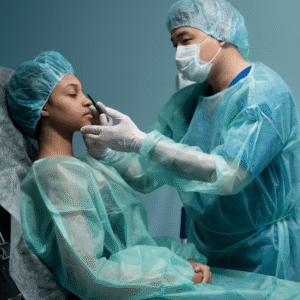
➡️ Consultation: Korean doctors use 3D face scanners and aesthetic guidelines (like the Golden Ratio) to decide the best projection and shape.
➡️ Medical history: Patients disclose any allergies, bleeding disorders, or medications.
➡️ Avoid blood thinners: Stop aspirin, ibuprofen, vitamin E, fish oil, and alcohol 3–5 days before treatment.
➡️ Skin care adjustment: Avoid retinoids, strong exfoliants, or peels before the procedure.
➡️ Photography: Clinics often take before-and-after photos for precise progress tracking.
🟢 How it’s Done
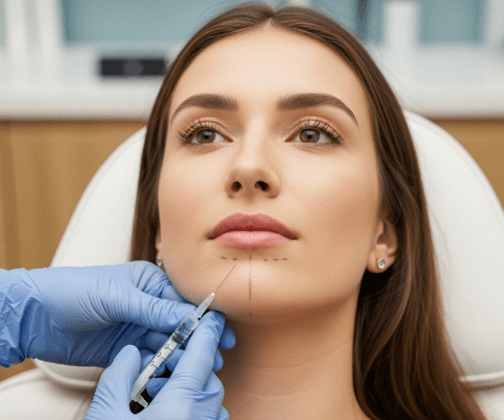
The procedure is typically 20–30 minutes and requires no general anesthesia.
- Cleansing & sterilization of the chin area.
- Numbing cream or local anesthetic (many HA fillers already contain lidocaine).
- Injection techniques:
- Needle injection for small, precise points.
- Cannula method (blunt-tipped) for larger coverage and reduced bruising.
- Shaping and molding: The filler is massaged to create the ideal projection and smooth lines.
- Final check: Doctor ensures balance with nose, lips, and jawline.
In Korea, emphasis is placed on subtle enhancements—adding just enough filler to improve the profile without looking artificial.
🟢 Recovery
Recovery is usually fast and uncomplicated:
🔹 Downtime: Minimal—most return to normal life immediately.
🔹 Swelling & redness: Common for 1–3 days.
🔹 Bruising: May last up to a week.
🔹 Final results: Immediate, with settling over 1–2 weeks.
✅ Post-care instructions in Korea:
- Avoid heavy exercise, alcohol, and saunas for 24–48 hours.
- Do not press or massage the chin area unless directed.
- Apply ice packs for swelling.
- Always wear sunscreen to protect treated skin.
🟢 Complications
Chin filler is generally safe, but risks exist:
⚠️ Mild issues:
- Redness, swelling, tenderness, bruising.
- Temporary asymmetry (can be corrected at follow-up).
⚠️ Serious but rare risks:
- Vascular occlusion if filler blocks a blood vessel.
- Infection at injection site.
- Nodules or lumps if filler isn’t evenly distributed.
- Overfilling, leading to unnatural projection.
➡️ Korean clinics mitigate these risks with high skill, precise techniques, and emergency protocols (e.g., hyaluronidase to dissolve HA fillers).
🟢 Treatment Options in Korea
Korea is a leader in chin filler artistry, offering advanced products and techniques.
🔹 Common filler brands used for chin:
- Korean: Revolax, Yvoire, Replengen, Neuramis, Dermalax.
- International: Juvederm Voluma, Restylane Lyft, Teosyal Ultra Deep.
🔹 Popular chin filler styles in Korea:
- Projection filler: Adds forward definition for a stronger profile.
- Lengthening filler: Extends a short chin to create balance.
- V-line filler: Slenderizes the lower face when combined with jawline Botox.
- Blending filler: Smooths chin dimples or creases.
🔹 Cost in Korea:
- $300–$600 per session depending on filler brand and amount used.
- Results typically last 9–18 months depending on metabolism and filler type.
Many clinics offer customized contouring packages, combining chin filler with jawline contouring, nose filler, and Botox for full harmony.
🟢 Final Thoughts
Chin Fillers in Korea are a powerful, non-surgical way to enhance facial balance, define the profile, and achieve the coveted V-line look.
➡️ Ideal for those with a weak, recessed, or short chin, fillers provide instant, reversible, and natural results.
➡️ With advanced Korean filler products, expert techniques, and competitive prices, patients can expect high satisfaction and minimal risks.
In summary: Chin fillers in Korea are a safe, effective, and customizable treatment that enhances natural beauty and delivers the sharp, balanced facial lines central to Korean aesthetics.