What it is
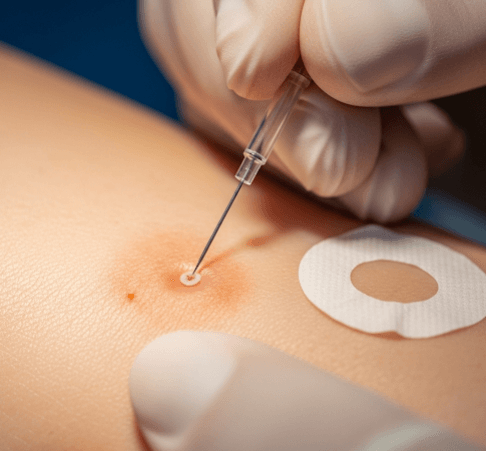
A biopsy is a medical procedure in which a small tissue sample is taken from the skin or other organ and examined under a microscope to diagnose disease. In dermatology and cosmetic care, biopsies are most commonly performed for:
- Suspicious moles or pigmented lesions
- Unexplained rashes or chronic skin conditions
- Tumors, cysts, or unusual growths
- Inflammatory skin disorders
The tissue is analyzed by a pathologist, providing a definitive diagnosis.
💡 In Korea, biopsies are often done as part of a comprehensive dermatology workflow: mole check → dermatoscopic evaluation → biopsy if suspicious → treatment or removal.
Why it’s done
A biopsy is performed when a clinical exam alone is not enough for a clear diagnosis.
✔ To rule out or confirm cancer (e.g., melanoma, basal cell carcinoma)
✔ To identify benign lesions (e.g., seborrheic keratosis, intradermal nevus)
✔ To diagnose skin diseases like psoriasis, eczema, or lupus
✔ To guide treatment plans (laser vs. excision, medical therapy, or monitoring)
✔ To provide peace of mind by confirming whether a lesion is harmless
Alternatives
While a biopsy is the gold standard, alternatives include:
➡️ Dermatoscopy – Magnified skin imaging (non-invasive) for preliminary evaluation.
➡️ Imaging (ultrasound, MRI) – Useful for deeper lesions but not diagnostic for cellular changes.
➡️ Clinical monitoring – For benign-looking lesions, observation over time.
However, none of these fully replace a biopsy when a definitive diagnosis is needed.
Preparation
Before undergoing a biopsy in Korea:
- 🔹 Consultation → Dermatologist reviews the lesion and explains the need for biopsy.
- 🔹 Consent & medical history → Allergies, medications, and bleeding tendencies checked.
- 🔹 Pre-care → Patients may be advised to stop blood-thinners (if safe), avoid alcohol, and keep the area clean.
How it’s Done
Biopsies are minor outpatient procedures, usually completed in 15–30 minutes. Techniques include:
- Punch biopsy – A circular tool removes a core of skin, including deeper layers.
- Shave biopsy – A thin layer of raised lesion shaved off; common for moles.
- Excisional biopsy – Entire lesion removed with a scalpel, often with stitches.
- Incisional biopsy – Only part of a large lesion is sampled.
Steps in Korean clinics:
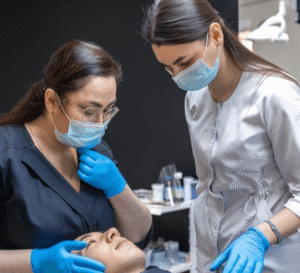
- Skin is cleansed and numbed with local anesthesia.
- Lesion sample is collected using one of the above methods.
- Bleeding is controlled with cautery, ointment, or stitches.
- Sample sent to pathology lab for microscopic analysis.
Recovery
Recovery is quick and varies depending on method:
➡️ Shave/punch biopsy → Small scab forms, heals in 1–2 weeks.
➡️ Excisional biopsy → Stitches removed in 1–2 weeks; scar fades over months.
➡️ Post-care in Korea:
- Apply antibiotic ointment and keep area covered as directed.
- Avoid sun exposure on healing sites (sunscreen essential).
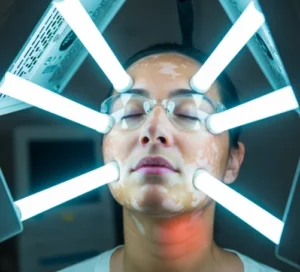
- Clinics often provide scar-prevention creams, hydrocolloid patches, or LED therapy.
Complications
Biopsies are generally safe but may have mild side effects:
⚠ Possible risks:
- Minor bleeding or bruising
- Infection (rare, minimized with proper aftercare)
- Temporary pain or tenderness
- Scarring or pigmentation changes (more likely with larger excisions)
Korean dermatologists minimize risks with fine surgical tools, precise suturing, and advanced scar management routines.
Treatment Options in Korea
Biopsies are widely available across dermatology and plastic surgery clinics in Korea, often integrated into skin cancer screening and mole removal programs.
🇰🇷 Common Korean Approaches:
- Punch biopsy → For small or deep lesions, commonly used for mole testing.
- Shave biopsy → For raised cosmetic moles suspected to be benign.
- Excisional biopsy → For complete mole or tumor removal with pathology.
- Integrated digital monitoring → Many Korean clinics use dermatoscopy + biopsy together.
- K-beauty recovery care → Scar gels, brightening serums, and LED healing for scar minimization.
✅ Final Thoughts
Biopsy for diagnosis in Korea is the most reliable way to confirm whether a mole, lesion, or skin condition is benign or malignant. It provides definitive answers, guiding safe and effective treatment.
With Korea’s advanced dermatology standards, precise surgical techniques, and scar-focused aftercare, biopsies are performed with both medical accuracy and cosmetic consideration in mind.