What it is
➝ Asteatotic eczema (also called xerotic eczema or winter eczema) is a common condition caused by excessively dry skin, leading to itchy, cracked, and inflamed patches.
➝ It typically affects older adults and is worse in cold, dry climates or with frequent bathing.
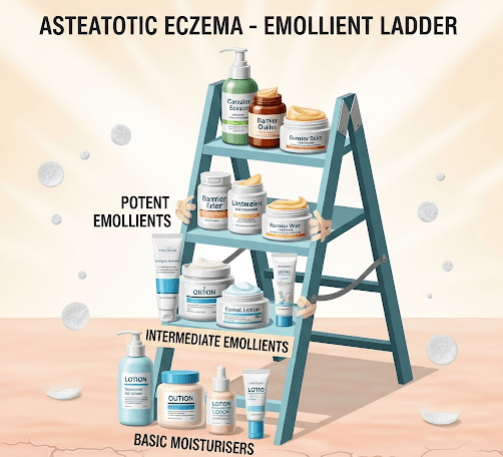
➝ The mainstay of therapy is regular emollient use, and dermatologists often prescribe an “emollient ladder” – a stepwise approach to moisturization depending on disease severity.
➝ In Korea, this structured ladder approach is widely used in dermatology and geriatric care, often paired with gentle cleansing and environmental humidification.
Why it’s done
→ To restore the skin barrier, reducing dryness and micro-cracks that trigger inflammation.
→ To control itch and discomfort, improving quality of life.
→ To reduce the need for topical steroids, since well-hydrated skin flares less.
→ To provide personalized care, selecting the right emollient formulation for each stage of severity.
→ In Korea, an emollient ladder helps patients follow a clear routine, which improves compliance and outcomes.
Alternatives
→ Topical corticosteroids: Used short-term during flares, but not for long-term barrier care.
→ Calcineurin inhibitors: Sometimes added in steroid-sensitive areas (face, folds).
→ Phototherapy: Reserved for severe chronic eczema.
→ Systemic therapy: Rarely needed unless secondary eczema is severe.
→ Lifestyle adjustments: Humidifier use, lukewarm bathing, fragrance-free cleansers.
Preparation
→ Assess skin dryness and severity: mild (dry, flaky), moderate (red, cracked, itchy), severe (painful fissures, oozing).
→ Educate patient on correct application: apply generously and frequently, especially after bathing.
→ In Korea, dermatologists often recommend gentle K-beauty cleansers and ceramide-rich creams to support barrier repair.
How it’s Done – The Emollient Ladder
→ Step 1: Mild asteatotic eczema (dryness, fine scaling)
- Use light lotions or creams with humectants (glycerin, hyaluronic acid, urea ≤5%).
- Apply 2–3 times daily.
→ Step 2: Moderate asteatotic eczema (red, cracked, itchy patches)
- Switch to thicker creams or ointments containing ceramides, petrolatum, shea butter, or dimethicone.
- Add urea 5–10% or lactic acid for extra hydration and keratolysis.
- Apply after every bath and before bedtime.
→ Step 3: Severe asteatotic eczema (fissures, oozing, painful plaques)
- Use occlusive ointments (petrolatum jelly, paraffin-based ointments) multiple times daily.
- Wet-wrap therapy with emollients can be added for deep hydration.
- For fissures: add protective barrier creams (zinc oxide, silicone-based).
→ Adjuncts at any step
- Gentle, fragrance-free cleansers instead of soap.
- Short lukewarm baths followed by immediate emollient application (“soak and seal” method).
- Humidifier use in dry indoor environments.
Recovery
→ Most patients notice reduced itch and smoother skin within 1–2 weeks of consistent emollient use.
→ Cracks and redness heal gradually over 2–4 weeks.
→ Long-term, regular emollient use prevents flares and reduces need for steroids.
→ Patients report improved comfort, sleep, and daily function.
Complications
→ Non-adherence: Many patients underapply moisturizers or stop once symptoms improve.
→ Contact dermatitis: Rare, but some emollients with fragrances or preservatives may irritate.
→ Secondary infection: Severe untreated eczema can become infected with bacteria.
→ With proper product choice and consistent use, complications are minimal.
Treatment Options in Korea
→ Korean dermatology clinics often use an emollient ladder chart, helping patients move up or down based on severity.
→ Pharmacies and hospitals offer a wide range of K-beauty dermatologic emollients with ceramides, panthenol, and hyaluronic acid, many fragrance-free and formulated for sensitive skin.
→ Clinics emphasize education and demonstration, showing patients the amount to apply (fingertip unit method) and frequency.
→ In geriatric care settings, nurses often integrate emollient routines into daily skin care for elderly patients.
→ Some advanced centers in Korea combine emollient therapy with phototherapy or dupilumab for patients with mixed asteatotic and atopic eczema.
→ Overall, Korea’s approach blends stepwise emollient ladders, modern cosmeceuticals, and structured education, giving patients effective long-term eczema control.