
What it is
➝ Alopecia areata (AA) is an autoimmune disease in which T-cells attack the hair follicle, leading to non-scarring hair loss.
➝ It typically presents as round, well-defined bald patches, but can progress to alopecia totalis (loss of all scalp hair) or alopecia universalis (loss of all body hair).
➝ The course is unpredictable, with spontaneous regrowth possible, but relapses are common.
➝ In Korea, AA is managed with a stepwise approach, integrating topical, intralesional, systemic, and advanced biologic therapies, often alongside psychological support.
Why it’s done
→ To promote hair regrowth and reduce the extent of bald patches.
→ To manage autoimmune inflammation that drives hair loss.
→ To address the psychological distress caused by sudden and visible changes in appearance.
→ To prevent progression to more severe forms of alopecia.
→ In Korea, treatment emphasizes both cosmetic recovery and long-term disease control.
Alternatives / Treatment Options
Topical therapy
→ High-potency corticosteroids applied to bald patches.
→ Topical immunotherapy with diphenylcyclopropenone (DPCP) or squaric acid dibutylester (SADBE) to induce controlled allergic dermatitis that distracts the immune response.
→ Minoxidil solution or foam (2% or 5%) to stimulate regrowth.
→ Anthralin ointment in some cases.
Intralesional therapy
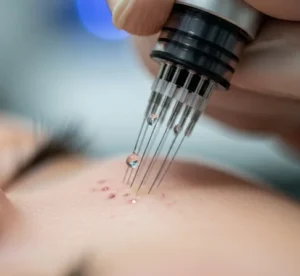
→ Triamcinolone acetonide injections into affected areas every 4–6 weeks.
→ Highly effective for limited patches but less suitable for widespread AA.
Systemic therapy
→ Oral corticosteroids (short-term pulses) for rapid, extensive hair loss.
→ Immunosuppressants (cyclosporine, methotrexate, azathioprine) for severe or resistant cases.
→ Emerging biologics: JAK inhibitors (baricitinib, tofacitinib, ruxolitinib, upadacitinib) show strong efficacy and are increasingly available in Korea.
→ Baricitinib was recently approved in many regions, including Korea, for severe AA.
Adjunctive and supportive care
→ Wigs, hairpieces, and cosmetic camouflage.
→ Counseling and psychological support, as AA is strongly linked with depression and anxiety.
→ Nutritional support and stress management, which can influence relapse.
Preparation
→ Confirm diagnosis clinically; dermoscopy may reveal exclamation mark hairs, yellow dots, and black dots.
→ Blood tests may be done to screen for associated autoimmune conditions (thyroid disease, vitiligo, atopy).
→ Baseline photographs to track regrowth progress.
→ In Korea, digital trichoscopy is widely used for precise documentation.
How it’s Done
→ Step 1: For limited AA, begin with topical steroids or intralesional injections.
→ Step 2: If resistant or rapidly progressing, escalate to topical immunotherapy or systemic corticosteroid pulses.
→ Step 3: For severe AA (alopecia totalis/universalis), consider systemic immunosuppressants or JAK inhibitors.
→ Step 4: Combine with minoxidil to maximize regrowth potential.
→ Step 5: Offer psychological and cosmetic support throughout treatment.
Recovery
→ Initial regrowth may appear within 6–12 weeks of therapy.
→ Full regrowth is possible, but relapse is common and may occur after stress, illness, or treatment withdrawal.
→ JAK inhibitors show the most sustained regrowth rates among modern therapies.
→ Cosmetic recovery improves self-esteem, social confidence, and mental health.
Complications
→ Disease-related: unpredictable relapses, nail pitting, or progression to universalis.
→ Treatment-related:
- Steroids: skin atrophy, systemic side effects.
- Immunotherapy: eczema-like dermatitis, pigmentary changes.
- JAK inhibitors: risk of infections, blood clots, lipid elevation (monitoring required).
→ Psychological burden: depression, anxiety, and social withdrawal if untreated.
Treatment Options in Korea
→ Dermatology clinics in Korea use a personalized protocol depending on severity.
→ DPCP immunotherapy is available in specialized centers for resistant AA.
→ Intralesional steroids are commonly performed for localized patches.
→ JAK inhibitors (baricitinib, upadacitinib, tofacitinib) are increasingly prescribed in severe cases, often under insurance approval for refractory AA.
→ Phototherapy (NB-UVB, excimer laser) is sometimes added for stimulation in chronic cases.
→ Psychological counseling and cosmetic integration (wigs, scalp micropigmentation) are widely supported, reflecting Korea’s emphasis on both medical and aesthetic outcomes.
→ With Korea’s advanced trichology infrastructure, patients with AA have access to comprehensive, state-of-the-art care, ranging from traditional intralesional steroids to cutting-edge JAK inhibitor therapies.