What it is
→ ALA photosensitizer therapy refers to a type of photodynamic therapy (PDT) that uses aminolevulinic acid (ALA) as the photosensitizing agent.
→ When applied to the skin, ALA is absorbed by abnormal or rapidly growing cells (such as precancerous or acne-related cells). Inside the cells, ALA converts into protoporphyrin IX (PpIX), a compound that becomes highly sensitive to light.
→ When the treated area is exposed to a specific wavelength of light (blue, red, or daylight), PpIX produces reactive oxygen species that destroy abnormal cells.
→ ALA therapy is widely used for:
- Actinic keratoses (precancerous sun-damaged lesions).
- Acne vulgaris (by reducing sebaceous gland activity and acne-causing bacteria).
- Photorejuvenation (improving wrinkles, texture, and pigmentation).
- Superficial skin cancers (in selected cases).
Why it’s done
→ ALA photosensitizer therapy is performed for both medical and cosmetic purposes:
- To treat actinic keratoses, preventing their progression to squamous cell carcinoma.
- To manage moderate-to-severe acne without long-term antibiotics or isotretinoin.
- To achieve cosmetic rejuvenation, reducing fine lines, pigmentation, and uneven skin tone.
- To clear field damage in areas with widespread sun exposure.
- To provide a minimally invasive, non-surgical alternative to more aggressive treatments.
→ It is especially recommended for patients with chronic sun damage, precancerous lesions, or persistent acne that does not respond to standard therapies.
Alternatives
→ Alternatives to ALA photosensitizer therapy include:
- Other photosensitizers → Methyl aminolevulinate (MAL) PDT.
- Topical therapies → 5-FU, imiquimod, or diclofenac gel for actinic keratoses.
- Cryotherapy → liquid nitrogen for individual lesions.
- Laser therapy and chemical peels → resurfacing treatments for sun damage.
- Oral acne medications → isotretinoin, antibiotics, or hormonal therapy.
- Conventional skincare → retinoids, vitamin C, and sunscreens for mild photoaging.
→ The choice depends on the extent of damage, patient’s tolerance, and cosmetic goals.
Preparation
→ To prepare for ALA photosensitizer therapy:
- Dermatology evaluation → confirm diagnosis and suitability for PDT.
- Avoid sun exposure → at least 1–2 weeks before therapy.
- Stop photosensitizing medications if possible (e.g., tetracyclines).
- Clean skin → no makeup, sunscreen, or lotions on treatment day.
- Discontinue harsh skincare → retinoids, peels, or exfoliants should be paused 3–5 days before.
- Plan downtime → mild redness, peeling, and sensitivity are expected post-treatment.
How it’s Done
→ A typical ALA PDT session includes:
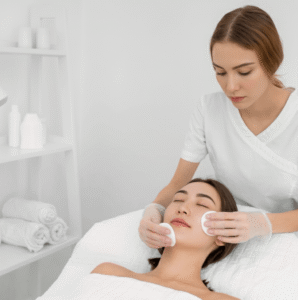
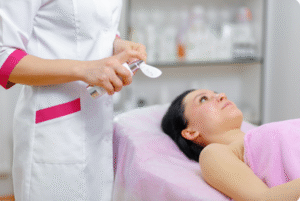
- Application → ALA solution or cream applied to the treatment area (face, scalp, chest, or back).
- Incubation → the cream is left for 30–180 minutes to penetrate cells and convert into PpIX.
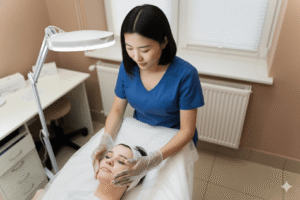
- Light activation → dermatologist exposes the area to a specific light source:
- Blue light → more superficial effects (ideal for acne and actinic keratoses).
- Red light → penetrates deeper, effective for thicker lesions.
- Daylight → a gentler activation method with less pain.
- Reaction → abnormal cells absorb light, producing reactive oxygen species that destroy them.
- Completion → cream is removed, skin is cleansed, and sunscreen or soothing ointments are applied.
→ The procedure usually lasts 1.5–3 hours, depending on incubation time.
Recovery
→ Recovery after ALA photosensitizer therapy is generally quick:
- Day 1–3 → redness, mild swelling, and sensitivity like a sunburn.
- Day 3–7 → peeling, crusting, and flaking as damaged cells shed.
- Day 7–14 → skin heals, appearing clearer, smoother, and more even-toned.
→ Patients should:
- Avoid direct sun exposure for at least 48 hours.
- Use broad-spectrum sunscreen daily.
- Apply gentle moisturizers and healing ointments.
- Avoid harsh skincare until the skin recovers.
→ Most patients resume normal activities within 1–2 days, but visible peeling may continue for up to a week.
Complications
→ ALA photosensitizer therapy is safe, but potential side effects include:
- Temporary redness, swelling, and irritation.
- Burning or stinging sensations during light exposure.
- Peeling or scabbing during recovery.
- Hyperpigmentation or hypopigmentation, especially in darker skin types.
- Photosensitivity reactions if exposed to sunlight too soon.
→ Rare but possible risks: scarring or infection if aftercare is neglected.
Treatment options in Korea
→ Korea is a global hub for advanced dermatology, and ALA photosensitizer therapy is widely used for both medical and cosmetic purposes.
- Cutting-edge devices → clinics use the latest PDT systems with precise light wavelengths for safe activation.
- Customized incubation times → Korean dermatologists adjust protocols based on skin type, severity, and treatment goals.
- Combination treatments → ALA PDT is often paired with chemical peels, lasers, or microneedling for enhanced results.
- Acne focus → many clinics use ALA PDT to treat resistant acne, combined with K-beauty skincare regimens.
- Cosmetic integration → clinics emphasize not only medical clearance of lesions but also rejuvenation and anti-aging benefits.
- International patient services → English-speaking dermatologists and structured medical tourism programs are common.
- Preventive emphasis → Korean dermatology clinics stress long-term sun protection and skin health education after PDT.
→ With its combination of medical precision, cosmetic expertise, and advanced technology, Korea offers some of the most effective and patient-friendly ALA photosensitizer therapy options worldwide.