What It Is
A spiral thigh lift is an advanced cosmetic surgery that addresses excess skin and fat around the entire circumference of the thighs — including the front, inner, outer, and back of the thighs. Unlike a medial (inner) or lateral (outer) thigh lift that focuses on specific areas, the spiral thigh lift provides a comprehensive reshaping of the entire thigh.
This procedure is especially beneficial for patients who have experienced massive weight loss, leaving them with severe sagging skin that affects the thighs from all angles.
Why It’s Done
Patients choose a spiral thigh lift because:
- They have loose skin that encircles the thigh, not limited to one area.
- Significant weight loss or aging has caused circumferential thigh sagging.
- They want a smoother, firmer, and more balanced thigh contour.
- Chafing, discomfort, and difficulty wearing fitted clothing occur due to skin folds.
Good candidates include:
- Men and women with severe thigh skin laxity affecting multiple regions.
- Patients at or near their goal weight and in stable health.
- Non-smokers with realistic expectations who understand the procedure involves longer incisions and scars.
Alternatives
- Medial thigh lift: Suitable for patients with sagging limited to the inner thighs.
- Lateral thigh lift: For patients with excess skin mainly on the outer thighs.
- Liposuction alone: Effective for fat removal but cannot correct large skin folds.
- Non-surgical tightening: Devices like radiofrequency or ultrasound may help mild laxity but are not effective for severe cases.
Preparation
Before undergoing a spiral thigh lift in Korea, patients will:
- Attend a thorough consultation to assess skin laxity and fat distribution.
- Complete medical tests including bloodwork and possibly ECG.
- Stop smoking and alcohol at least 4 weeks before surgery.
- Avoid blood thinners and certain supplements.
- Prepare for an extended recovery, often 3–4 weeks of downtime.
How It’s Done
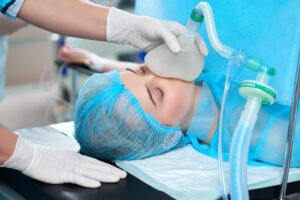
- Anesthesia: Performed under general anesthesia.
- Incisions: A continuous incision may be made around the thigh to access and remove excess skin. The placement depends on patient needs but is designed to balance contour and hide scars where possible.
- Skin and fat removal: Loose skin is excised, and liposuction may be used to refine shape.
- Tissue tightening: The skin is pulled upward and around the thigh to create a smoother, firmer contour.
- Duration: 4–6 hours, often requiring at least one overnight hospital stay.
Recovery
- First week: Patients experience swelling, bruising, and tightness around the thighs. Walking may be difficult initially. Pain is managed with medication.
- Compression garment: Worn for 6–8 weeks to control swelling and support healing.
- Return to work: Most patients resume light duties in 2–3 weeks.
- Exercise: Gentle walking is encouraged, but strenuous activities are restricted for 6–8 weeks.
- Final results: Visible improvements after swelling decreases, with final contour settling after 6–12 months.
Possible Complications
- Significant bruising and swelling due to the large surgical area.
- Prominent scarring around the thighs.
- Risk of delayed wound healing due to thigh movement.
- Rare but serious risks: infection, blood clots, asymmetry, or fluid accumulation.
Treatment Options in Korea
Diagnosis
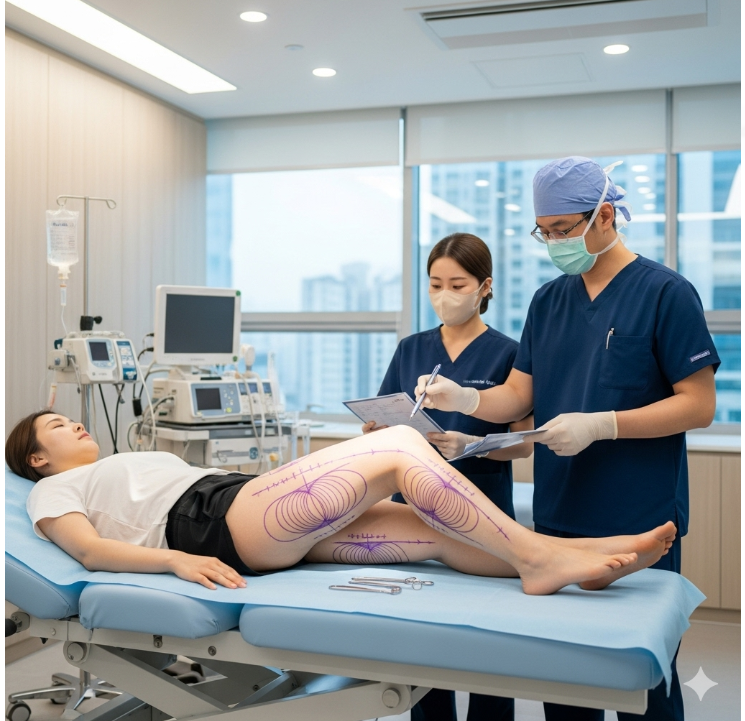
Korean surgeons evaluate skin laxity and fat distribution around the thighs. 3D body imaging may be used to plan the incision placement and show predicted outcomes.
Medical Treatments
Mild sagging can sometimes be treated with non-surgical tightening devices (radiofrequency or ultrasound), but they are not effective for patients with severe, circumferential skin laxity.
Surgical or Advanced Therapies
- Spiral thigh lift for circumferential sagging and folds.
- Often combined with liposuction for refined contouring.
- May be performed as part of a lower body lift after massive weight loss.
Rehabilitation and Support
- Regular post-op follow-ups to monitor wound healing and scar care.
- Scar management treatments such as silicone therapy or laser.
- Lymphatic drainage massages to reduce swelling and improve comfort.
- International patients in Korea benefit from detailed aftercare support and multilingual services.