What It Is
Septal Cartilage Harvest is a procedure where cartilage is taken from the nasal septum to be used in rhinoplasty or reconstructive nasal surgeries. The septal cartilage serves as an ideal graft material because it is strong, straight, and located within the same surgical field, reducing additional donor site trauma. It is commonly used for tip support, dorsal augmentation, or correcting deformities.
Why It’s Done
Patients undergo septal cartilage harvest to:
- Provide structural support for nasal tip or bridge
- Correct congenital or traumatic nasal deformities
- Enhance aesthetic outcomes in primary or revision rhinoplasty
- Avoid the need for rib or ear cartilage harvesting
It is especially beneficial in patients requiring substantial tip projection or nasal reconstruction.
Alternatives
Alternatives include:
- Ear (auricular) cartilage grafts for tip or small augmentations
- Rib cartilage for major reconstructions when septal cartilage is insufficient
- Alloplastic implants for patients who cannot use autologous cartilage
- Non-surgical fillers for temporary or minor augmentations
Preparation
Preparation steps include:
- Preoperative consultation to assess septal cartilage availability and nasal structure
- Nasal endoscopy or imaging to ensure sufficient cartilage
- Avoiding blood-thinning medications and smoking prior to surgery
- Fasting if general anesthesia is planned
How It’s Done
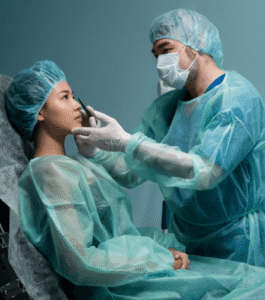
The procedure is performed under local anesthesia with sedation or general anesthesia. An incision is made inside the nose to access the septum. A portion of cartilage is carefully removed while preserving the L-strut to maintain nasal support. The harvested cartilage is then shaped and used in the rhinoplasty procedure as needed. Surgery typically lasts 1–2 hours.
Recovery
Recovery includes:
- Managing mild nasal discomfort and swelling
- Avoiding trauma or pressure to the nose for several weeks
- Using nasal splints or internal supports as directed
- Follow-up visits to monitor healing and nasal function
Patients can usually resume light activities within 1 week, while full recovery may take several months.
Possible Complications
Potential risks include:
- Septal perforation
- Nasal obstruction or deviation if structural support is compromised
- Infection or bleeding
- Graft warping or resorption
- Cosmetic dissatisfaction
Experienced Korean surgeons minimize these risks through careful surgical planning and precise technique.
Treatment Options in Korea
Diagnosis
Korean surgeons use detailed nasal examination, imaging, and endoscopic assessment to determine cartilage quantity and quality before harvesting.
Medical Treatments
Temporary fillers or non-surgical reshaping may be used in minor cases but do not provide structural support like septal cartilage.
Surgical or Advanced Therapies
Advanced Korean rhinoplasty techniques allow precise cartilage harvest, minimal donor site trauma, and effective shaping for natural and durable results.
Rehabilitation and Support
Postoperative care includes swelling management, nasal care instructions, follow-up appointments, and access to international patient support programs for smooth recovery.
Advantages of receiving treatment in Korea: expert surgeons, advanced surgical tools, precise grafting techniques, minimal donor site morbidity, excellent aesthetic outcomes, and cost-effective care for international patients.