
What It Is
Lip reconstruction after Mohs surgery is a procedure to restore the form and function of the lips following removal of skin cancer (such as basal cell carcinoma or squamous cell carcinoma). Mohs surgery removes cancerous tissue with precision but can leave defects in the lip, which may affect appearance, speech, and oral competence.
In Korea, lip reconstruction is performed by plastic and reconstructive surgeons using techniques such as local flaps, skin grafts, mucosal advancement, and microsurgery to recreate natural lip shape, symmetry, and mobility while maintaining cancer clearance.
Why It’s Done
Patients undergo lip reconstruction after Mohs surgery because:
- They need restoration of oral competence (ability to eat, speak, and close the mouth).
- Cancer excision left a visible cosmetic defect.
- They want to maintain facial harmony and natural appearance.
- Proper reconstruction improves both function and confidence.
Good candidates include:
- Patients who have completed Mohs surgery for lip cancer.
- Individuals in good health for reconstructive procedures.
- Those with realistic expectations for recovery and results.
Alternatives
- Secondary intention healing: Allowing the wound to heal naturally, suitable only for very small defects.
- Skin grafts: Simple closure option but may not provide ideal color or texture match.
- No reconstruction: Not recommended for large or functionally significant defects.
Preparation
Before lip reconstruction in Korea, patients will:
- Undergo full evaluation including cancer margins and wound assessment.
- Discuss reconstructive options (flap vs graft) with their surgeon.
- Stop smoking and alcohol 2–4 weeks prior to surgery.
- Avoid blood-thinning medications and supplements.
How It’s Done
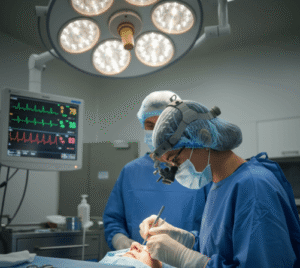
- Anesthesia: Local anesthesia with sedation or general anesthesia, depending on defect size.
- Reconstruction technique depends on defect:
- Primary closure: For small defects with direct suturing.
- Local flaps (advancement, rotation, transposition): Use adjacent lip tissue for a natural match.
- Mucosal advancement: Restores lining inside the lip.
- Skin grafts: Taken from other areas for external surface coverage.
- Microsurgical free flaps: For very large or complex reconstructions.
- Duration: 1–4 hours depending on complexity.
Recovery
- First week: Swelling, bruising, and tightness in lips; soft diet recommended.
- Return to activities: Light activities in 5–7 days; avoid strenuous activity for 3–4 weeks.
- Speech and oral function improve gradually as swelling subsides.
- Final results: A more natural lip appearance and function within 2–3 months.
Possible Complications
- Scarring or asymmetry.
- Lip stiffness or reduced mobility.
- Sensory changes (temporary numbness).
- Infection or delayed healing.
- Rare risks: flap failure or graft loss.
Treatment Options in Korea
Diagnosis
Korean specialists use clinical examination, histopathology from Mohs surgery, and imaging if needed to assess defect size and plan reconstruction.
Medical Treatments
- Topical ointments and scar care for very small post-Mohs wounds.
- Speech therapy if function is temporarily affected.
Surgical or Advanced Therapies
- Primary closure for small defects.
- Local tissue flaps (advancement, rotation, or Abbe flap) for moderate defects.
- Skin grafting for external coverage.
- Microsurgical free tissue transfer for large or complex reconstructions.
Rehabilitation and Support
- Scar management with silicone gels, microneedling, or laser therapy.
- Speech and oral rehabilitation if needed.
- Long-term follow-up to monitor cancer recurrence and lip function.
- International patients benefit from Korea’s integrated skin cancer and reconstructive centers, advanced microsurgery, and aesthetic expertise.