What It Is
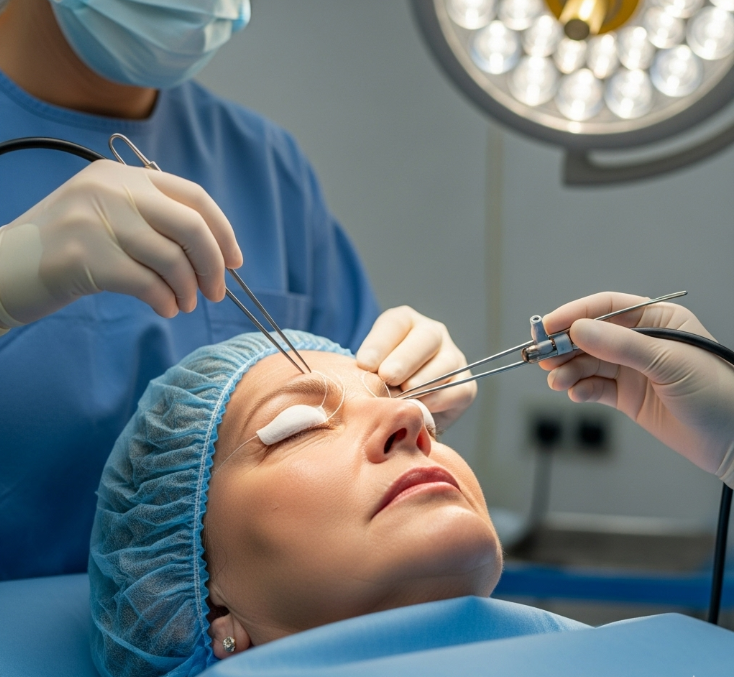
Eyelid ptosis frontalis sling surgery is a reconstructive procedure used to treat severe drooping of the upper eyelid (ptosis) when the levator muscle (the main muscle that lifts the eyelid) is too weak to function properly. In this surgery, the eyelid is connected to the frontalis muscle in the forehead using a sling made of silicone, fascia, or other biocompatible material. This allows the patient to lift the eyelid by raising their eyebrows.
In Korea, this surgery is performed by oculoplastic and plastic surgeons with expertise in both functional and cosmetic eyelid surgery, often for children with congenital ptosis and adults with severe acquired ptosis.
Why It’s Done
Frontalis sling surgery is recommended when:
- The levator muscle function is very poor (usually less than 4 mm of eyelid lift)
- Eyelids droop so much that they obstruct vision
- Patients experience difficulty with reading, driving, or daily activities
- Children with congenital ptosis are at risk of amblyopia (lazy eye) if untreated
This procedure helps restore vision, prevent developmental problems in children, and improve appearance.
Alternatives
- Levator advancement or resection: Used for mild to moderate ptosis when the levator muscle has sufficient strength
- Müller’s muscle-conjunctival resection (MMCR): Suitable for mild ptosis with good response to eye drop testing
- Non-surgical management: Special glasses with ptosis crutches (temporary and rarely used long-term)
Frontalis sling is the preferred option for severe ptosis with minimal or no levator function.
Preparation
Preparation for frontalis sling surgery in Korea includes:
- Consultation: Detailed eyelid measurements and levator muscle testing
- Eye exam: To evaluate vision, corneal health, and risk of amblyopia in children
- Material selection: Choosing between silicone, autologous fascia (from the thigh), or other sling materials
- Medical evaluation: Blood tests and anesthesia clearance
- Family counseling: For pediatric cases, parents are informed about the timing and recovery process
How It’s Done
The procedure is usually performed under general anesthesia for children and local anesthesia with sedation for adults. It takes about 1–2 hours.
- Small incisions are made in the upper eyelid and forehead
- The sling material (silicone rod or fascia) is passed through the tissues to connect the eyelid to the frontalis muscle
- The sling is tightened to achieve proper eyelid height and contour
- Incisions are closed with fine sutures, leaving minimal scarring
Recovery
- First week: Swelling, bruising, and forehead tightness are common
- Activity: Patients should avoid rubbing the eyes and heavy physical activity for 2–3 weeks
- Vision: Improvement is usually immediate, but eyelid position may take time to settle
- Follow-ups: Adjustments may be needed, especially in children as they grow
- Full healing: Most swelling resolves in 2–3 weeks, with final results visible after several months
Possible Complications
While generally safe, potential risks include:
- Overcorrection or undercorrection of eyelid height
- Sling loosening or breakage over time
- Exposure keratopathy (eye dryness from incomplete eyelid closure)
- Infection or scarring at incision sites
- Asymmetry between eyelids
- Rare need for revision surgery
Treatment Options in Korea
Diagnosis
- Precise eyelid and muscle function measurements
- Visual field testing if drooping affects sight
- Pediatric vision screening for congenital ptosis
Medical Treatments
- Lubricating eye drops or ointments to prevent dryness after surgery
- Antibiotics and pain control during recovery
Surgical or Advanced Therapies
- Frontalis sling with silicone rod: Adjustable, widely used in Korea
- Frontalis sling with autologous fascia lata: Long-lasting, often used in children
- Combined techniques: In complex cases with asymmetry or repeat surgery
Rehabilitation and Support
- Ongoing eye care and corneal protection in children and adults
- Scar management with creams or laser if needed
- Long-term follow-up, as sling adjustments may be required over time
- International patient services including interpreters, hospital coordination, and telemedicine follow-ups