
Fat graft to irradiated breast in Korea
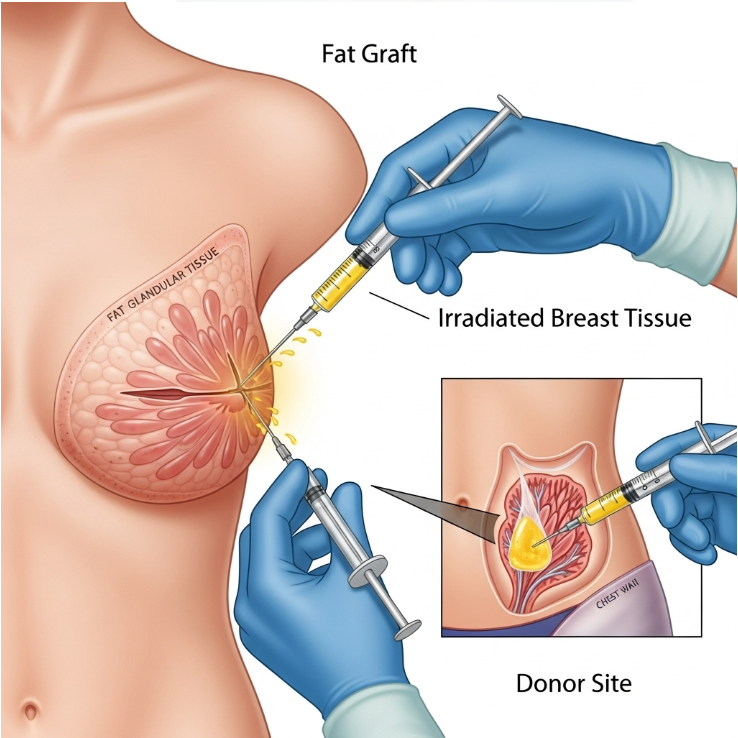
What It Is Fat grafting to the irradiated breast is a reconstructive procedure that uses the patient’s own fat (autologous fat transfer) to restore softness, improve skin quality, and correct deformities caused by radiation therapy after breast cancer treatment. Radiation often causes stiffness, scarring, volume loss, and poor skin elasticity, which can affect both appearance […]
Male breast reduction (gynecomastia) in korea
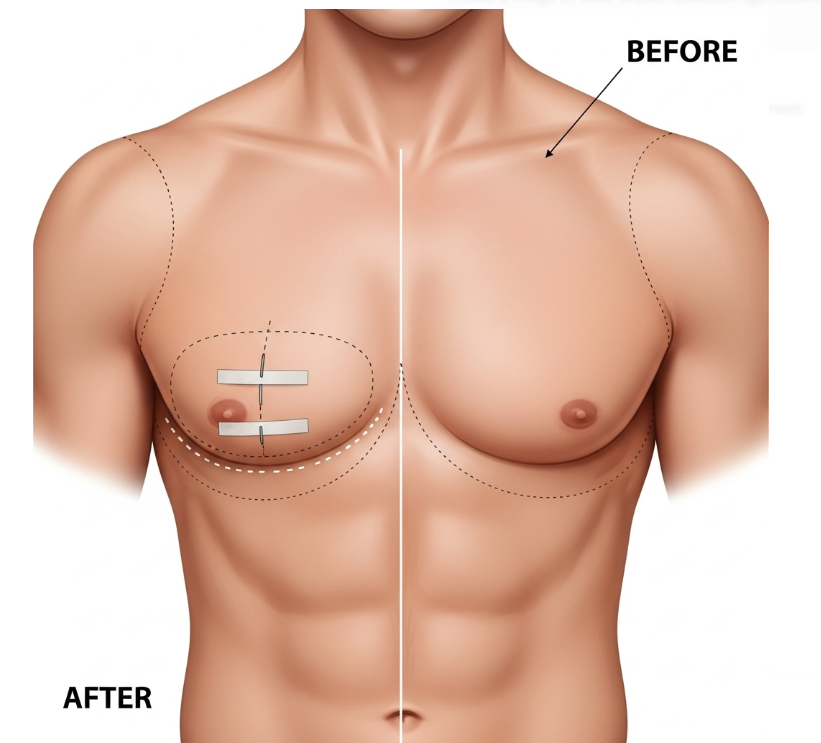
What It Is Male breast reduction, also known as gynecomastia surgery, is a procedure that removes excess glandular tissue, fat, and sometimes skin from the male chest to create a flatter, more masculine contour. Gynecomastia is a common condition that may result from hormonal imbalance, genetics, weight changes, medication side effects, or lifestyle factors. In […]
3D nipple–areola tattoo in Korea
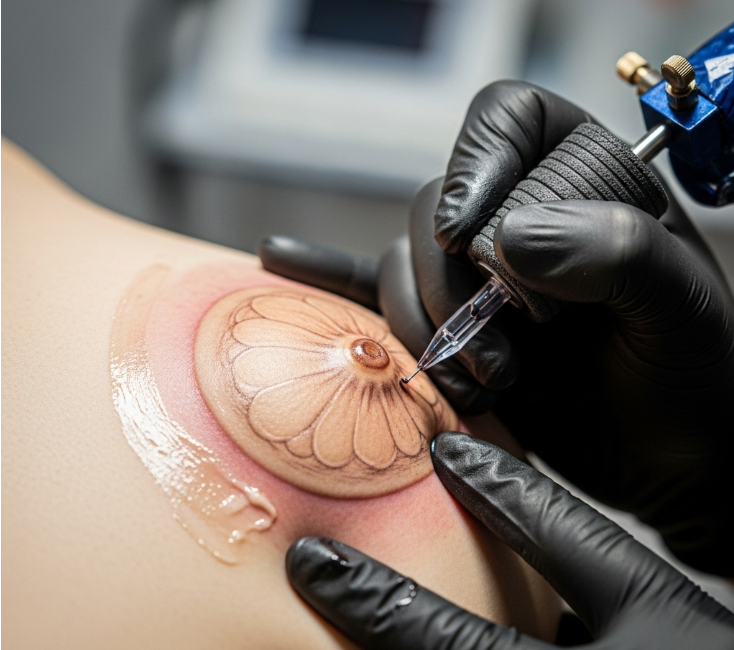
What It Is A 3D nipple–areola tattoo is an advanced medical micropigmentation technique that creates the illusion of a natural nipple and areola using detailed shading, highlighting, and color blending. Unlike standard areola tattooing, 3D tattooing provides a realistic, three-dimensional effect, making the reconstructed breast look complete without additional surgery. In Korea, 3D nipple–areola tattooing […]
Breast implant exchange in Korea

What It Is Breast implant exchange is a surgical procedure to replace existing breast implants with new ones. This may be done to change the size, shape, or type of implant, or to correct complications such as capsular contracture, implant rupture, or dissatisfaction with previous results. In Korea, breast implant exchange is commonly performed with […]
Tuberous breast correction in Korea

What It Is Tuberous breast correction is a surgical procedure to treat tuberous breast deformity, a congenital condition where the breasts develop in a narrow, constricted shape. This condition often includes a tight lower breast pole, enlarged areolas, and breast asymmetry, giving the breasts a tube-like appearance. Correction typically involves a combination of tissue expansion, […]
Nipple-areola reduction in Korea

What It Is Nipple-areola reduction is a surgical procedure that reshapes or reduces the size of enlarged nipples or areolas for improved proportion and aesthetics. It can be performed alone or in combination with other breast surgeries such as augmentation, lift (mastopexy), or reduction. Enlarged nipples or areolas may occur due to genetics, breastfeeding, pregnancy, […]
Breast reduction in Korea
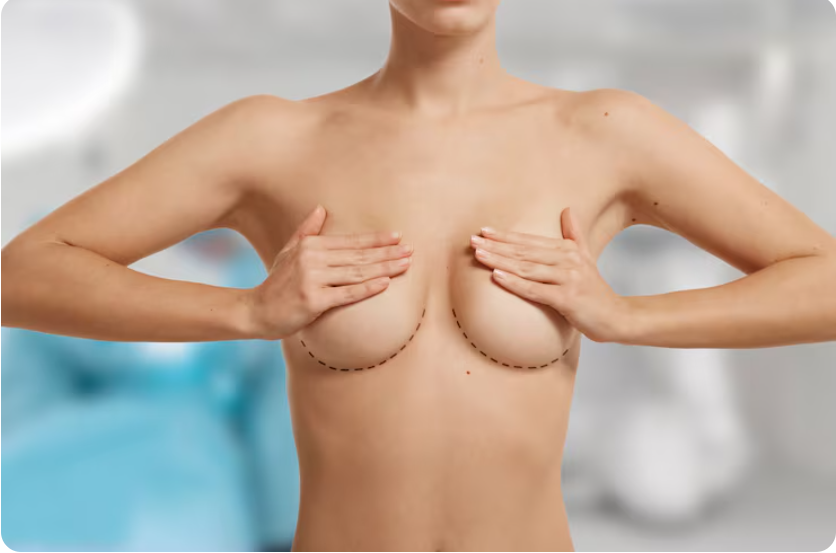
What It Is Breast reduction, also called reduction mammaplasty, is a surgical procedure to reduce the size and weight of overly large breasts by removing excess breast tissue, fat, and skin. The surgery reshapes the breasts to a smaller, lighter, and more proportionate size, while also lifting them for improved contour. In Korea, breast reduction […]
Breast lift (mastopexy) in Korea

What It Is A breast lift, also called mastopexy, is a cosmetic surgical procedure that raises and reshapes sagging breasts by removing excess skin and tightening the surrounding tissues. Unlike breast augmentation, mastopexy focuses on lifting and contouring the existing breast tissue rather than increasing size (although it can be combined with implants or fat […]
Anchor mastopexy (Wise pattern) in Korea
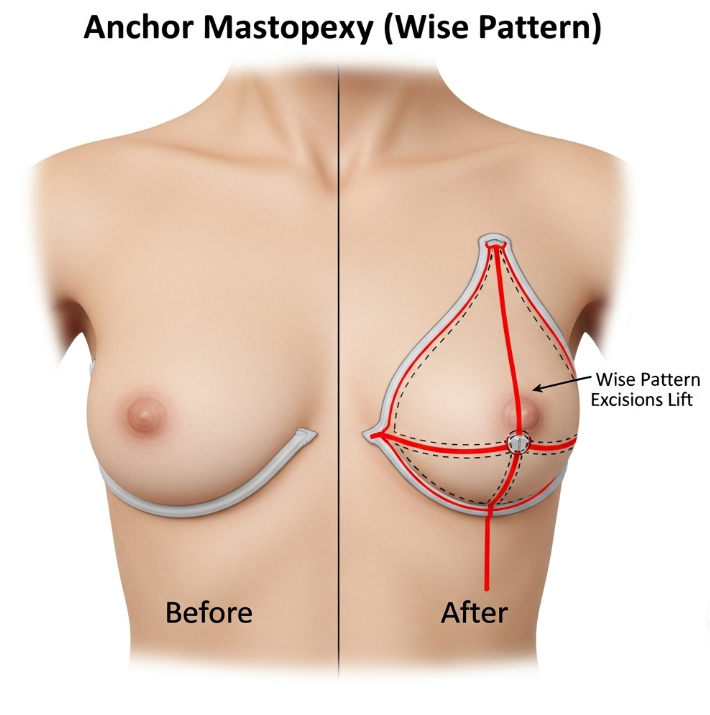
What It Is Anchor mastopexy, also known as the Wise pattern breast lift, is a surgical procedure designed to correct severe breast sagging (ptosis). It is the most comprehensive form of breast lift, suitable for patients with significant drooping, stretched skin, or enlarged areolas. The incision pattern resembles an anchor: around the areola, vertically down […]
Nasal fracture closed reduction in Korea
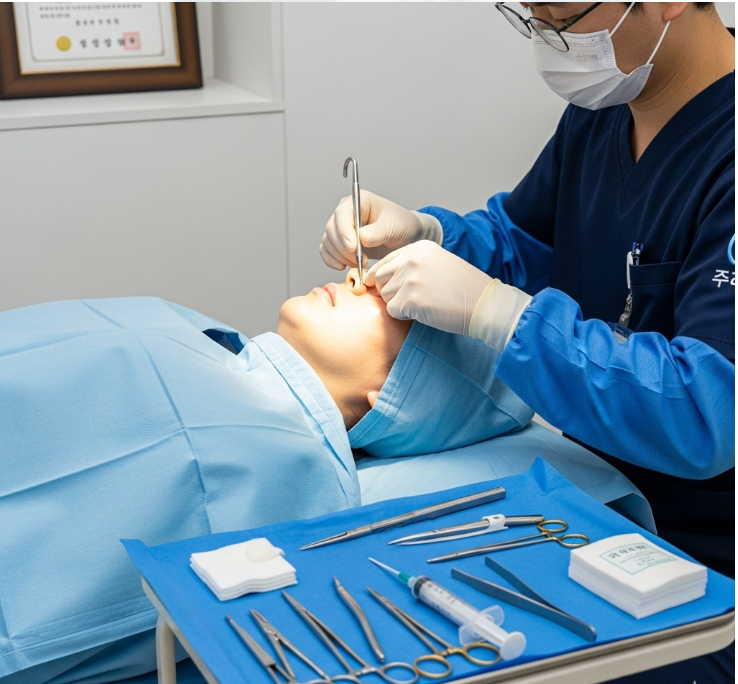
What It Is Nasal fracture closed reduction is a non-invasive surgical procedure to correct a broken nose by manually realigning displaced nasal bones without making external incisions. Nasal fractures are the most common type of facial fracture, usually caused by accidents, falls, or sports injuries. The procedure restores nasal shape, airway function, and facial symmetry. […]