Overview
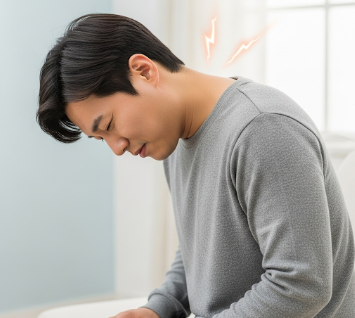
Lhermitte’s Sign is a neurological symptom characterized by a sudden, brief, electric-shock-like sensation that travels down the spine and often into the arms and legs when the neck is flexed forward. It is not a disease itself, but a clinical sign that often indicates demyelination or irritation of the cervical spinal cord.
In Korea, neurology and rehabilitation clinics provide advanced diagnostic tools like MRI, nerve conduction studies, and electrophysiological testing to identify the underlying cause of Lhermitte’s Sign. Early evaluation is important to diagnose conditions such as multiple sclerosis, cervical spondylosis, or vitamin deficiencies, allowing timely treatment to prevent progression.
Key Facts
- ➔ Lhermitte’s Sign produces electric-shock-like sensations down the spine when bending the neck forward.
- ➔ It is commonly associated with multiple sclerosis (MS), cervical spinal cord compression, or radiation-induced myelopathy.
- ➔ The sensation is usually brief, lasting a few seconds, but can be recurrent.
- ➔ Other neurological symptoms may accompany it, such as numbness, tingling, weakness, or visual disturbances.
- ➔ Early recognition helps in diagnosing underlying neurological disorders and guiding treatment.
What is Lhermitte’s Sign?
Lhermitte’s Sign is a clinical symptom indicating irritation or demyelination of the cervical spinal cord.
- ➔ Characteristic sensation: Electric-shock-like feeling radiating from the neck down the spine and sometimes into the limbs.
- ➔ Trigger: Neck flexion or bending forward typically provokes the sensation.
- ➔ Clinical significance: Commonly observed in multiple sclerosis, cervical spondylosis, vitamin B12 deficiency, or after radiation therapy.
- ➔ Not a disease: It is a sign pointing to spinal cord involvement or nerve irritation rather than a standalone condition.
What Symptoms Are Related To
Lhermitte’s Sign may accompany other neurological symptoms depending on the cause:
- ➔ Tingling, numbness, or “pins and needles” sensations in arms and legs
- ➔ Weakness or clumsiness in hands, arms, or legs
- ➔ Loss of balance or difficulty walking
- ➔ Visual disturbances, especially in multiple sclerosis
- ➔ Fatigue, dizziness, or muscle spasms
- ➔ Pain or stiffness in the neck
- ➔ Cognitive or mood changes in some neurological conditions
These associated symptoms can help clinicians determine the underlying neurological disorder causing Lhermitte’s Sign.
What Causes / Possible Causes
Lhermitte’s Sign can result from several conditions affecting the cervical spinal cord:
- ➔ Multiple sclerosis (MS): Demyelination of spinal cord neurons is the most common cause.
- ➔ Cervical spondylosis or spinal stenosis: Degenerative changes compressing the spinal cord.
- ➔ Vitamin B12 deficiency: Leading to subacute combined degeneration of the spinal cord.
- ➔ Radiation-induced myelopathy: Damage to spinal cord tissue after radiation therapy.
- ➔ Trauma or spinal cord injury: Structural or functional irritation of the cervical cord.
- ➔ Tumors or lesions: Masses compressing or infiltrating the cervical spinal cord.
Identifying the exact cause is crucial for preventing neurological deterioration and optimizing patient outcomes.
When Should I See My Doctor
Immediate or prompt evaluation is recommended if Lhermitte’s Sign is:
- ➔ Recurrent or progressively worsening
- ➔ Accompanied by weakness, numbness, or loss of coordination
- ➔ Associated with visual changes, severe pain, or bladder/bowel dysfunction
- ➔ Occurring in individuals with known neurological disorders or a family history of MS
- ➔ Causing functional impairment or interfering with daily activities
Early consultation with a neurologist can lead to timely diagnosis and management of underlying spinal cord disorders.
Care and Treatment
Treatment of Lhermitte’s Sign focuses on addressing the underlying cause:
- ➔ Multiple sclerosis: Disease-modifying therapies, corticosteroids for acute relapses, and symptomatic treatments for tingling or spasticity.
- ➔ Cervical spondylosis or spinal stenosis: Physical therapy, anti-inflammatory medications, pain management, and surgical decompression if needed.
- ➔ Vitamin B12 deficiency: Vitamin supplementation orally or via injections to prevent neurological damage.
- ➔ Radiation-induced myelopathy: Supportive care, physiotherapy, and medications to manage symptoms.
- ➔ Spinal cord tumors or trauma: Surgical intervention or targeted therapy depending on the lesion.
- ➔ Symptom relief: Medications for neuropathic pain, occupational therapy, and ergonomic adjustments.
Supportive care, including neck exercises, proper posture, and regular monitoring, can help reduce the frequency or severity of the sensations.
Treatment Options in Korea
Korean hospitals provide comprehensive care for Lhermitte’s Sign:
- ➔ Neurological evaluation: MRI of the cervical spine, nerve conduction studies, and electrophysiology.
- ➔ Laboratory tests: Blood tests for vitamin deficiencies, autoimmune markers, and metabolic disorders.
- ➔ Physical therapy and rehabilitation: Customized exercise programs to improve mobility, strength, and posture.
- ➔ Medical therapy: Disease-modifying agents for MS, pain management, and vitamin supplementation.
- ➔ Surgical options: Cervical decompression, tumor excision, or spinal stabilization if structural lesions are present.
- ➔ Multidisciplinary approach: Collaboration among neurologists, physiatrists, neurosurgeons, and occupational therapists for personalized care.
Leading hospitals such as Seoul National University Hospital, Asan Medical Center, and Samsung Medical Center provide state-of-the-art diagnostics and treatment plans, ensuring early detection and management of conditions causing Lhermitte’s Sign.
In Summary: Lhermitte’s Sign is a neurological symptom indicating irritation or demyelination of the cervical spinal cord. While it can be associated with multiple sclerosis, cervical spondylosis, or vitamin deficiencies, early evaluation and treatment in Korea can prevent neurological deterioration, relieve symptoms, and improve quality of life.
- ➔ Key Takeaway: Any sudden or recurrent electric-shock sensation down the spine during neck flexion warrants medical evaluation.
- ➔ Action Point: Consult a neurologist for comprehensive assessment, diagnosis, and individualized treatment.