Overview
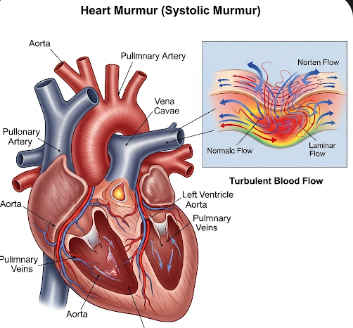
A heart murmur is an abnormal sound heard during a heartbeat, often described as a whooshing or swishing noise. Murmurs are caused by turbulent blood flow within the heart or near its valves. While some murmurs are harmless (innocent), others may indicate underlying heart conditions, including valve disorders, congenital defects, or other cardiovascular issues.
In South Korea, cardiology clinics and hospitals offer advanced diagnostics and treatment for heart murmurs, ensuring accurate assessment and personalized care.
Key Facts
🟢 ➤ Heart murmurs are classified as either innocent (harmless) or abnormal (indicative of heart disease).
🟢 ➤ Innocent murmurs are common in children and adolescents and typically do not require treatment.
🟢 ➤ Abnormal murmurs may signal structural heart problems, valve disorders, or congenital heart defects.
🟢 ➤ Murmurs are detected through a stethoscope during a physical exam and further evaluated with echocardiography.
🟢 ➤ Treatment depends on the underlying cause, ranging from observation to surgical interventions.
🟢 ➤ South Korean cardiologists provide state-of-the-art imaging, monitoring, and treatment for patients with heart murmurs.
What is a Heart Murmur?
A heart murmur is an audible vibration caused by turbulent blood flow in the heart or great vessels.
Key points:
➤ Innocent (physiologic) murmurs occur without structural heart disease and often resolve over time.
➤ Abnormal (pathologic) murmurs may result from:
- Valve stenosis: narrowing of heart valves.
- Valve regurgitation: leakage of blood backward through a valve.
- Septal defects: holes in the heart walls.
➤ Murmurs vary in timing (systolic or diastolic), pitch (high or low), and location on the chest wall.
➤ Murmurs may be asymptomatic or associated with shortness of breath, fatigue, chest pain, or palpitations.
Symptoms Related to Heart Murmurs
Symptoms depend on the type and severity of the murmur:
🟢 ➤ Many innocent murmurs cause no symptoms and are found during routine exams.
🟢 ➤ Abnormal murmurs may be accompanied by:
- Shortness of breath or rapid breathing.
- Fatigue, especially during exertion.
- Chest pain or discomfort.
- Swelling of legs, ankles, or abdomen.
- Palpitations or irregular heartbeat.
- Fainting or dizziness in severe cases.
🟢 ➤ In infants and children, poor feeding or failure to thrive may indicate a significant heart defect.
🟢 ➤ Cyanosis (bluish skin or lips) may occur if oxygenation is affected.
Causes / Possible Causes
Heart murmurs can arise from innocent or abnormal factors:
Innocent Causes
➤ High blood flow during exercise, fever, pregnancy, or rapid growth in children.
➤ Thin chest walls or increased blood velocity in children.
Abnormal Causes
➤ Valve disorders: stenosis or regurgitation of the mitral, aortic, tricuspid, or pulmonary valves.
➤ Congenital heart defects: septal defects, patent ductus arteriosus, or coarctation of the aorta.
➤ Endocarditis: infection of the heart valves causing damage and abnormal flow.
➤ Rheumatic heart disease: post-infection valve damage.
➤ Cardiomyopathy: abnormal heart muscle affecting blood flow.
Other Contributing Factors
➤ Aging and degenerative valve disease.
➤ High blood pressure increasing cardiac workload.
➤ Chronic anemia or thyroid disorders altering blood flow dynamics.
When Should I See a Doctor?
Seek medical attention if:
🟢 ➤ A murmur is detected for the first time, especially in adults.
🟢 ➤ Associated symptoms like chest pain, shortness of breath, palpitations, or fainting occur.
🟢 ➤ In children, signs such as poor feeding, growth issues, or cyanosis are present.
🟢 ➤ There is a history of heart disease, infection, or valve problems.
Prompt evaluation ensures early diagnosis, appropriate management, and prevention of complications.
Care and Treatment
Management depends on whether the murmur is innocent or abnormal:
Innocent Murmurs
➤ Usually require no treatment.
➤ Regular monitoring during routine check-ups.
➤ Education and reassurance for patients and families.
Abnormal Murmurs
➤ Medications to manage symptoms or underlying conditions, including antihypertensives, diuretics, or anticoagulants.
➤ Surgical or interventional procedures:
- Valve repair or replacement.
- Closure of septal defects.
- Treatment of congenital heart defects.
➤ Lifestyle measures: maintaining heart health, avoiding smoking, and controlling blood pressure.
Advanced Care in Korea
➤ South Korean cardiology centers provide echocardiography, cardiac MRI, catheterization, and minimally invasive surgeries.
➤ Multidisciplinary teams ensure comprehensive evaluation and tailored treatment.
➤ Patient education emphasizes monitoring symptoms, adherence to medications, and routine follow-ups.
Highlights (Clean Green Arrow Version)
🟢 ➤ Heart murmurs are abnormal sounds from turbulent blood flow in the heart, detected via stethoscope.
🟢 ➤ Symptoms: may be absent in innocent murmurs or include fatigue, shortness of breath, chest pain, palpitations, and cyanosis in abnormal murmurs.
🟢 ➤ Causes: innocent murmurs (normal flow variations) or abnormal murmurs (valve disorders, congenital defects, infection, cardiomyopathy).
🟢 ➤ Seek medical care for new, persistent, or symptom-associated murmurs.
🟢 ➤ Treatment ranges from monitoring and medications to surgical interventions, depending on severity.
🟢 ➤ South Korea offers advanced cardiology services with state-of-the-art diagnostics, minimally invasive procedures, and personalized patient care.