Overview
Rhabdomyolysis is a serious medical condition that occurs when damaged muscle tissue breaks down and releases its contents, including a protein called myoglobin, into the bloodstream. This can lead to kidney damage or failure if not treated promptly. The condition can be caused by trauma, intense physical activity, certain medications, or medical disorders. Early diagnosis and treatment are critical for preventing life-threatening complications.
What is Rhabdomyolysis?
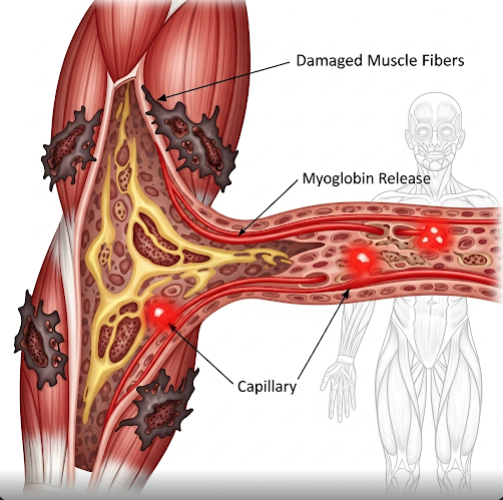
Rhabdomyolysis results from the destruction of skeletal muscle fibers, leading to the release of myoglobin, electrolytes, and other cellular components into the blood. Myoglobin can damage the kidneys, and electrolyte imbalances can cause dangerous heart rhythm disturbances. The severity ranges from mild cases with no symptoms to severe cases causing acute kidney failure and multi-organ damage.
Symptoms
Symptoms of rhabdomyolysis can vary but commonly include
- Muscle pain, tenderness, or swelling (often in the shoulders, thighs, or lower back)
- Weakness or inability to move the affected muscles
- Dark, cola-colored urine due to myoglobin release
- Reduced or no urine output
- Nausea, vomiting, or confusion in severe cases
- Irregular heartbeat or cardiac arrest in extreme electrolyte disturbances
Causes
Rhabdomyolysis can result from various triggers, such as
- Severe muscle injury from accidents, crush injuries, or burns
- Extreme physical exertion, especially in untrained individuals
- Prolonged immobilization or unconsciousness
- Heat stroke or severe dehydration
- Medications such as statins or certain antipsychotics
- Drug or alcohol abuse
- Infections or metabolic disorders
- Seizures causing prolonged muscle contractions
Risk Factors
Risk factors for rhabdomyolysis include
- Participation in high-intensity exercise without adequate training
- Military training or endurance events in hot climates
- Chronic alcohol or drug abuse
- Use of certain prescription drugs that affect muscle metabolism
- Older age with reduced muscle mass and resilience
- Pre-existing kidney disease
- Genetic muscle disorders
Complications
Without timely treatment, rhabdomyolysis can cause
- Acute kidney injury or complete kidney failure
- Electrolyte imbalances leading to arrhythmias
- Disseminated intravascular coagulation (DIC) causing abnormal bleeding and clotting
- Permanent muscle damage and weakness
- Death in severe, untreated cases
Prevention
Preventive measures include
- Staying well-hydrated before, during, and after intense physical activity
- Avoiding extreme workouts without proper conditioning
- Taking prescribed medications exactly as directed and reporting muscle pain to a doctor
- Avoiding alcohol and drug abuse
- Protecting muscles from injury in high-risk occupations or sports
- Seeking early medical care if symptoms of muscle breakdown appear
Treatment Options in Korea
South Korea offers advanced emergency care and specialized treatment for rhabdomyolysis.
1. Hospitalization and Monitoring – Patients are admitted for close monitoring of kidney function, electrolytes, and muscle enzyme levels.
2. Intravenous (IV) Fluids – Aggressive fluid therapy is started immediately to flush myoglobin from the kidneys and prevent acute kidney injury.
3. Electrolyte Management – Potassium, calcium, and phosphorus levels are closely controlled to avoid dangerous heart rhythm changes.
4. Dialysis – In severe cases of kidney failure, hemodialysis is performed in specialized nephrology units until kidney function recovers.
5. Treating the Underlying Cause – Stopping offending medications, managing trauma injuries, cooling in heat stroke cases, or treating infections promptly.
6. Rehabilitation and Recovery – Physical therapy and gradual return to activity are guided by Korean rehabilitation specialists to restore muscle strength safely.
7. Leading Korean Medical Centers for Rhabdomyolysis Care
- Asan Medical Center – Emergency Medicine & Nephrology
- Seoul National University Hospital – Internal Medicine & Critical Care
- Samsung Medical Center – Nephrology & Trauma Center
- Severance Hospital – Department of Emergency Medicine