Overview
Penile cancer is a rare form of cancer that develops in the skin or tissues of the penis. Most commonly affecting men over the age of 50, penile cancer can be aggressive if not detected and treated early. However, when diagnosed in its early stages, it is highly treatable. This condition is more common in parts of Africa, Asia, and South America but remains rare in countries with widespread circumcision and strong hygiene practices.
What is Penile Cancer?
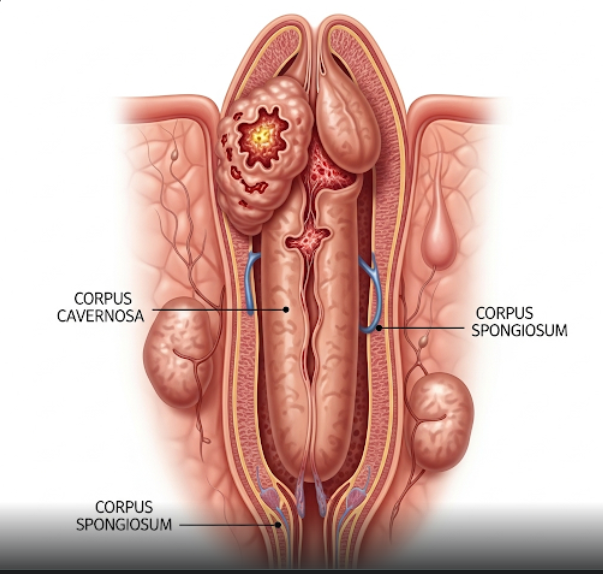
Penile cancer occurs when malignant (cancerous) cells form in the tissues of the penis. The most common type is squamous cell carcinoma, which originates in the skin cells and often begins on the glans (head) or foreskin. Other less common types include melanoma, basal cell carcinoma, adenocarcinoma, and sarcoma.
Penile cancer often begins as a small lesion or growth but can quickly progress if left untreated, potentially spreading to lymph nodes and other parts of the body.
Symptoms
Early symptoms of penile cancer may be subtle and mistaken for infections or skin conditions. Signs to watch for include:
- A growth, lump, or sore on the penis that does not heal
- Redness, irritation, or rash on the glans or foreskin
- Bleeding or foul-smelling discharge from the lesion
- Thickening or color changes in the skin of the penis
- Pain or swelling in the penile area
- Swollen lymph nodes in the groin (suggests possible spread)
Symptoms can persist for weeks or months, and early diagnosis is critical for effective treatment.
Causes
Penile cancer is caused by mutations in the DNA of cells in the penis, leading to uncontrolled growth. Several contributing factors and carcinogens are known:
- Human papillomavirus (HPV) infection — especially types 16 and 18
- Poor genital hygiene
- Phimosis (inability to retract the foreskin)
- Smoking — increases risk by exposing the body to carcinogens
- Chronic inflammation or irritation
- Multiple sexual partners and unprotected sex (higher HPV exposure)
- Lack of circumcision in areas with poor hygiene
HPV is believed to be involved in nearly 50% of penile cancer cases.
Risk Factors
Several factors increase the likelihood of developing penile cancer:
- Age over 50
- HPV infection
- Uncircumcised men, particularly with poor hygiene
- History of smoking
- Chronic inflammatory conditions (e.g., balanitis, lichen sclerosus)
- Multiple sexual partners or early sexual activity
- Immunosuppression (e.g., HIV-positive patients)
Vaccination against HPV and good hygiene are key modifiable risk factors.
Complications
If not treated early, penile cancer can lead to serious and life-threatening complications:
- Invasion of deeper tissues of the penis
- Metastasis to lymph nodes in the groin or pelvis
- Spread to distant organs such as lungs, liver, or bones
- Lymphedema (swelling due to lymph node removal or blockage)
- Erectile dysfunction or sexual impairment
- Psychological impact due to body image, stigma, or sexual health concerns
Late-stage penile cancer can be fatal, but early-stage cancer has a high cure rate.
Prevention
While penile cancer cannot always be prevented, several steps can significantly reduce risk:
- HPV vaccination (recommended for boys and young men)
- Practice good genital hygiene, especially for uncircumcised men
- Safe sex practices — use of condoms and limiting sexual partners
- Quit smoking to reduce cancer risk
- Regular self-examination to detect changes early
- Seek medical attention for persistent sores, redness, or swelling
Public awareness and education about early signs are crucial for prevention and early detection.
Treatment Options in Korea
South Korea provides comprehensive, modern care for penile cancer, with access to urologic oncology specialists, advanced diagnostics, and surgical options.
Diagnosis:
- Physical examination and medical history review
- Biopsy of any suspicious lesion
- Imaging tests: MRI, CT scans, or ultrasound to assess spread
- Lymph node evaluation in the groin and pelvis
Treatment Options:
- Topical therapies (for early, superficial cancers): 5-FU or imiquimod cream
- Laser ablation or cryotherapy for superficial lesions
- Surgical options:
- Mohs micrographic surgery (precise tumor removal)
- Partial penectomy (removal of part of the penis)
- Total penectomy (for advanced cancer), with reconstructive options available
- Inguinal lymph node dissection if cancer has spread
- Radiation therapy for localized or palliative treatment
- Chemotherapy, often used in advanced or metastatic cases
Reconstructive and Psychological Support:
- Korea offers penile reconstruction surgery and counseling services to support emotional recovery.
- Multidisciplinary care teams help patients manage both physical and emotional aspects of recovery.
Where to Seek Care in Korea:
Top centers such as Samsung Medical Center, Seoul National University Hospital, Asan Medical Center, and Severance Hospital provide expert urologic oncology care, advanced diagnostics, and supportive services for local and international patients.