Overview
A Pancoast tumor is a rare form of lung cancer that occurs at the top (apex) of the lung. Unlike most other lung cancers, Pancoast tumors often invade nearby tissues such as the ribs, nerves, and spinal structures before affecting lung function. Because of its unusual location and symptoms, it is often misdiagnosed in its early stages. Early detection and a multidisciplinary approach are crucial for effective treatment.
What is Pancoast Tumor?
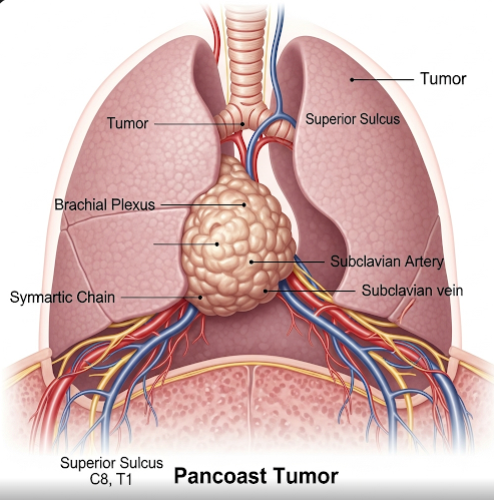
A Pancoast tumor, also known as a superior sulcus tumor, is a type of non-small cell lung cancer (NSCLC) that forms in the upper part of either lung. Due to its location near the thoracic inlet, it may invade surrounding tissues such as the brachial plexus (nerves), blood vessels, lymph nodes, spine, or chest wall.
Unlike typical lung cancers that cause respiratory symptoms like coughing or shortness of breath, Pancoast tumors often cause neurological and musculoskeletal symptoms due to their impact on nearby structures.
Symptoms
Symptoms of Pancoast tumors vary depending on the extent and direction of the tumor’s growth, but common signs include:
- Severe shoulder pain that radiates to the arm, especially the inner side
- Arm weakness or muscle atrophy, particularly in the hand
- Horner’s syndrome, which includes:
- Drooping eyelid (ptosis)
- Constricted pupil (miosis)
- Lack of sweating (anhidrosis) on one side of the face
- Chest or upper back pain
- Swelling in the arm (if lymph nodes or blood vessels are involved)
- Voice hoarseness (due to nerve compression)
- Shortness of breath or persistent cough (less common early on)
Because these symptoms mimic orthopedic or nerve conditions, diagnosis can often be delayed.
Causes
Pancoast tumors arise from abnormal cell growth in the lung’s apex, typically due to long-term exposure to carcinogens. The most common causes include:
- Smoking: The leading risk factor for nearly all types of lung cancer
- Exposure to industrial substances like asbestos, chromium, or petroleum products
- Genetic mutations in lung cells
- Chronic lung diseases such as COPD
- Radiation exposure in rare cases
Pancoast tumors are usually a type of squamous cell carcinoma or adenocarcinoma, both subtypes of non-small cell lung cancer.
Risk Factors
The following factors increase the risk of developing a Pancoast tumor:
- Heavy tobacco smoking
- Long-term exposure to chemical carcinogens (e.g., asbestos, arsenic)
- Older age (typically over 50)
- Male gender (though incidence in women is increasing)
- Family history of lung cancer or genetic predisposition
- Living in areas with high air pollution
Anyone with multiple risk factors and persistent shoulder or arm pain should undergo further evaluation.
Complications
If left untreated, Pancoast tumors can lead to several serious complications:
- Permanent nerve damage in the brachial plexus
- Paralysis or loss of hand function
- Metastasis to lymph nodes, bones, brain, or liver
- Spinal cord compression
- Respiratory failure in advanced stages
- Severe pain and reduced mobility
- Treatment-related complications, such as side effects from surgery, radiation, or chemotherapy
Early detection can prevent these complications and improve survival rates.
Prevention
Although not all cases can be prevented, the risk of developing a Pancoast tumor can be reduced through:
- Complete avoidance of tobacco products
- Minimizing exposure to workplace carcinogens with protective gear and regulations
- Maintaining good lung health with regular exercise and healthy air quality
- Annual health check-ups, especially for high-risk individuals
- Early evaluation of unexplained shoulder or arm pain, especially in smokers
Genetic counseling or screening may also be helpful in families with a strong history of cancer.
Treatment Option in Korea
South Korea offers world-class care for complex cancers like Pancoast tumors, with advanced diagnostic and therapeutic options available at leading cancer centers.
- Accurate Diagnosis: Korean hospitals use high-resolution CT scans, MRI, PET scans, and biopsy techniques to locate and evaluate tumor size and nerve involvement.
- Multidisciplinary Treatment Teams: Top hospitals such as Samsung Medical Center, National Cancer Center Korea, and Severance Hospital provide comprehensive cancer care using teams of oncologists, thoracic surgeons, neurologists, and radiation therapists.
- Treatment Modalities:
- Radiation Therapy: Often given before surgery (neoadjuvant) to shrink the tumor.
- Surgery: Surgical removal of the tumor, often involving complex procedures like lobectomy with resection of nearby tissues.
- Chemotherapy: Used in combination with surgery or radiation for better outcomes.
- Targeted Therapy or Immunotherapy: Offered in cases with specific genetic mutations.
- Rehabilitation & Pain Management: Korean cancer centers provide supportive care for pain, physical therapy for limb recovery, and emotional counseling.
- Robotic-Assisted Surgery: Available at elite hospitals for minimally invasive approaches.
- Complementary Korean Medicine (Hanbang): Integrated in some centers to aid symptom management, reduce inflammation, and support immune health.
South Korea’s combination of high-tech oncology, quick access to specialists, and holistic support makes it one of Asia’s top destinations for treating rare cancers like Pancoast tumors.