Overview
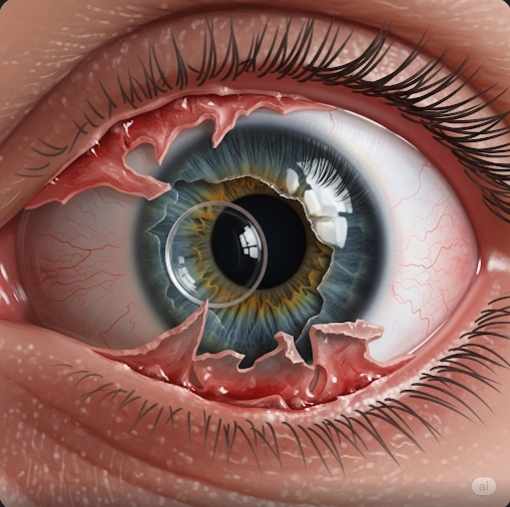
Open globe injury is a serious, full-thickness wound of the eye wall, typically involving the cornea and/or sclera. It occurs when the outer protective layers of the eye are disrupted, usually due to trauma. Open globe injuries are ocular emergencies that can lead to permanent vision loss or even loss of the eye if not treated promptly. Immediate medical attention, surgical repair, and careful follow-up are critical for preserving vision and preventing complications.
What is Open Globe Injury?
An open globe injury refers to a penetrating or rupturing trauma of the eyeball that causes a break in the eye’s outer membrane (cornea or sclera). This is distinct from a “closed globe injury,” in which the eye wall remains intact. Open globe injuries can be classified into different types based on the nature of the trauma:
- Rupture: Caused by blunt force that causes the eye to burst
- Penetrating injury: Caused by a sharp object entering the eye
- Perforating injury: Involves an entry and exit wound
- Intraocular foreign body (IOFB): Foreign material is embedded inside the eye
Such injuries can lead to immediate vision loss, structural damage, and a high risk of infection (endophthalmitis).
Symptoms
Symptoms of an open globe injury can be alarming and include:
- Sudden loss or blurring of vision
- Severe eye pain or discomfort
- Bleeding from the eye
- Misshapen or collapsed eyeball
- Visible laceration or hole in the eye
- Leakage of clear fluid (aqueous or vitreous humor)
- Foreign object visible in or protruding from the eye
- Pupillary irregularities or afferent pupillary defect
- Sensation of pressure release or rupture
Causes
Open globe injuries are typically the result of high-impact trauma, such as:
- Workplace or industrial accidents involving sharp tools
- Falls or blunt trauma from sports or physical altercations
- Motor vehicle accidents
- Penetration from glass, wood, or metal fragments
- Gunshots or explosions
- Assaults or stabbing injuries
Children and adults in high-risk occupations are especially vulnerable.
Risk Factors
Several factors increase the risk of sustaining an open globe injury:
- Lack of protective eyewear during high-risk activities
- Occupations involving construction, welding, carpentry, or machinery
- Engaging in contact sports without eye protection
- Military or law enforcement roles
- Handling fireworks, firearms, or sharp tools unsafely
- Alcohol or drug impairment increasing risk of accidents
Complications
Open globe injuries can lead to several sight-threatening or life-altering complications, including:
- Endophthalmitis (intraocular infection)
- Retinal detachment
- Cataract formation
- Choroidal or vitreous hemorrhage
- Sympathetic ophthalmia (autoimmune reaction affecting both eyes)
- Permanent vision loss
- Enucleation (surgical removal of the eye in severe cases)
Prevention
Many open globe injuries are preventable with the right precautions:
- Wear certified protective eyewear during industrial, military, or sports activities
- Educate workers and athletes on eye safety protocols
- Supervise children when handling sharp objects or fireworks
- Follow workplace safety regulations and use shields where needed
- Avoid DIY activities without proper eye protection
- Secure hazardous environments in high-risk professions
Treatment Options in Korea
South Korea is well-equipped with emergency ophthalmologic services and advanced microsurgical capabilities for treating open globe injuries. Key aspects of treatment include:
- Emergency surgical repair: To close the wound and stabilize the eye, ideally within 24 hours
- Removal of foreign bodies (if present) using specialized tools
- Antibiotics: Intravenous and intraocular antibiotics to prevent infection
- Anti-inflammatory medications to reduce swelling and immune reaction
- Vitrectomy or retinal surgery if the posterior segment of the eye is involved
- Reconstructive surgery for severe damage
- Long-term rehabilitation, including vision therapy, prosthetics, or counseling
Renowned Korean hospitals such as Samsung Medical Center, Seoul National University Hospital, and Kim’s Eye Hospital offer 24/7 trauma ophthalmology services with experienced eye surgeons, advanced diagnostics (e.g., ocular CT, ultrasound B-scan), and specialized eye ICUs.