Overview
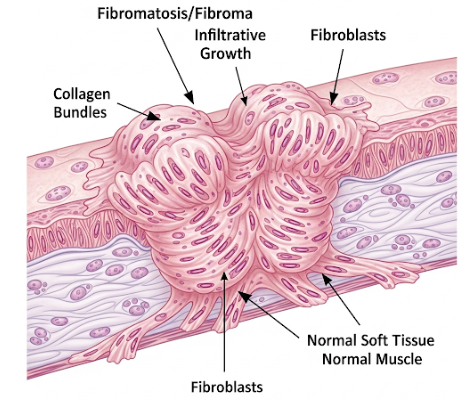
Fibromatosis refers to a group of rare, benign (non-cancerous) but locally aggressive soft tissue tumors that arise from fibroblasts (cells responsible for connective tissue formation). Unlike typical tumors, fibromatosis does not metastasize (spread to distant organs), but it can invade surrounding tissues and cause significant complications.
In Korea, fibromatosis is treated with a multidisciplinary approach that combines advanced imaging, surgery, targeted therapies, and supportive care. Korean hospitals, particularly university and cancer-specialized centers, are recognized for their expertise in handling rare conditions like fibromatosis, ensuring accurate diagnosis and personalized treatment.
What is Fibromatosis?
Fibromatosis includes several conditions where fibrous tissue grows excessively. The most common form is desmoid-type fibromatosis, which can appear in the abdominal wall, limbs, or other soft tissues.
Types include:
- Superficial fibromatosis – affects skin and connective tissues (e.g., palmar fibromatosis, plantar fibromatosis, penile fibromatosis).
- Deep fibromatosis (desmoid tumors) – develops in muscles, fascia, or abdominal tissues.
Symptoms
Symptoms vary depending on tumor location:
- Painless lump or swelling (most common initial symptom)
- Pain or discomfort when pressing on nearby nerves or organs
- Restricted movement if tumors affect joints or muscles
- Digestive issues (if abdominal fibromatosis presses on intestines)
- Recurrence after removal is common
Causes
The exact cause is unknown, but factors include:
- Genetic mutations (e.g., CTNNB1 or APC gene mutations)
- Hormonal influence – estrogen may play a role
- Trauma or surgery in the affected area
- Familial adenomatous polyposis (FAP) – increases risk of desmoid tumors
Risk Factors
- Family history of fibromatosis or related genetic conditions
- History of abdominal surgery
- Women of reproductive age (estrogen sensitivity)
- Inherited conditions like Gardner’s syndrome
Complications
- Recurrence after surgery (very common in desmoid fibromatosis)
- Organ dysfunction (e.g., bowel obstruction if in abdomen)
- Chronic pain or mobility issues
- Emotional and psychological impact due to repeated treatments
Prevention & Lifestyle
- Regular screening for individuals with FAP or genetic risk factors
- Avoid unnecessary abdominal surgeries if predisposed
- Healthy lifestyle to maintain immunity and recovery
- Routine check-ups for early detection
Treatment Options in Korea
Diagnosis
- MRI scan – best imaging for soft tissue tumors
- CT scan – used for abdominal cases
- Biopsy – confirms diagnosis and rules out cancer
- Genetic testing – for APC or CTNNB1 mutations (available in Korea’s top hospitals)
Medical Treatments
- NSAIDs – reduce pain and inflammation
- Anti-hormonal therapy (e.g., tamoxifen) – blocks estrogen’s role in tumor growth
- Chemotherapy – used in aggressive or unresectable cases
- Targeted therapies (e.g., tyrosine kinase inhibitors) – available in Korea for resistant fibromatosis
Surgical & Advanced Treatments in Korea
- Surgery – complete removal if possible, but recurrence rates are high
- Radiation therapy – used when surgery is not an option
- Cryoablation / Radiofrequency ablation (RFA) – minimally invasive techniques available in Korean hospitals
- Observation (“Watch-and-Wait”) – in some stable cases, close monitoring without immediate treatment is preferred
Rehabilitation & Support
- Physical therapy – for mobility issues
- Pain management clinics
- Psychological support – for coping with chronic illness
- Genetic counseling – for patients with familial risk