
Gonorrhea in Korea

Overview Gonorrhea is a sexually transmitted infection (STI) caused by the bacterium Neisseria gonorrhoeae. It can infect the genital tract, rectum, throat, and, in rare cases, the eyes. In Korea, gonorrhea is a notifiable disease, meaning healthcare providers must report cases to the national surveillance system. While the overall rate of infection is lower compared […]
Gonorrhoea in Korea

Overview Gonorrhoea is a sexually transmitted infection (STI) caused by the bacterium Neisseria gonorrhoeae. It primarily affects the genital tract, rectum, and throat. Although gonorrhoea cases in Korea are lower compared to many countries due to strong public health measures, it still remains a concern, especially among sexually active young adults. If left untreated, it […]
Goodpasture syndrome in Korea

Overview Goodpasture syndrome is a rare but serious autoimmune disorder in which the body’s immune system mistakenly attacks the lungs and kidneys. It is caused by antibodies directed against the glomerular basement membrane (GBM), leading to bleeding in the lungs and progressive kidney damage. In Korea, the condition is considered uncommon but is recognized and […]
Gout in Korea

Overview Gout is a common type of inflammatory arthritis caused by the buildup of uric acid crystals in the joints. It leads to sudden, severe pain, swelling, redness, and stiffness, most commonly in the big toe but also in other joints. In Korea, the prevalence of gout has been increasing, partly due to dietary changes, […]
Granuloma in Korea

Overview A granuloma is a small area of chronic inflammation in body tissue, formed when the immune system tries to isolate substances it perceives as foreign but cannot eliminate. These substances may include infections, environmental irritants, or autoimmune triggers. Granulomas can occur in the lungs, liver, skin, lymph nodes, and other organs. In Korea, granulomas […]
Granuloma annulare in Korea

Overview Granuloma annulare is a benign, chronic skin condition characterized by ring-shaped, reddish or skin-colored bumps. Although the exact cause is unknown, it is believed to involve abnormal immune system activity. The condition is not contagious and often resolves on its own, though it can persist for years in some cases. In Korea, dermatology clinics […]
Graves’ disease in Korea

Overview Graves’ disease is an autoimmune disorder that causes the thyroid gland to overproduce hormones, leading to hyperthyroidism. It is one of the most common thyroid diseases worldwide and a significant cause of hyperthyroidism in Korea. The condition affects metabolism, heart rate, and overall body functions. With Korea’s advanced endocrinology and nuclear medicine facilities, Graves’ […]
Groin irritation and infection in Korea

Overview Groin irritation and infection are common conditions that affect the skin and soft tissues around the inner thighs, genital area, and buttocks. These problems can be caused by fungal infections, bacterial infections, chafing, or skin conditions. While not usually life-threatening, groin infections can cause significant discomfort, itching, and swelling. In Korea, advanced dermatology and […]
Group A streptococcal (GAS) infection in Korea

Overview Group A Streptococcal (GAS) infection is an illness caused by the bacterium Streptococcus pyogenes. These bacteria are highly contagious and can spread through close contact, respiratory droplets, or contaminated surfaces. GAS can cause a wide spectrum of diseases, ranging from mild infections such as pharyngitis (strep throat) and impetigo (skin infection) to life-threatening conditions […]
Growth disorders in Korea
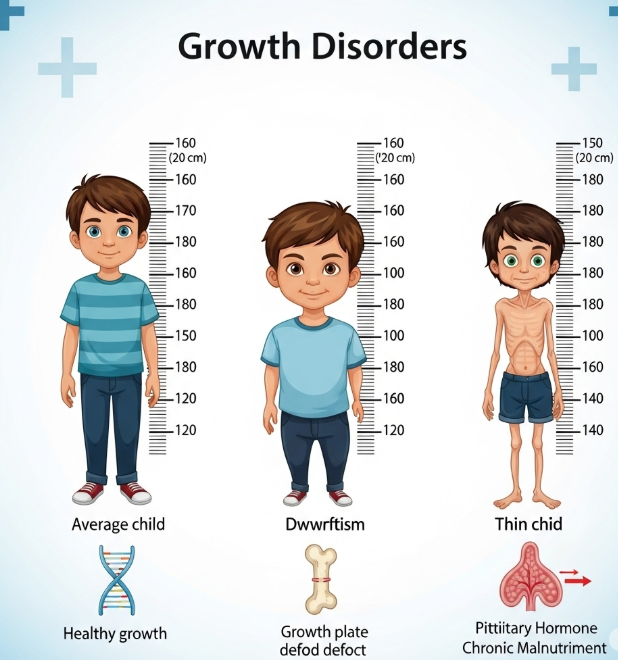
Overview Growth disorders refer to a group of conditions where a child’s growth rate is below the expected level for their age and gender. In South Korea, pediatric endocrinologists identify and manage growth disorders early to optimize health outcomes. These conditions may be caused by hormonal imbalances, genetic factors, or chronic illnesses. Symptoms Early detection […]