
Canalicular laceration repair in Korea
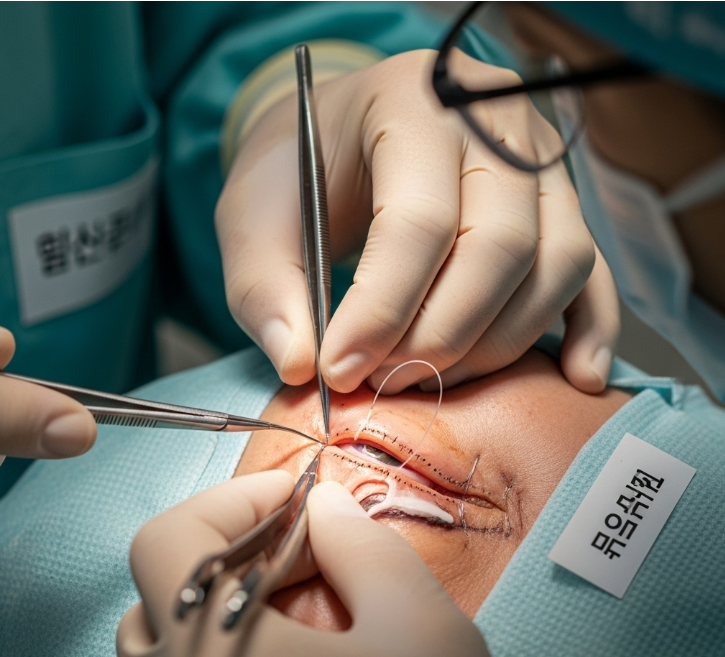
What It Is Canalicular laceration repair is a delicate surgical procedure used to treat injuries to the canaliculus—tiny tear drainage channels in the inner eyelids. These ducts carry tears from the eyes to the nose. When they are cut or torn, patients may develop constant tearing (epiphora), infections, and eyelid deformities. In Korea, this surgery […]
Levator advancement in Korea
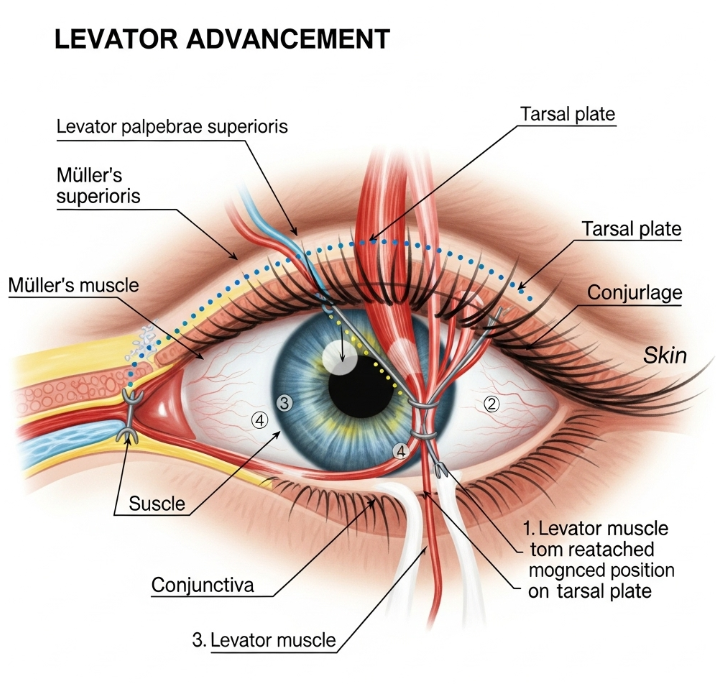
What It Is Levator advancement is a surgical procedure used to correct ptosis (drooping of the upper eyelid) by tightening or repositioning the levator muscle, which is responsible for lifting the eyelid. When the levator is weak or stretched, the eyelid droops and may block vision or make the eyes look tired. In Korea, levator […]
Brow ptosis repair in Korea
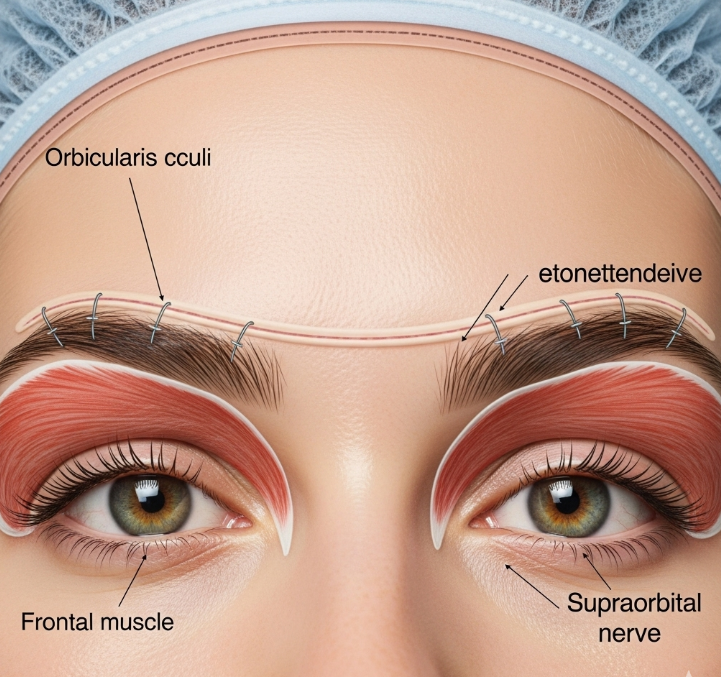
What It Is Brow ptosis repair is a surgical procedure that corrects drooping of the eyebrows. As skin and soft tissues lose elasticity with age, or due to nerve and muscle weakness, the brows may sag and press down on the upper eyelids. This not only causes a tired or sad appearance but can also […]
Temporalis tendon transfer in Korea

What It Is Temporalis tendon transfer is a reconstructive surgical procedure used to restore smile function and facial movement in patients with facial paralysis. The temporalis muscle, a chewing muscle located on the side of the head, is redirected and connected to the corner of the mouth. This allows patients to regain the ability to […]
Syndactyly release in Korea

What It Is Syndactyly release is a surgical procedure to separate fused fingers or toes, a congenital condition where two or more digits are joined by skin, soft tissue, or sometimes bone. This condition is one of the most common hand anomalies and may affect one or multiple digits, either partially (incomplete syndactyly) or completely […]
Polydactyly correction in Korea
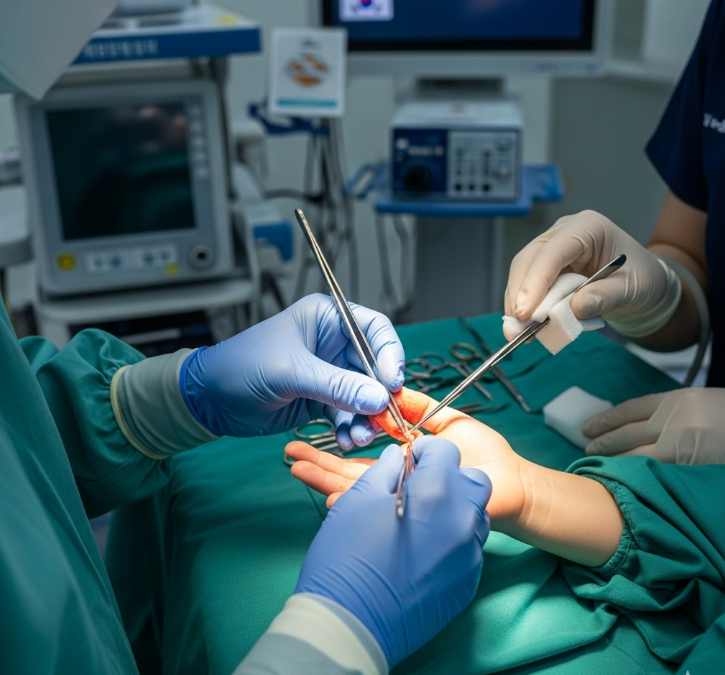
What It Is Polydactyly correction is a surgical procedure to treat polydactyly, a congenital condition where a child is born with extra fingers or toes. The additional digit may be fully formed with bone and joints, or it may be small and rudimentary, connected only by soft tissue. The surgery involves removing the extra digit […]
Brachial plexus reconstruction in Korea
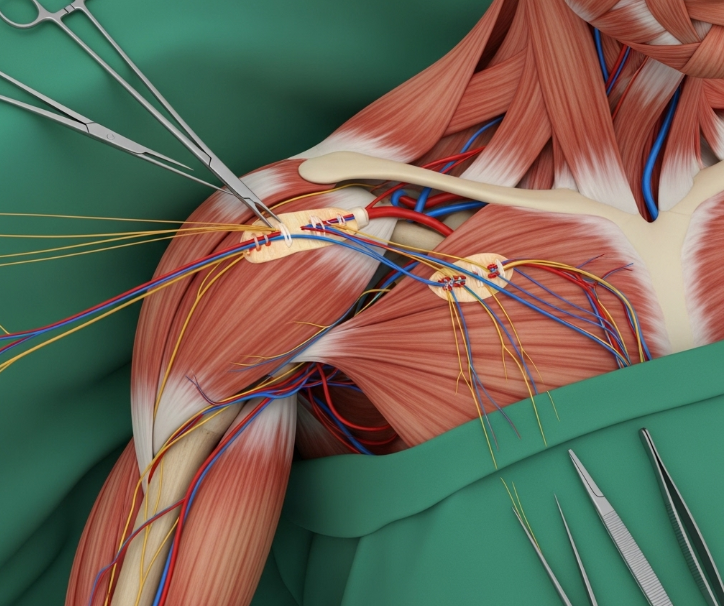
What It Is Brachial plexus reconstruction is a complex surgical procedure to repair injuries to the brachial plexus, the network of nerves that controls movement and sensation in the shoulder, arm, and hand. These injuries can result from trauma (motorcycle or car accidents), birth injury (obstetric brachial plexus palsy), tumors, or inflammation. Reconstruction may involve […]
Nerve repair with graft in Korea
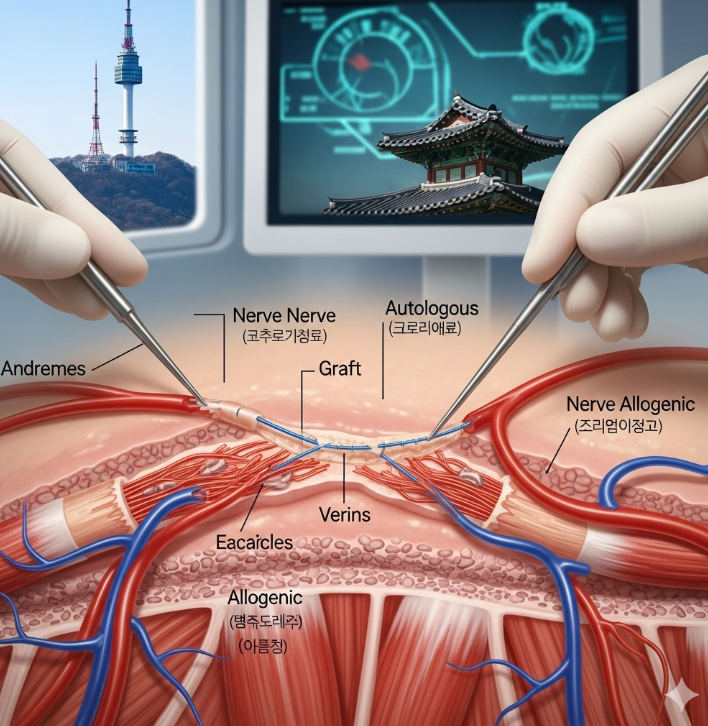
What It Is Nerve repair with grafting is a microsurgical procedure used when a nerve is injured and the damaged segment is too long to be repaired by direct end-to-end suturing. In these cases, a nerve graft is used to bridge the gap. The most common donor is the sural nerve (from the leg), though […]
Facial nerve reanimation in Korea
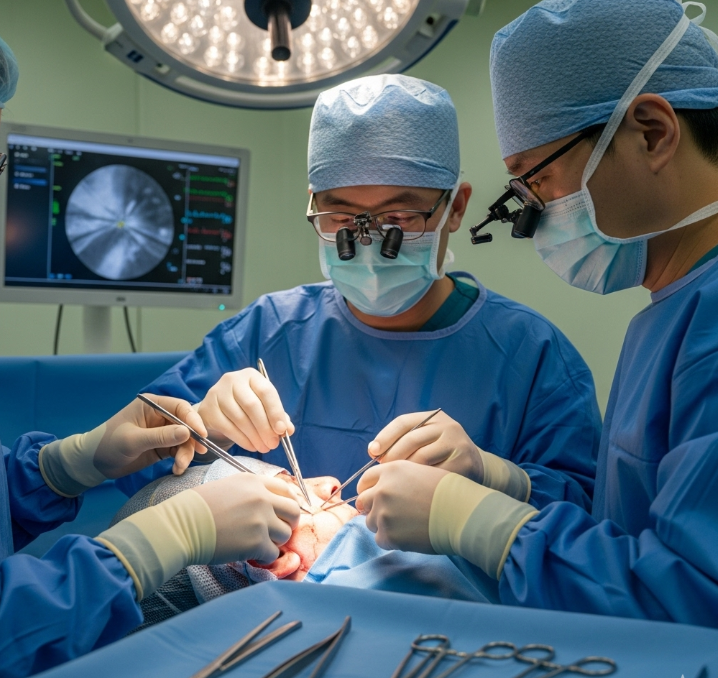
What It Is Facial nerve reanimation is a surgical procedure that restores movement and expression to the face after facial paralysis caused by trauma, tumor removal, infection, or congenital conditions like Moebius syndrome. Facial paralysis not only affects appearance but also interferes with speech, eating, blinking, and emotional expression. Reanimation involves different approaches such as […]
Gracilis free flap smile reanimation in Korea
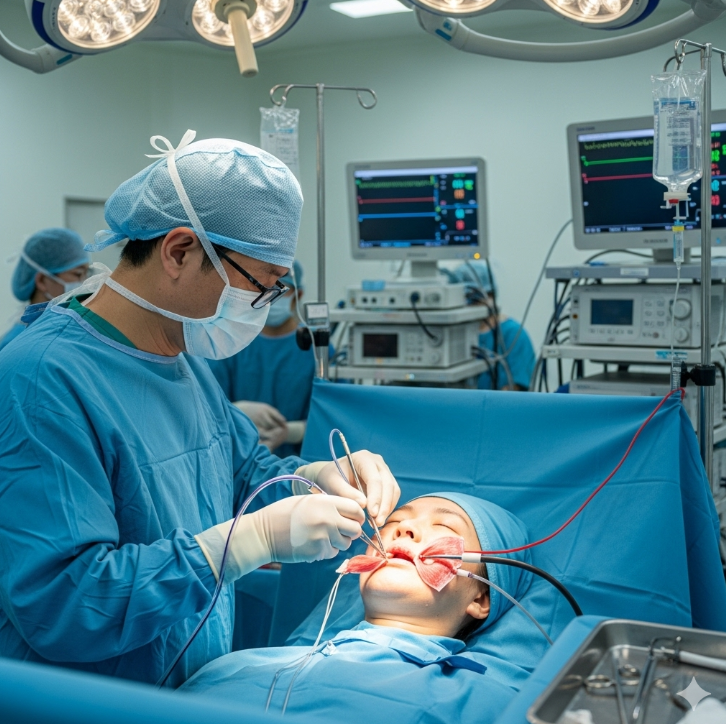
What It Is Gracilis free flap smile reanimation is an advanced microsurgical technique used to restore the ability to smile in patients with long-standing or complete facial paralysis. In this procedure, the gracilis muscle (a thin, long muscle from the inner thigh) is transplanted to the face along with its nerve and blood supply. Once […]