
Serous Drainage in Korea
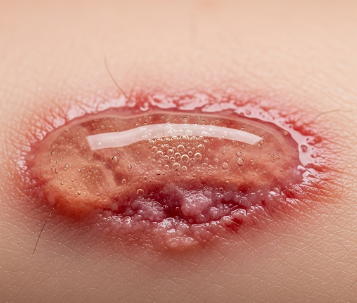
➤ Overview Serous drainage is a type of thin, clear, or slightly yellow fluid that may leak from wounds, surgical sites, or skin lesions. This drainage typically consists of serum, the liquid part of blood, and is a normal part of the body’s healing process. However, excessive, persistent, or foul-smelling serous drainage may indicate infection, […]
Sensitive Teeth in Korea

➤ Overview Sensitive teeth, also called dentin hypersensitivity, is a common dental condition where the teeth experience sharp, sudden pain in response to stimuli such as hot, cold, sweet, or acidic foods and drinks. This discomfort arises when the protective enamel wears down or the gums recede, exposing the underlying dentin or tooth root. In […]
Self-Loathing in Korea

➤ Overview Self-loathing is a deep and persistent sense of disgust, hatred, or intense dislike toward oneself. This emotional state often impacts self-esteem, interpersonal relationships, and daily functioning. People experiencing self-loathing may be overly critical of themselves, blame themselves for events beyond their control, or feel worthless. In South Korea, mental health awareness has been […]
Scleral Icterus in Korea

➤ Overview Scleral icterus is a medical sign characterized by a yellowing of the sclera, the white part of the eyes. This yellow discoloration is caused by increased bilirubin levels in the bloodstream, often due to liver dysfunction, bile duct obstruction, or hemolytic disorders. While the yellow eyes themselves may not cause discomfort, scleral icterus […]
Scintillating Scotoma in Korea
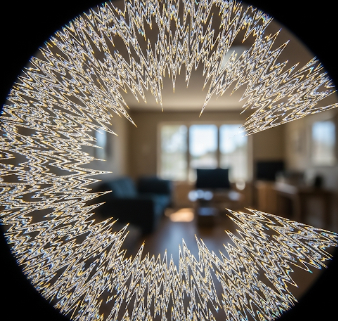
➤ Overview A scintillating scotoma is a visual phenomenon in which a person experiences a shimmering, flickering blind spot in their visual field. This often occurs as a type of migraine aura before or during a migraine headache, but it can also appear in other neurological or ophthalmologic conditions. The shimmering spot may expand, move […]
Scalloped Tongue in Korea
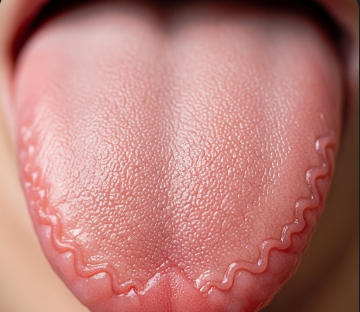
➤ Overview A scalloped tongue, also known as a crenated tongue, is a condition where the edges of the tongue develop wavy, indented, or rippled patterns that resemble teeth marks. This happens when the tongue repeatedly presses against the teeth, either due to tongue enlargement, teeth misalignment, or habits such as teeth grinding. While the […]
Ringing in the ears (tinnitus) in Korea

Overview Tinnitus, commonly known as ringing in the ears, is the perception of sound without an external source. It may manifest as ringing, buzzing, hissing, or clicking, and can affect one or both ears. Tinnitus is a symptom rather than a disease itself and often indicates an underlying auditory or systemic condition. In Korea, ENT […]
Roundworm in Korea

Overview Roundworm infection, medically known as ascariasis, is a common intestinal parasitic infection caused by the nematode Ascaris lumbricoides. It affects both children and adults and is more prevalent in regions with poor sanitation or contaminated food and water. In Korea, roundworm infections are relatively rare due to high hygiene standards, but sporadic cases may […]
Reflux in babies in Korea

Overview Reflux in babies, also called gastroesophageal reflux (GER), occurs when stomach contents flow back into the esophagus, causing spit-up, vomiting, or discomfort. It is common in infants, as the lower esophageal sphincter is still immature and the stomach is small. In Korea, pediatricians routinely evaluate infant reflux to distinguish between normal spit-up and gastroesophageal […]
Rashes in babies and children in Korea
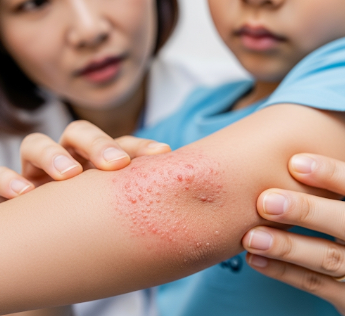
Overview Rashes in babies and children are common and can appear as red spots, bumps, blisters, or patches on the skin. Most rashes are mild and self-limiting, but some may indicate serious infections or allergic reactions. In Korea, pediatricians and dermatologists frequently evaluate rashes to identify their cause, which may range from viral or bacterial […]