Overview
Carrion’s Disease, also known as Peruvian Wart or Bartonellosis, is a rare but serious bacterial infection endemic to Peru and other Andean regions of South America. It is caused by the bacterium Bartonella bacilliformis and is transmitted by sandflies. The disease has two clinical phases—an acute, potentially fatal phase and a chronic skin phase. Without treatment, Carrion’s Disease can result in high mortality, especially during the acute stage.
What is Carrion’s Disease?
Carrion’s Disease is a vector-borne infectious disease transmitted by the bite of the Lutzomyia sandfly. It occurs almost exclusively in high-altitude regions of Peru, Ecuador, and Colombia. The disease has two phases:
- Acute Phase (Oroya Fever): Characterized by fever, anemia, and systemic infection due to invasion of red blood cells by the bacteria.
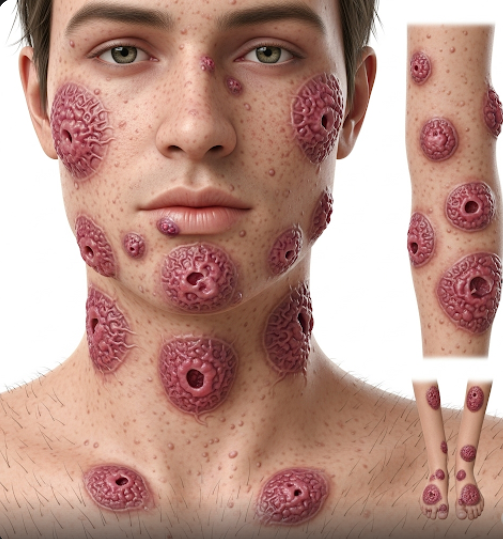
- Chronic Phase (Verruga Peruana or Peruvian Wart): Appears weeks or months later as skin eruptions—vascular lesions resembling warts.
The disease was named after Daniel Alcides Carrión, a Peruvian medical student who died after infecting himself to study the disease.
Symptoms
Carrion’s Disease progresses in two main stages with distinct symptoms:
Acute Phase (Oroya Fever):
- High fever
- Severe anemia
- Jaundice
- Headache and muscle pain
- Enlarged lymph nodes
- Weakness and fatigue
- Potential multi-organ failure
Chronic Phase (Verruga Peruana):
- Red, purple, or wart-like skin lesions
- Painless or mildly painful eruptions on limbs and face
- Nodules that may bleed
- Symptoms may last several months
The chronic phase may follow the acute stage or occur independently in some patients.
Causes
The disease is caused by the bacterium Bartonella bacilliformis, which is transmitted to humans through the bite of an infected Lutzomyia verrucarum sandfly. The bacteria infect red blood cells and endothelial cells, leading to both systemic and dermatological symptoms.
Factors contributing to infection include:
- Living in or traveling to endemic areas in Peru
- Exposure to sandfly habitats, especially at night
- Lack of protective clothing or mosquito netting
Risk Factors
Certain populations are at higher risk of contracting Carrion’s Disease:
- Residents of high-altitude Andean regions (especially in rural Peru)
- Travelers or aid workers in endemic areas
- People sleeping outdoors or in unprotected housing
- Children under 15 years old (higher case numbers)
- Immunocompromised individuals
- Lack of access to vector control and healthcare
Complications
If untreated, the acute phase of Carrion’s Disease can be life-threatening, with complications such as:
- Severe hemolytic anemia
- Heart failure
- Respiratory distress
- Secondary infections
- Septic shock
- Death (especially in the absence of antibiotics)
The chronic phase, while less life-threatening, can lead to:
- Disfigurement due to extensive skin lesions
- Secondary skin infections
- Psychosocial impact from cosmetic appearance
Prevention
Prevention efforts focus on reducing exposure to sandfly bites, especially in endemic areas:
- Use insect repellent containing DEET
- Wear long-sleeved clothing and pants
- Sleep under insecticide-treated bed nets
- Install window screens and avoid outdoor activity at dusk and dawn
- Support community-based vector control programs
- Educate travelers and local populations about the risks
There is no vaccine currently available, so prevention through protective measures is key.
Treatment Options in Korea
Although Carrion’s Disease is not endemic in South Korea, the country’s medical system is highly capable of diagnosing and treating tropical and imported diseases:
- Diagnosis:
- Blood smear or PCR testing to detect Bartonella bacilliformis
- Serological tests (if available in tropical medicine departments)
- Clinical evaluation of skin lesions and travel history
- Treatment:
- Acute phase: Chloramphenicol or ciprofloxacin for bacterial clearance
- Chronic phase: Rifampin or azithromycin for skin lesion management
- Severe cases may require blood transfusions or hospitalization
- Supportive care for anemia, fever, and hydration
- Referral Centers:
- Tropical medicine units at major hospitals like Seoul National University Hospital, Samsung Medical Center, and Incheon Medical Center for Infectious Diseases can manage imported diseases.
- Korean quarantine and disease control services monitor travelers from endemic regions.