What It Is
Nipple reconstruction is a surgical procedure to restore the appearance of the nipple-areola complex after mastectomy, trauma, congenital absence, or previous breast surgeries. It is usually the final stage of breast reconstruction, performed after the breast mound has healed and stabilized.
The procedure involves creating a new nipple projection and shape using local skin flaps, grafts, or medical tattooing to achieve a natural look. In Korea, surgeons combine microsurgical precision, advanced flap designs, and 3D tattooing techniques to produce realistic results tailored to each patient.
Why It’s Done
Patients undergo nipple reconstruction because:
- They want to restore a natural breast appearance after mastectomy or trauma.
- The absence of a nipple affects body image and self-confidence.
- They desire symmetry between both breasts.
- They want closure to the breast reconstruction journey.
Good candidates include:
- Patients who have completed breast mound reconstruction and healing.
- Those in good overall health with realistic expectations.
- Individuals motivated to improve cosmetic and psychological well-being.
Alternatives
- 3D nipple-areola tattooing alone: Creates the illusion of a nipple without surgery.
- External nipple prostheses: Adhesive nipples worn on the skin, removable and temporary.
- No reconstruction: Some patients choose to forgo reconstruction altogether.
Preparation
Before nipple reconstruction in Korea, patients will:
- Have a consultation to discuss technique options (flap, graft, or tattooing).
- Ensure the reconstructed breast mound is stable and fully healed.
- Stop smoking and alcohol 2–4 weeks prior to surgery.
- Avoid blood-thinning medications and certain supplements.
- Plan for a short recovery period, as the procedure is less invasive than breast mound reconstruction.
How It’s Done
- Anesthesia: Local anesthesia with or without sedation.
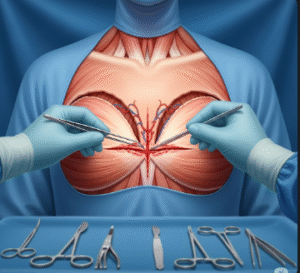
- Flap techniques: Local skin flaps are raised and folded to create nipple projection.
- Grafts: Tissue from the opposite nipple (if available) or skin grafts may be used.
- Tattooing: Medical tattooing recreates the areola color and enhances 3D realism.
- Duration: 1–2 hours, usually outpatient.
Recovery
- First week: Mild swelling, bruising, and tenderness are expected.
- Dressings: Protect the new nipple with light dressings or shields.
- Return to activities: Most patients resume normal activities within 2–3 days.
- Final results: Nipple projection stabilizes over weeks; tattooing may be done later for color refinement.
Possible Complications
- Flattening or loss of nipple projection over time.
- Asymmetry between nipples.
- Pigment fading or unevenness after tattooing.
- Rare risks: infection, delayed healing, or graft failure.
Treatment Options in Korea
Diagnosis
Korean surgeons use clinical examination and 3D imaging simulations to plan nipple placement, size, and symmetry with the opposite breast.
Medical Treatments
- 3D tattooing alone for patients not wanting surgery.
- External nipple prostheses for temporary cosmetic use.
Surgical or Advanced Therapies
- Local flap nipple reconstruction for long-term projection.
- Skin grafts or contralateral nipple-sharing techniques.
- 3D medical tattooing for realistic areola coloring.
- Combined surgical and tattoo approaches for the most natural appearance.
Rehabilitation and Support
- Scar and pigment management with follow-ups.
- Tattoo touch-ups as color fades over time.
- Counseling and support for patients completing the reconstruction journey.
- International patients benefit from Korea’s aesthetic expertise, advanced tattooing technology, and personalized aftercare.