What it is
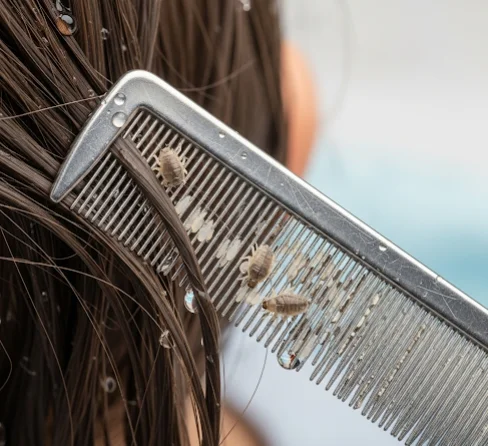
➝ Pediculosis capitis (head lice infestation) is caused by the parasite Pediculus humanus capitis, which lives on the scalp and feeds on blood.
➝ Symptoms include itching, scalp irritation, and visible lice or nits (eggs) on hair shafts, most often in children.
➝ Wet combing is a non-chemical treatment method that involves using a fine-toothed lice comb on wet, conditioned hair to mechanically remove lice and nits.
➝ In Korea, wet combing is recognized as a safe, effective, and chemical-free treatment, often recommended for children, pregnant women, and those with sensitive skin.
Why it’s done
→ To remove lice and nits without using insecticidal shampoos or lotions.
→ To reduce risk of chemical resistance, as lice in many regions have developed resistance to permethrin and pyrethrins.
→ To avoid skin irritation or allergic reactions that can occur with topical insecticides.
→ To provide a safe option for children under 2 years, pregnant women, and patients with allergies.
→ In Korea, wet combing is commonly used in schools and households as part of integrated lice management.
Alternatives
→ Topical pediculicides: Permethrin 1%, malathion, dimethicone-based lotions.
→ Oral medications: Ivermectin or trimethoprim-sulfamethoxazole (rare, for resistant or severe infestations).
→ Manual nit removal only: Less effective unless combined with systematic combing.
→ Preventive strategies: Avoiding head-to-head contact, not sharing hats, combs, or hair accessories.
Preparation
→ Hair should be washed with regular shampoo and then conditioned to make combing easier.
→ A wide-toothed comb is first used to detangle hair.
→ A fine-toothed metal lice comb is prepared, ideally one designed for nit removal.
→ In Korea, many pharmacies sell specialized stainless steel lice combs, and some pediatric clinics provide demonstration sessions for parents.
How it’s Done
→ Apply a generous amount of conditioner to wet hair to immobilize lice and ease combing.
→ Use a fine-toothed lice comb, starting at the scalp and pulling the comb all the way through to the hair tips.
→ After each stroke, wipe the comb on a white tissue or rinse in water to check for lice and nits.
→ Comb systematically in sections, covering the entire scalp.
→ Repeat the process every 3–4 days for at least 2 weeks, continuing until no lice or nits are found for two consecutive sessions.
→ In Korea, wet combing is often taught as a family-based routine, ensuring siblings are checked and treated together.
Recovery
→ Relief from itching begins once lice are removed, though irritation may persist briefly from scratching.
→ Full clearance is usually achieved within 2–3 weeks, depending on diligence.
→ Hair regains normal appearance and comfort, with no chemical side effects.
→ Families often feel more reassured with visible confirmation of lice removal.
Complications
→ Incomplete removal may lead to persistence or reinfestation.
→ Time-consuming process, especially for long or thick hair.
→ Compliance issues if families do not repeat combing consistently.
→ With proper technique and follow-up, wet combing is highly effective and safe.
Treatment Options in Korea
→ Korean schools and pediatric clinics often recommend wet combing as first-line therapy for young children.
→ Families are educated on combined strategies:
- Wet combing.
- Washing bedding, hats, and hair accessories in hot water.
- Avoiding head-to-head contact.
→ Some dermatology and pediatric clinics in Korea combine wet combing with topical dimethicone solutions, which suffocate lice and make combing easier.
→ Pharmacies in Korea widely stock stainless steel lice combs, conditioners, and supportive products for at-home use.
→ With Korea’s structured family and school health programs, wet combing is integrated into community-based pediculosis management, ensuring effective and chemical-free eradication.