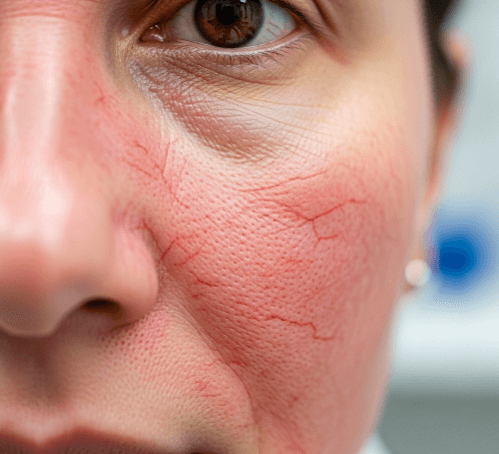
What it is
Erythrotelangiectatic rosacea (ETR) in Korea is a subtype of rosacea characterized by persistent facial redness (erythema) and visible, dilated blood vessels (telangiectasia), especially on the cheeks, nose, forehead, and chin.
Unlike acne rosacea, which is associated with pimples, or phymatous rosacea, which causes thickened skin, ETR primarily presents as chronic flushing and redness, often worsened by triggers such as heat, stress, alcohol, or spicy food.
→ In Korea, ETR is managed with vascular laser treatments, topical therapies, and lifestyle adjustments, reflecting the country’s strong dermatological expertise.
• It is common in individuals with fair to medium skin, but can affect all skin types.
• Korean dermatology emphasizes early intervention to prevent worsening and reduce visible blood vessels.
Why it’s done
Patients in Korea seek treatment for erythrotelangiectatic rosacea for several reasons:
→ Aesthetic concerns: Persistent redness and visible vessels can be distressing and difficult to cover with makeup.
→ Comfort: Flare-ups are often accompanied by burning, stinging, or skin sensitivity.
→ Progression prevention: Untreated ETR may worsen over time, with redness becoming more permanent.
→ Confidence: Clearer skin improves self-esteem and social comfort.
→ Professional culture in Korea: Smooth, even-toned skin is highly valued in both personal and professional settings.
Alternatives
Some alternatives or complementary approaches to professional treatment include:
• Topical soothing creams → Centella asiatica, niacinamide, and green tea extract help calm redness.
• Green-tinted cosmetics → Color-correcting bases can temporarily mask erythema.
• Cold compresses → Reduce flushing after exposure to heat or triggers.
• Oral supplements → Anti-inflammatory options such as omega-3 fatty acids may provide mild support.
→ While helpful, these methods are temporary; Korean dermatology clinics focus on medical-grade treatments for long-term results.
Preparation
Before undergoing rosacea treatment in Korea, preparation is important:
- Consultation → Dermatologists evaluate skin sensitivity, blood vessel size, and severity of redness.
- Identify triggers → Patients are asked about lifestyle factors such as diet, stress, and skincare routines.
- Avoid irritants → Retinoids, acids, and harsh exfoliants should be paused.
- Sun protection → Daily SPF use is essential, as UV exposure worsens rosacea.
- Patch testing → Recommended for patients with highly reactive skin.
→ Many Korean clinics start with barrier-strengthening skincare before initiating stronger treatments.
How it’s done
Erythrotelangiectatic rosacea treatment in Korea usually involves a combination of professional and at-home strategies:
- Laser and light therapy
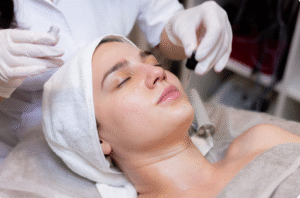
- V-beam (pulsed dye laser) → Gold standard for reducing redness and visible blood vessels.
- IPL (intense pulsed light) → Effective for diffuse redness.
- Nd:YAG laser → Used for deeper telangiectasia.
- Topical treatments
- Prescription creams like brimonidine gel or oxymetazoline cream temporarily constrict blood vessels to reduce redness.
- Korean dermatology also emphasizes soothing products with centella asiatica, panthenol, and ceramides.
- Oral medications
- Low-dose antibiotics (such as doxycycline) may be prescribed for their anti-inflammatory effects.
- Lifestyle management
- Identifying and avoiding triggers such as alcohol, spicy food, hot drinks, and extreme temperatures.
→ Most patients need 3–5 laser sessions, spaced 4–6 weeks apart, for noticeable improvement.
Recovery
Recovery after ETR treatment in Korea depends on the method:
• Laser treatment → Mild redness or swelling for 1–2 days; makeup can usually be worn after 24 hours.
• Topicals → Minimal downtime; may cause mild dryness initially.
• Oral medications → Generally well tolerated, with mild digestive upset possible.
• Skincare → Patients are encouraged to use gentle, hydrating routines to maintain results.
→ Most patients see significant improvement after a few months, with smoother and less reactive skin.
Complication
While safe, erythrotelangiectatic rosacea treatments may involve some risks:
- Temporary redness or bruising → Especially after vascular lasers.
- Pigmentation changes → In darker skin tones, hyperpigmentation or hypopigmentation may occur.
- Skin sensitivity → Some topical medications may cause dryness or irritation.
- Incomplete clearance → Severe cases may require maintenance treatments.
→ Korean specialists minimize risks through precise laser calibration and tailored skincare routines.
Treatment option in Korea
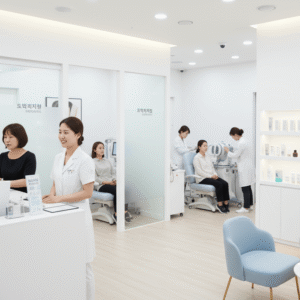
Korea is globally respected for its expertise in vascular dermatology, making it one of the best places to treat ETR:
→ Advanced laser systems → Clinics in Seoul and Busan use cutting-edge devices like V-beam, IPL, and Nd:YAG lasers.
→ Holistic approach → Dermatologists combine laser, topical, and lifestyle strategies for comprehensive care.
• Customized skincare → Clinics provide soothing post-treatment kits with centella asiatica, hyaluronic acid, and peptides.
• Medical tourism → International patients seek rosacea treatment in Korea due to its precision, advanced technology, and results-oriented culture.
• Follow-up care → Korean clinics emphasize long-term skin health, often combining laser sessions with maintenance skincare routines.
→ With advanced technology and a deep understanding of sensitive skin, Korea offers some of the most effective erythrotelangiectatic rosacea treatments worldwide, helping patients regain even-toned, calm skin.